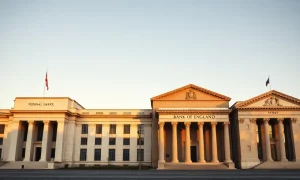
May 1, 2026 – The British pound gave back earlier gains against the US dollar on Thursday, after the Bank of England held interest rates steady at 4.75% in a decision that markets read as hawkish. The GBP/USD pair slipped below the 1.2700 mark, reversing a brief rally that followed the announcement.
BoE Holds Firm, Signals Caution
The Monetary Policy Committee voted 7-2 to keep rates unchanged, with the majority citing persistent services inflation and wage growth as reasons to wait. The two dissenters preferred a quarter-point cut. Governor Andrew Bailey said the bank needed “more evidence” that price pressures were sustainably easing before considering a move.
Also read: South Korean Won Supported by Equities and Hawkish BoK Stance: BBH
Markets had priced in a roughly 40% chance of a cut. The hawkish hold pushed short-term gilt yields higher, which typically supports the pound. But the currency failed to hold its ground. Analysts at ING said the reaction suggested traders were focused on the BoE’s cautious tone rather than the rate decision itself.
Data Deluge Looms
Friday brings a heavy calendar of UK economic releases. The S&P Global manufacturing PMI for April is due, along with consumer credit data and mortgage approvals. These figures will shape expectations for the BoE’s next move.
Also read: Central Bank Marathon: Fed, BoJ, BoE, and RBA Decisions Loom Over Markets
Economists polled by Reuters expect the manufacturing PMI to hold near 49.5, still in contraction territory. Consumer credit growth is forecast to slow to £1.1 billion from £1.3 billion. A miss on any of these numbers could renew selling pressure on sterling.
Industry watchers note that the pound has been caught between two forces: a hawkish central bank and a slowing economy. The implication is that GBP/USD may remain range-bound until clearer signals emerge from either the BoE or the Federal Reserve.
US Dollar Strength Adds Pressure
The greenback found support from safe-haven flows amid renewed trade tensions between the US and China. Reports that Washington is considering new tariffs on Chinese semiconductors weighed on risk appetite. The US dollar index rose 0.3% on the day, adding to the headwinds for cable.
Data from the Commodity Futures Trading Commission shows speculative net long positions on the dollar have risen for three consecutive weeks. This suggests traders are positioning for further USD strength, which could cap any upside in GBP/USD.
Technical Picture: Key Levels
The pair is now testing support near the 200-day moving average at 1.2680. A break below that level could open the door to the April low at 1.2630. On the upside, resistance sits at 1.2750, followed by 1.2800.
Traders will watch Friday’s data closely. A strong PMI reading could push the pound back toward 1.2750. But if the data disappoints, a move below 1.2650 becomes more likely.
What’s Next
All eyes are on Friday’s releases. The BoE’s next meeting is in June, and markets currently see a 50% chance of a cut by August. Until then, the pound will be driven by data and external factors like trade policy and global risk sentiment.
For investors, the key question is whether the UK economy can avoid a sharper slowdown. If it can, the BoE’s hawkish stance may support sterling. If not, the pound could face renewed selling pressure.