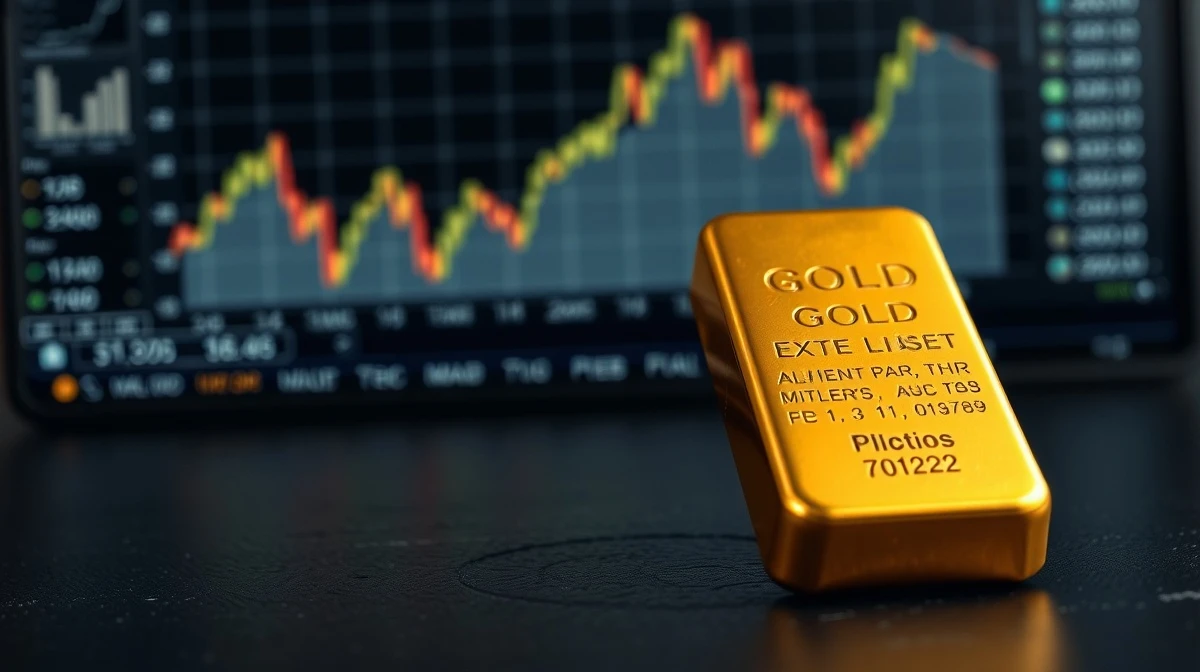
Gold prices retreated on Wednesday, February 12, 2026, as a surge in US Treasury yields to multi-month highs kept the precious metal below the psychologically significant $4,100 per ounce level. Spot gold was last down 0.8% at $4,062.20 per ounce, after briefly touching an intraday high of $4,098.50 in early trading before reversing course.
The pullback came as the yield on the 10-year US Treasury note climbed to 4.62%, its highest level since November 2025, according to data from the US Department of the Treasury. Higher yields increase the opportunity cost of holding non-yielding assets like gold, making bonds more attractive to investors seeking income.
Also read: Strategy Backs Market Structure Bill After Reporting $8.22B Quarterly Loss
What’s driving the yield spike
The move in yields reflects a repricing of expectations for Federal Reserve policy. Stronger-than-expected jobs data and resilient consumer spending have led traders to scale back bets on near-term rate cuts. According to the CME FedWatch Tool, the probability of a rate cut at the Fed’s March meeting has fallen to 18%, down from 32% a month ago.
Fed Governor Christopher Waller added to the hawkish tone in a speech on Tuesday, stating that “the recent data suggest we can afford to be patient” before adjusting rates. He noted that inflation, while cooling, remains above the central bank’s 2% target.
Also read: CLARITY Act Update: Treasury Chief Urges Senate Vote Before Recess
The dollar index, which measures the greenback against a basket of major currencies, rose 0.3% to 104.20, further pressuring gold prices. A stronger dollar makes gold more expensive for holders of other currencies.
Gold’s technical resistance at $4,100
The $4,100 level has emerged as a formidable barrier for gold bulls. Over the past two weeks, the metal has attempted to break above this level on three separate occasions, only to be met with selling pressure each time.
“The $4,100 level is a clear battleground,” said Maria Hernandez, senior metals analyst at BullionDesk. “Every time gold approaches it, profit-taking kicks in. A decisive break above would require a significant catalyst, such as a dovish surprise from the Fed or a sharp escalation in geopolitical tensions.”
Technical analysts point to the 50-day moving average at $4,015 as immediate support, with the 200-day moving average at $3,890 providing a stronger floor. On the upside, a close above $4,100 would open the door to test the all-time high of $4,150 set in October 2025.
What this means for investors
For investors holding gold as a hedge against inflation or market volatility, the current environment presents a mixed picture. On one hand, persistent inflation and geopolitical uncertainty — including ongoing tensions in Eastern Europe and the Middle East — provide underlying support for bullion. On the other hand, the prospect of higher-for-longer interest rates is a headwind.
Central bank buying remains a key pillar of demand. According to the World Gold Council, central banks purchased 1,037 tonnes of gold in 2025, marking the third consecutive year of purchases above 1,000 tonnes. China’s central bank has been particularly active, adding to its reserves for 18 straight months.
Retail demand has also been reliable. The US Mint reported that sales of American Eagle gold coins reached 95,000 ounces in January 2026, the highest monthly total since April 2025.
Looking ahead, the market will be closely watching Thursday’s release of the US Consumer Price Index (CPI) for January. Economists surveyed by Reuters expect a 0.3% month-over-month increase in headline CPI, with core CPI rising 0.3% as well. A hotter-than-expected reading could push yields even higher and drag gold down toward $4,000, while a cool number could reignite the rally.
“The CPI report is the next major catalyst,” said Hernandez. “If inflation surprises to the downside, we could see gold finally break through $4,100. If it comes in hot, we might see a retest of $4,000.”
In the broader context, gold’s trajectory remains tied to the tug-of-war between inflation hedging demand and the opportunity cost of holding the metal. With the Fed in no rush to cut rates, the path of least resistance for gold may be sideways until a clearer signal emerges.