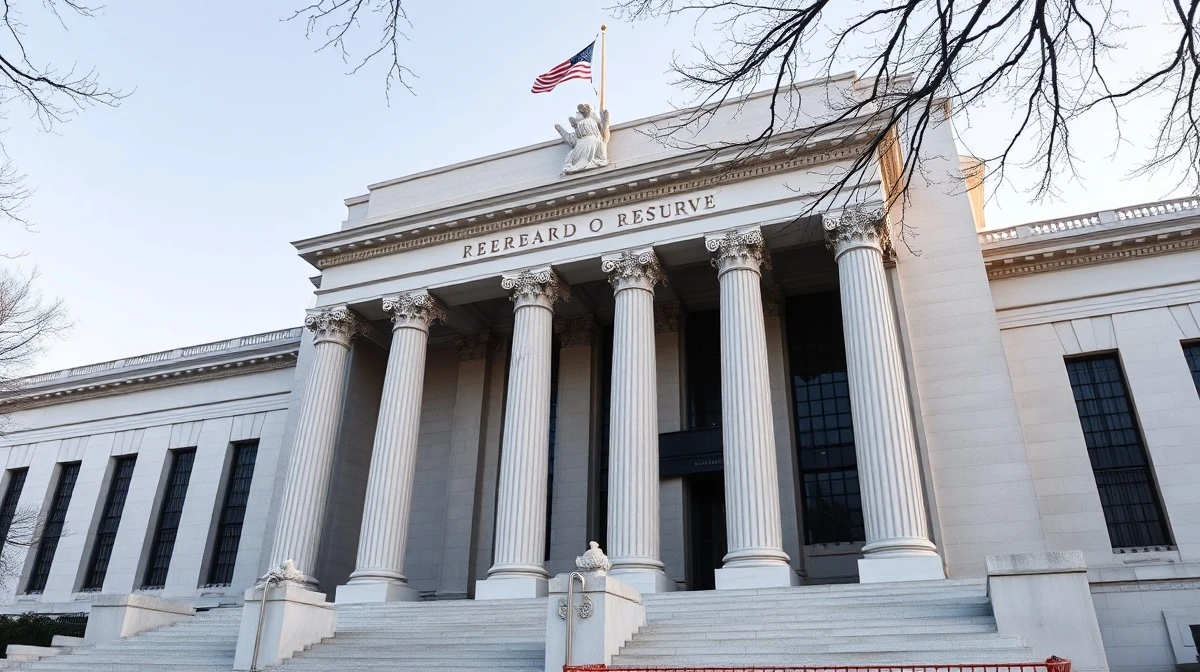
The Federal Reserve’s annual bank stress tests, introduced after the 2008 financial crisis to ensure the nation’s largest lenders could survive a severe economic downturn, are facing a new wave of scrutiny — this time from one of their original architects. In a commentary published this week, a former Fed economist who helped design the tests argues they have become a time-consuming ritual that misleads the public about the true health of the financial system and should be abandoned.
The author, who worked at the Federal Reserve Board during the development of the Comprehensive Capital Analysis and Review (CCAR) in the early 2010s, contends that the tests’ complexity and opacity have grown to the point where they no longer serve their primary purpose. Instead of providing a clear picture of bank resilience, they have become a costly compliance exercise that can give a false sense of security.
Also read: NYSE Owner ICE to Acquire Bond Platform MarketAxess in $5.7 Billion Deal
The Case Against the Current Stress Test Regime
The critique centers on several key issues. First, the tests are extremely resource-intensive, requiring banks to build and maintain massive data infrastructure and modeling teams. The Fed itself spends significant time and resources developing scenarios and analyzing results. The author argues that this effort yields diminishing returns, as the tests often fail to capture the most relevant risks to the financial system.
Second, the tests’ reliance on historical data and standardized scenarios means they are inherently backward-looking. They may not adequately account for new types of risks, such as those emerging from cyber threats, climate change, or the rapid growth of non-bank financial intermediaries. This limitation became evident during the COVID-19 pandemic, when the Fed had to conduct additional, ad-hoc analyses to gauge the impact of the shock.
Also read: The Corgi-Inspired ETF Provider Taking Aim at BlackRock's Throne
Third, the author points to the potential for the tests to create a false sense of precision. The results are presented as a clear pass/fail, but the underlying models are subject to significant uncertainty. This can lead to overconfidence among regulators, bank management, and the public about the stability of the financial system.
Implications for Banks and the Broader Economy
The debate over stress tests is not merely academic. The tests directly influence how much capital banks must hold, which in turn affects their ability to lend and support economic growth. If the tests were dropped or significantly redesigned, banks could see their capital requirements change, potentially freeing up capital for lending or, conversely, requiring them to raise more.
For investors and the public, the stress tests are a key indicator of the financial system’s health. A move away from them could reduce transparency, but the author argues that the current system’s opacity is already problematic. The tests are often criticized for being a “black box,” with banks and outsiders unable to fully understand how the Fed reaches its conclusions.
The author’s proposal aligns with a broader conversation among policymakers and academics about the future of bank regulation. Some have called for a more principles-based approach, while others advocate for greater reliance on market discipline. The Federal Reserve has already begun to modify its stress test framework, including moving away from the pass/fail model for capital distributions and increasing transparency about its scenarios.
What Comes Next
The debate is likely to intensify as the Federal Reserve continues its review of capital rules and as the financial system evolves. The former official’s argument adds a notable voice to the discussion, given their role in creating the very framework they now criticize. While the immediate impact on regulation is uncertain, the commentary signals that even those with deep knowledge of the system see its limitations.
For now, the stress tests remain a cornerstone of U.S. financial regulation, but their future is increasingly uncertain. As the Fed considers reforms, it will need to balance the benefits of these exercises with their costs and limitations. The goal, as the author suggests, should be a regulatory framework that provides a true and useful picture of financial stability, rather than a ritual that offers comfort without clarity.