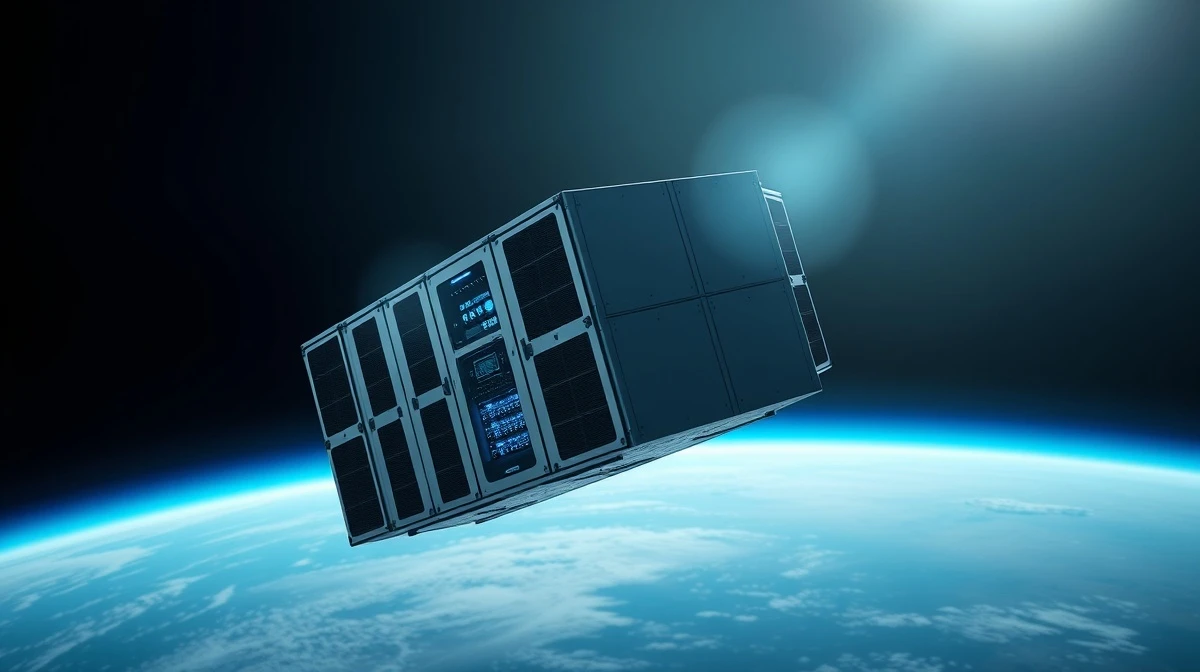
Google and SpaceX are in discussions to deploy data centers in orbit, according to a report from The Wall Street Journal citing sources familiar with the matter. The potential collaboration would place AI compute infrastructure in space, an idea that SpaceX CEO Elon Musk has promoted as cheaper to operate over the long term than terrestrial facilities.
Orbital data centers and the AI compute race
The talks come as SpaceX prepares for a highly anticipated initial public offering later this year, reportedly valued at $1.75 trillion. Part of the company’s pitch to investors is that orbital data centers could become the most cost-effective location for AI workloads within a few years. Google, which invested $900 million in SpaceX in 2015, is also reportedly in discussions with other rocket-launch companies about similar projects.
Also read: Potholes cost cities millions. This company is using AI and trucks to fix them.
The report follows SpaceX’s recent deal with Anthropic to use computing resources from xAI’s data center in Memphis, Tennessee. SpaceX acquired xAI in February. The agreement includes potential collaboration on orbital data centers in the future.
Project Suncatcher and Google’s space ambitions
Google has its own space-based computing initiative called Project Suncatcher, announced late last year. The company plans to launch prototype satellites by 2027. The orbital data center talks appear to align with that broader strategy, though the scope and timeline of any potential deal with SpaceX remain unclear.
Also read: Anthropic Warns Investors: Unauthorized Platforms Selling Its Shares Are Not Recognized
Advocates of space-based data centers argue they avoid the local opposition and regulatory hurdles that often delay ground-based data center construction in the United States. Musk has publicly claimed that orbital facilities can be cheaper to operate once launch and construction costs are amortized over time.
Cost realities and challenges
However, as TechCrunch recently reported, today’s terrestrial data centers remain significantly cheaper than orbital alternatives when satellite construction and launch costs are factored in. The economics of space-based compute depend heavily on reductions in launch costs, which SpaceX has achieved with its reusable rocket technology, but the upfront investment remains substantial.
Technical challenges also persist, including radiation hardening, thermal management in vacuum, and the latency inherent in transmitting data between Earth and orbit. For AI workloads that require real-time responsiveness, these factors could limit the types of applications suited to space-based processing.
Conclusion
The reported talks between Google and SpaceX represent a significant step toward commercializing orbital data centers, but the technology remains in early stages. Both companies have declined to comment. The outcome will depend on whether the long-term operational savings Musk promises can overcome the high upfront costs of building and launching infrastructure into space. TechCrunch has reached out to both companies for comment.
FAQs
Q1: Why would data centers be placed in orbit?
Proponents argue that orbital data centers can be cheaper to operate over time due to abundant solar energy, free cooling in space, and avoidance of local regulatory and community opposition that often delays terrestrial construction. They also offer a potential solution to the growing energy demands of AI compute.
Q2: What are the main challenges of orbital data centers?
The primary challenges include high upfront satellite construction and launch costs, radiation damage to electronics, thermal management in the vacuum of space, and data transmission latency. Current terrestrial data centers remain significantly cheaper than orbital alternatives.
Q3: When could orbital data centers become operational?
Google plans to launch prototype satellites by 2027 as part of Project Suncatcher. Any commercial orbital data center service would likely take years beyond that to develop, pending successful testing and cost reductions in launch infrastructure.