
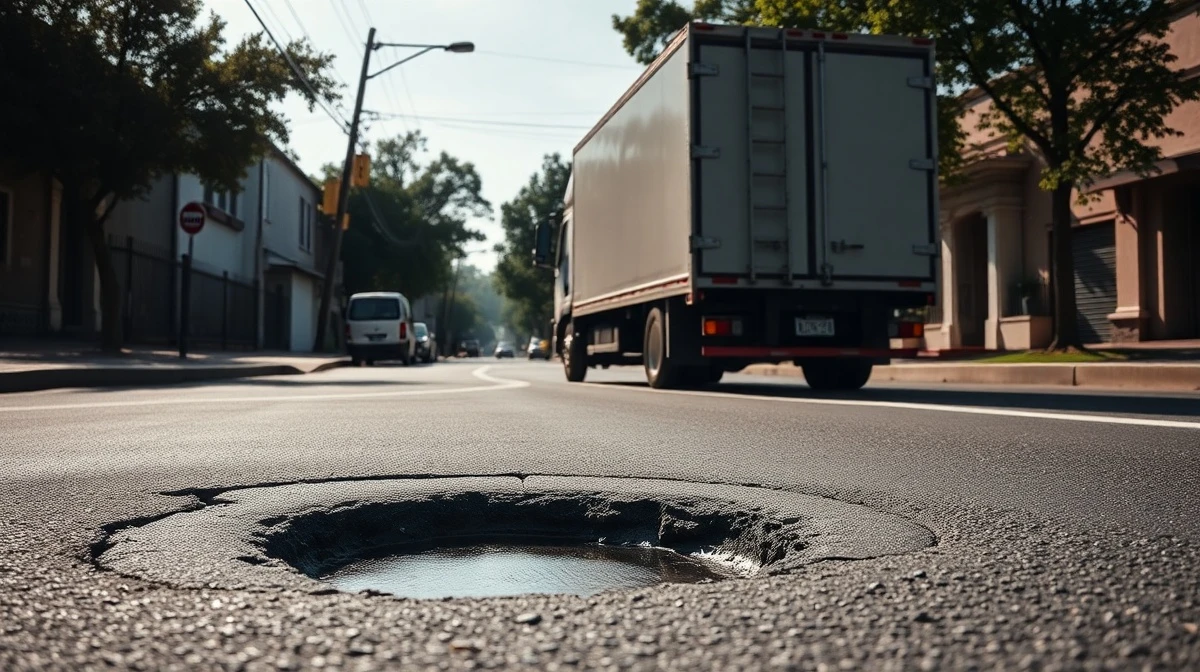
Potholes are more than a nuisance for drivers — they represent a significant financial drain on city budgets and a persistent infrastructure challenge. Last week, scooter company Lime listed potholes as an official risk factor in its IPO filing, underscoring how widespread the problem has become. While technology companies have long promised solutions, few have delivered scalable results. Now, fleet management firm Samsara is rolling out an AI-powered system it calls Ground Intelligence, designed to turn commercial trucks into roving infrastructure monitors.
How Ground Intelligence works
Samsara has spent the past decade equipping millions of trucks with cameras for driver monitoring, theft prevention, and liability management. The company has now trained a custom AI model on that vast dataset to detect multiple types of potholes and assess how quickly they are deteriorating. Unlike previous efforts that relied on limited fleets — Waymo’s robotaxi fleet, for example, numbers only about 3,000 vehicles — Samsara’s network of commercial trucks and vans is far more extensive, allowing for repeated passes over the same roads to track changes over time.
Also read: Corgi denies stealing open-source code after Papermark accuses it of copying Dataroom software
The system functions as a proactive dashboard. It populates a map with warnings about developing potholes and other infrastructure problems, and allows city officials to pull anonymized footage from vehicle cameras to verify citizen reports of downed street signs, clogged sewers, or broken guardrails. Samsara’s senior vice president of product, Johan Land, described the shift from reactive to proactive maintenance as the core value proposition.
Why this matters for cities
Municipalities typically rely on dispatching workers or sifting through hundreds of 311 calls to identify road hazards. This process is slow, noisy, and inefficient. Samsara’s pitch is that its system delivers clear signals from a large, existing fleet without requiring new hardware investments from cities. The company announced Tuesday that multiple cities have signed contracts, with Chicago joining as a new customer. Land noted that the platform enables cities to plan repairs strategically — fixing multiple potholes in a single sweep rather than responding to complaints one at a time.
Also read: Notion Mail to shut down in September as users hand email over to AI agents
Beyond potholes: expanding the platform
Ground Intelligence is designed as a foundation for broader municipal monitoring. Future capabilities could include detecting graffiti, low-hanging power lines, or other observable issues relevant to both public and private sectors. Samsara also announced Waste Intelligence, a product that helps waste management companies confirm pickup completion, and a ridership management offering that alerts bus drivers to unexpected boarding events and creates digital manifests for school buses.
Implications for smart city infrastructure
The approach represents a shift in how cities can use existing commercial vehicle networks for infrastructure monitoring. Rather than deploying dedicated inspection fleets, municipalities can tap into data streams already generated by delivery trucks, service vans, and other commercial vehicles. This model could lower the cost of road maintenance and improve response times. However, questions remain about data privacy, the accuracy of AI detection in varied weather and lighting conditions, and the long-term cost of subscription-based city services.
Conclusion
Samsara’s Ground Intelligence system turns a longstanding urban problem into an opportunity for data-driven infrastructure management. By repurposing cameras already installed in commercial trucks, the company offers cities a scalable, proactive tool for road maintenance. With Chicago on board and additional features in development, the platform could reshape how municipalities monitor and maintain public assets — provided the technology proves reliable and cost-effective at scale.
FAQs
Q1: What is Samsara Ground Intelligence?
A: It’s an AI-powered system that uses cameras already installed in commercial trucks to detect potholes and other infrastructure issues, then alerts city officials via a dashboard.
Q2: How is this different from Waymo’s pothole detection pilot?
A: Waymo’s fleet is limited to about 3,000 robotaxis, while Samsara’s network includes millions of commercial trucks and vans, providing more frequent and repeat data from the same locations.
Q3: Which cities are using Ground Intelligence?
A: Samsara announced multiple cities under contract, with Chicago joining as a new customer. Additional municipal partners were not disclosed.

