
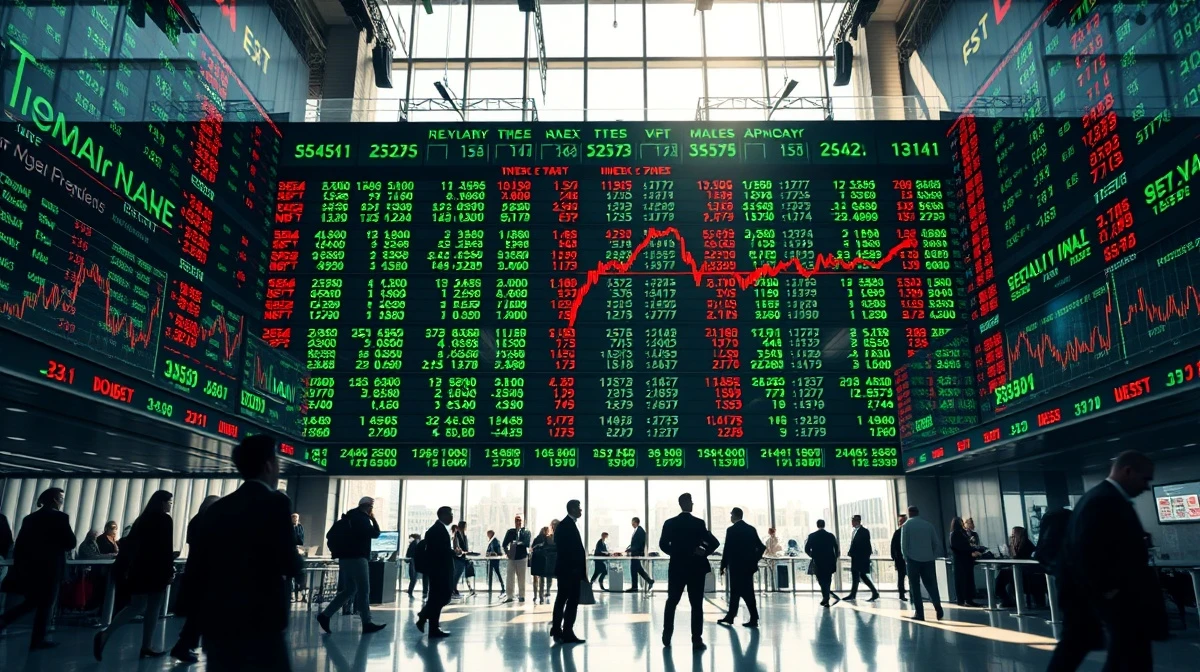
Six months ago, investors entered 2026 with cautious optimism, expecting the Federal Reserve to begin cutting interest rates by midyear. Instead, inflation proved stickier than anticipated, and the central bank held its benchmark rate steady at 4.50% through the June meeting. As the calendar flips to July, the S&P 500 has gained roughly 9% since January 1, but the ride has been anything but smooth.
The Fed’s patience tests Wall Street’s patience
The dominant narrative of the first half has been the Federal Reserve’s refusal to pivot. Despite market pricing in three quarter-point cuts by December, the Fed has signaled it needs to see more sustained progress on inflation, particularly in services and shelter costs. The core PCE index, the Fed’s preferred gauge, has hovered around 2.8% — above the 2% target. Fed Chair Jerome Powell, speaking at the May press conference, said the committee is “prepared to maintain the current stance for as long as needed.”
Also read: Canada's Q2 GDP Rebound Expected to Show Strength, but RBC Warns of 'Headwinds' Ahead
This has kept bond yields elevated, with the 10-year Treasury yield oscillating between 4.1% and 4.5%. For equity markets, the message is clear: the era of cheap money is not returning in 2026. Growth stocks, particularly in the tech sector, have absorbed this better than most, but rate-sensitive sectors like regional banking and real estate have lagged.
AI stocks extend their dominance — but cracks appear
The AI-driven rally that defined 2024 and 2025 continued into 2026, with the so-called “Magnificent Seven” stocks — Apple, Microsoft, Alphabet, Amazon, Nvidia, Meta, and Tesla — accounting for a disproportionate share of the S&P 500’s gains. Nvidia alone surged another 35% in the first half, driven by data center demand and its new Blackwell GPU architecture. As Reuters reported, Nvidia’s data center revenue exceeded $30 billion in its most recent quarter, up 60% year-over-year.
Also read: BNY: Fed has legal power to backstop corporate credit, but Warsh-era intervention bar is high
Yet there are warning signs. Valuations have stretched: the S&P 500’s forward P/E ratio sits at 22.5, well above its 10-year average of 18.5. A handful of analysts have begun to question whether the AI trade has become crowded. In May, a profit warning from a lesser-known AI hardware supplier triggered a brief 4% selloff in the sector, a reminder that momentum can reverse quickly.
Crypto volatility returns with a vengeance
Cryptocurrency markets provided some of the most dramatic moves of the half. Bitcoin hit an all-time high of $118,000 in March, fueled by continued institutional adoption and the launch of new spot ETFs in Asia. But by late April, a regulatory crackdown in the European Union — specifically around stablecoin reserves — and a leveraged liquidation event sent Bitcoin tumbling to $82,000, a 30% drawdown. As of late June, it has recovered to around $95,000.
Ethereum, meanwhile, underperformed, gaining only 12% over the period. The divergence highlights a market increasingly focused on regulatory clarity and utility, rather than pure speculation. The SEC’s ongoing litigation with several major exchanges remains a cloud over the sector.
Global trade and commodities reshape the map
Geopolitics returned as a major market driver. The ongoing trade friction between the U.S. and China escalated in March, when Washington imposed new tariffs on Chinese semiconductors and electric vehicles. Beijing retaliated with export controls on rare earth minerals, sending prices of key materials like neodymium and dysprosium up 20% in April. This has benefited mining stocks but pressured manufacturers reliant on these inputs.
Oil prices remained volatile, with Brent crude averaging $82 a barrel, caught between OPEC+ production cuts and concerns about global demand slowing. Gold, a traditional safe haven, reached $2,450 per ounce in May, reflecting investor anxiety about inflation and geopolitical instability.
What the second half holds
The second half of 2026 is likely to be defined by three questions: Will the Fed finally cut rates? Can AI earnings justify their valuations? And how will the U.S. midterm elections in November affect fiscal policy and market sentiment? The CBOE Volatility Index (VIX), currently around 17, suggests markets are pricing in moderate uncertainty — not panic, but not complacency either.
For long-term investors, the first half of 2026 has reinforced a classic lesson: markets reward patience and diversification. Chasing the hottest sector — whether AI or crypto — can yield outsized returns, but only if you time the exits correctly. The second half may test that discipline again.
Frequently Asked Questions
What was the biggest market surprise in the first half of 2026?
The biggest surprise was the persistence of inflation, which forced the Federal Reserve to delay expected rate cuts, keeping interest rates higher for longer than many investors anticipated.
Which sectors performed best in the first half of 2026?
Technology and AI-related stocks led gains, with the Nasdaq Composite outperforming the S&P 500. Energy and defensive sectors also held up well amid geopolitical uncertainty.
How did cryptocurrency markets behave in early 2026?
Cryptocurrency markets experienced high volatility, with Bitcoin briefly touching new highs before a sharp correction in April, driven by regulatory news and shifts in liquidity.
What should investors watch in the second half of 2026?
Investors should monitor Fed policy signals, corporate earnings from AI leaders, global trade developments, and the upcoming U.S. midterm elections, which could impact fiscal policy.
Is the AI stock rally sustainable?
Analysts are divided. While AI adoption continues to accelerate, valuations are elevated. The sustainability depends on earnings delivery and the pace of real-world AI integration across industries.

