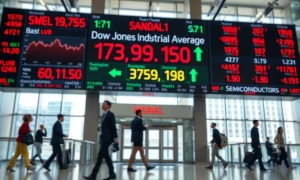
NEW YORK, March 11, 2026 — Global financial markets displayed divergent reactions today as the International Energy Agency announced an remarkable release of 400 million barrels from member nations’ strategic petroleum reserves. The coordinated action, aimed at stabilizing energy markets roiled by escalating conflict in the Middle East, triggered a complex response across equity indices. The S&P 500 Index ($SPX) edged up +0.20%, while the Dow Jones Industrial Average ($DOWI) declined -0.26%. The technology-heavy Nasdaq 100 Index ($IUXX) gained +0.46%, demonstrating the sector-specific nature of today’s market movements. This historic intervention surpasses the IEA’s previous 2022 reserve release and comes amid renewed volatility in the Strait of Hormuz, where three commercial vessels sustained missile damage earlier today.
Exceptional IEA Action to Counter Supply Disruptions
The International Energy Agency’s governing board authorized the emergency release during an unscheduled meeting in Paris this morning. The 400 million barrel figure represents approximately 4% of global daily consumption and marks the largest coordinated release in the organization’s 52-year history. IEA Executive Director Dr. Fatih Birol stated the action addresses “acute physical supply disruptions” stemming from the Iran conflict, which has threatened transit through critical chokepoints. The release will occur over the next 60 days, with the United States contributing 180 million barrels from its Strategic Petroleum Reserve. Meanwhile, European and Asian members will supply the remainder. This decision follows emergency consultations with OPEC+ nations, who declined to increase production quotas at their March 5 meeting.
Also read: Senator Warren Urges SEC to Block SpaceX IPO Ahead of Historic Listing
Energy analysts immediately noted the release’s scale. “The 400 million barrel volume signals genuine concern about systemic risk to global energy flows,” observed Samantha Chen, Senior Commodity Strategist at Energy Analytics Group. “Previous releases in 2011 and 2022 totaled 60 million and 180 million barrels respectively. Today’s action is of a different magnitude entirely.” The announcement temporarily pushed Brent crude futures down by $3.50 per barrel in early trading, though prices recovered half those losses by midday as traders assessed the conflict’s ongoing impact on physical shipments.
Market Reactions: Tech Strength Offsets Energy and Broader Concerns
Equity markets parsed multiple competing signals throughout the trading session. Technology shares, particularly those linked to artificial intelligence infrastructure, rallied strongly. Oracle surged more than 12% after reporting sturdy earnings and issuing optimistic guidance centered on AI computing demand. This news lifted the broader software sector, with Crowdstrike and Datadog both gaining over 3%. Semiconductor stocks followed, with Intel and Advanced Micro Devices advancing more than 2%. Consequently, the “Magnificent Seven” megacap technology cohort traded mostly higher, led by Tesla and Nvidia.
Also read: Dow trails chip rebound as CPI data looms over market
- Sector Divergence: While technology rallied, traditional energy stocks like Marathon Oil and Occidental Petroleum gained over 2%, benefiting from the day’s earlier oil price spike. Consumer staples faced pressure, with Campbell’s sinking 3% after cutting guidance.
- Inflation Data Neutral: The February Consumer Price Index report matched expectations exactly, showing headline inflation at +2.4% year-over-year and core inflation at +2.5%. Markets largely treated this as “old news,” with greater focus on future inflationary pressures from elevated energy costs.
- Credit Market Headwinds: JPMorgan Chase’s announcement that it is restricting lending to private credit funds introduced a cautionary note, highlighting stress in the $1.8 trillion private credit sector as investors exit amid unattractive returns.
Expert Analysis: Conflicting Signals Create Trading Choppiness
Market strategists emphasized the conflicting narratives driving Wednesday’s price action. “You have a powerful bullish impulse from the AI investment cycle colliding with renewed geopolitical risk and monetary policy uncertainty,” explained Michael Torres, Chief Investment Officer at Horizon Capital Advisors. “The IEA release is a meaningful supply-side response, but it doesn’t resolve the underlying conflict or its potential to escalate.” Torres noted that the 10-year Treasury yield’s rise to 4.183% reflects persistent inflation concerns, despite the CPI reading nearing five-year lows. Furthermore, the private credit sector’s troubles, as signaled by JPMorgan’s lending pullback, suggest broader financial stress that could eventually spill into public markets.
Historical Context and Strategic Reserve Mechanics
Today’s action invites comparison to previous strategic releases. The IEA has coordinated emergency responses only four times in its history: during the 1991 Gulf War, after Hurricanes Katrina and Rita in 2005, following the 2011 Libyan civil war, and in response to Russia’s 2022 invasion of Ukraine. The 2022 release, previously the largest at 180 million barrels, helped cap prices but drew down inventories to multi-decade lows. The current U.S. Strategic Petroleum Reserve sits at approximately 450 million barrels, its lowest level since 1984, raising questions about future buffer capacity.
| IEA Coordinated Release | Year | Volume (Million Barrels) | Trigger Event |
|---|---|---|---|
| Current Action | 2026 | 400 | Iran Conflict & Strait of Hormuz Disruptions |
| Previous Largest | 2022 | 180 | Russia’s Invasion of Ukraine |
| Third Largest | 2011 | 60 | Libyan Civil War |
| Gulf War Release | 1991 | Not Publicly Quantified | Operation Desert Storm |
The mechanics of the release involve both direct sales to refiners and coordinated exchanges where companies borrow crude, pledging to return higher-quality oil later. The U.S. Department of Energy will conduct its portion through a combination of these methods. Analysts at ClearView Energy Partners estimate the total release could offset roughly 45 days of disrupted Iranian exports, assuming current conflict levels persist.
Forward Outlook: Monitoring Conflict and Inflation Trajectories
The immediate market focus shifts to two unfolding timelines. First, the military situation in the Middle East will determine whether supply disruptions are transient or sustained. Second, central bank reactions to the inflationary impact of higher energy prices will shape monetary policy. The Federal Open Market Committee meets March 17-18, with markets currently discounting a 0% chance of a rate cut. The European Central Bank meets March 19, with swaps pricing only a 4% chance of a hike. “The Fed is in a bind,” noted Dr. Lisa Reynolds, former Federal Reserve economist now with the Brookings Institution. “Core inflation is nearing target, but energy-led headline inflation could reverse progress. They’ll likely maintain a hawkish pause, emphasizing data dependence.”
Industry and Geopolitical Reactions
Reactions from energy-producing nations were muted but pointed. Saudi Energy Minister Prince Abdulaziz bin Salman, in a brief statement, reiterated that “OPEC+ remains focused on market stability.” European leaders, including German Chancellor Scholz, welcomed the IEA action as a necessary step to protect consumers. Meanwhile, shipping insurance premiums for vessels transiting the Persian Gulf have increased 300% this week, according to Lloyd’s of London, reflecting the tangible commercial impact of the conflict. The White House confirmed President Harris was briefed on the IEA decision and supports the multilateral approach.
Conclusion
March 11, 2026, encapsulates the complex interplay between geopolitics, energy markets, and equity valuations. The historic IEA oil reserve release provided a substantial supply-side response to Middle East disruptions, yet stock markets reacted with mixed signals as technology strength battled broader economic concerns. The divergent performance between the Dow, S&P, and Nasdaq underscores how sector-specific narratives, particularly the AI investment boom, can decouple from macro headwinds. Investors should monitor two key developments: the physical flow of oil through the Strait of Hormuz and central bank communications regarding the inflationary impact of sustained energy price pressures. While the strategic reserve release acts as a critical buffer, it does not constitute a permanent solution to the underlying regional conflict driving market volatility.
Frequently Asked Questions
Q1: What exactly did the International Energy Agency announce on March 11, 2026?
The IEA authorized a coordinated release of 400 million barrels of oil from the strategic petroleum reserves of its 31 member countries. This is the largest such release in history, aimed at stabilizing markets disrupted by conflict in the Middle East.
Q2: Why did stock markets have a mixed reaction instead of rallying uniformly?
Markets processed conflicting signals: the positive supply shock from the IEA versus ongoing geopolitical risk, concerns about future inflation from elevated energy prices, and stress in the private credit sector. Technology stocks rallied on strong AI demand, while broader indices faced pressure.
Q3: How does this 2026 release compare to previous IEA actions?
It is more than double the previous record of 180 million barrels released in 2022 following Russia’s invasion of Ukraine. The 2026 release represents a more aggressive response to what the IEA perceives as a severe threat to global energy security.
Q4: Will this release cause gasoline prices to fall for consumers?
It should apply downward pressure on global crude benchmarks, which typically translates to lower pump prices with a lag of several weeks. However, the effect could be muted if the Middle East conflict worsens and causes further physical supply disruptions.
Q5: What is the current status of the U.S. Strategic Petroleum Reserve after this release?
The U.S. will contribute 180 million barrels, reducing its SPR inventory to approximately 270 million barrels—the lowest level since the early 1980s. This raises long-term questions about the nation’s emergency buffer against future crises.
Q6: What should investors watch next following this news?
Key indicators include: 1) developments in the Middle East conflict, particularly shipping traffic through the Strait of Hormuz, 2) weekly U.S. oil inventory data, 3) central bank commentary ahead of the March FOMC and ECB meetings, and 4) earnings reports from major energy companies for guidance on production plans.