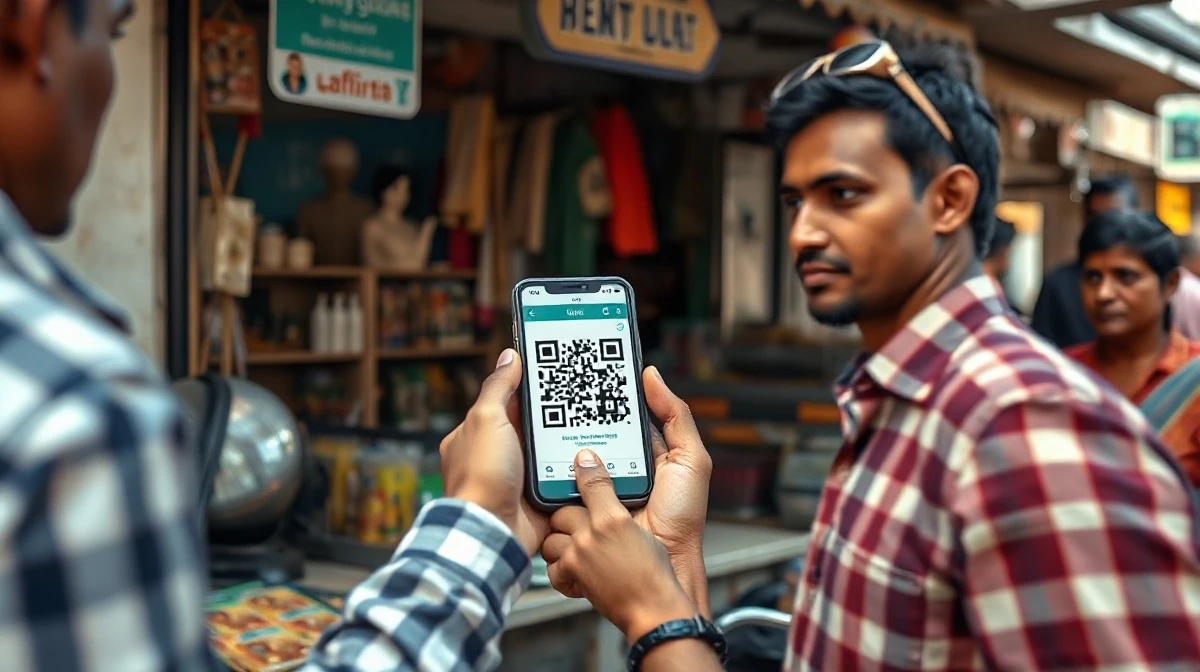
India has introduced legislation that lays the legal groundwork for charging merchants on Unified Payments Interface (UPI) transactions, a move that could end the zero-merchant-discount-rate (MDR) regime that has been in place since January 2020. The bill, published as a PDF by the government, does not itself set any fees or specify which transactions would be affected, but it opens the door for a significant overhaul of how the country’s dominant payments network is funded.
The timing is notable: UPI processed a record 23.66 billion transactions worth ₹29.88 trillion (around $313.4 billion) in July alone, according to the National Payments Corporation of India (NPCI), the network’s operator. That scale has intensified long-running tensions between the finance ministry, the Reserve Bank of India, and payment companies over how to sustain a system that has become nearly free for merchants to use.
Also read: Natural Gas Futures Rise 0.55% as EIA Storage Build Falls Below Forecast
Why the zero-MDR policy is under pressure
India scrapped merchant discount rates on UPI in January 2020 to accelerate adoption, relying on state incentives to support the network’s operation and development. The policy worked: UPI is now ubiquitous in Indian retail, from street vendors to large e-commerce platforms. But banks and fintech firms have argued that keeping merchant payments free has become harder to sustain as transaction volumes and infrastructure costs have climbed.
“For us to get to 90% penetration, and to take UPI global, startups, fintechs and banks will need to fund this expansion through continued investments in IT, innovation and cyber security,” Amrish Rau, chief executive of fintech firm Pine Labs, wrote on X, welcoming the move. Rau said allowing the industry to recover part of those investments from merchants while keeping consumer and peer-to-peer payments free would put UPI on a more sustainable footing.
Also read: Crude Falls 2.9% as IEA Warns of Biggest Oil Demand Drop Since Covid
The legislation follows years of debate over how to fund the network. Banks have long complained that they bear the cost of processing UPI transactions without receiving a merchant fee, while fintechs argue that the current model limits their ability to invest in new features and security.
What the new law could mean for the payments industry
The legislation does not impose merchant fees or specify which transactions would be affected, leaving those details to be specified later. Market analysts, however, believe it could mark the first step toward a significant new revenue stream for India’s payments industry.
In a report published on Tuesday, Jefferies estimated that introducing merchant charges on higher-value UPI transactions could generate an additional ₹50 billion to ₹100 billion (about $525 million to $1.05 billion) in annual revenue by fiscal 2028, assuming a fee of 15–30 basis points. The Indian daily Economic Times reported last month that officials were considering limiting any merchant charges to larger merchants rather than applying them across all UPI transactions.
In a report last week, brokerage firm Bernstein wrote that such an approach would preserve UPI’s consumer-friendly model while creating a meaningful new revenue pool for banks and payment companies. The report noted that transactions above ₹2,000 (about $21) account for only about 4% of payment volumes but nearly 70% of transaction value — a concentration that makes a targeted fee both politically and economically viable.
Who stands to gain — and what to watch
The legislation will be closely watched by countries where UPI is now live, including Singapore, the United Arab Emirates and France. If India moves ahead with merchant fees, it could set a precedent for how the network is funded internationally.
Domestically, the law could be particularly significant for the companies that dominate India’s digital payments market. Walmart-owned PhonePe and Alphabet’s Google Pay together account for nearly 80% of UPI transaction volumes, according to NPCI data. However, how much either company ultimately benefits will depend on how any merchant fees are distributed among banks, payment apps, and other participants in the ecosystem.
For merchants, the key question is whether fees will be limited to larger businesses or eventually extended to smaller ones. For consumers, the legislation appears designed to keep UPI free for person-to-person transfers and small-ticket purchases. The details, when they come, will determine whether this marks the end of UPI’s free-for-merchants era — or just a carefully targeted adjustment.
This article is for informational purposes only and does not constitute financial advice. Digital payments and cryptocurrency markets are volatile and uncertain; readers should conduct their own research before making any financial decisions.

Source: TechCrunch