Japanese space startup Letara has raised ¥2.6 billion (approximately $16 million) to expand beyond its core satellite thruster business and develop large hybrid rocket systems for the space, defense, and security markets, the company’s co-CEO Shota Hirai told TechCrunch. The Sapporo-based company, spun out of Hokkaido University in 2020, is capitalizing on Japan’s broader push to build a domestic aerospace sector with global reach, backed by billions of dollars in government investment and eased defense export restrictions.
The funding round was co-led by Headline Asia, JIC Venture Growth Investment, and Incubate Fund, with participation from strategic investors including NES Corporation, an energy company; Toyoda Gosei, a Toyota Group supplier of rubber and plastic automotive components; and Frontier Innovations, a Greece-based IT company specializing in data analytics and business intelligence.
Also read: Apollo Global Management confirms data breach after social engineering attack on cloud systems
“With this round, we will go beyond demonstrating that thruster in space,” Hirai said. “We plan to explore a much wider set of use cases across both the space domain and the defense and security domain, and to develop and propose hybrid rocket systems suited to each of them.”
Hybrid rocket technology: plastic and rubber as fuel
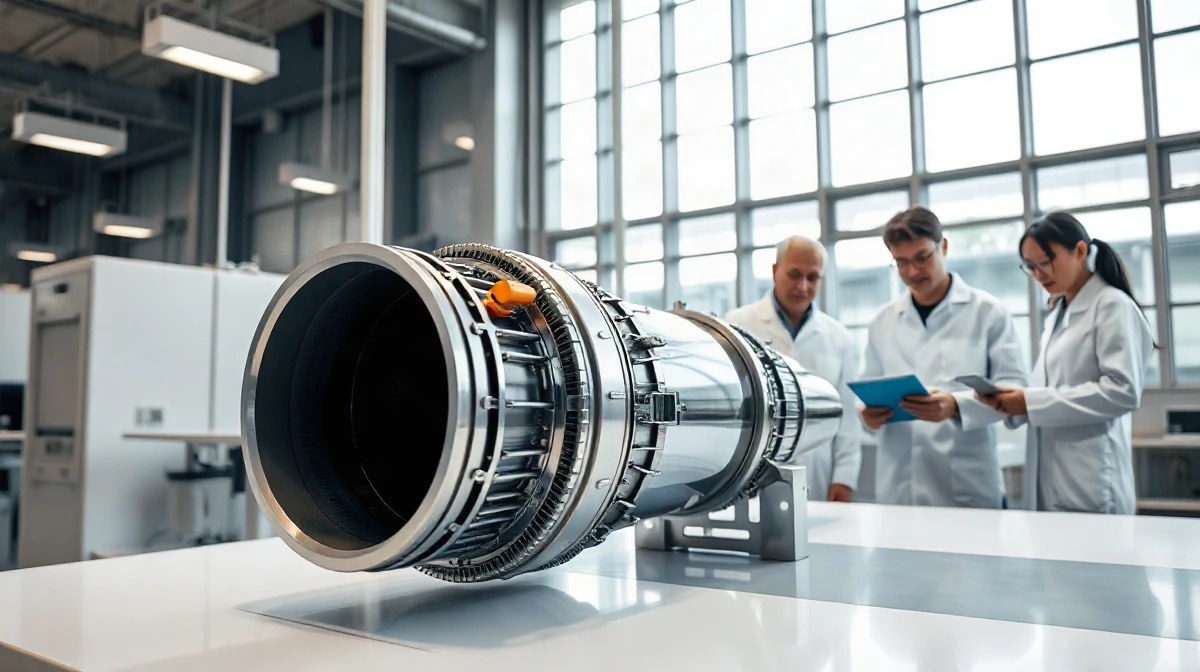
At the heart of Letara’s technology is a hybrid rocket design that keeps its solid fuel separate from the liquid oxidizer needed for combustion. The company uses inexpensive, widely available materials such as plastic and rubber as solid fuel, and has developed a proprietary manufacturing process that mixes, shapes, and compresses these materials to ensure they ignite reliably and burn consistently.
Also read: Calendly launches AI meeting note-taker, plans Callie assistant to automate post-meeting work
The result, according to the company, is a system that can deliver more thrust with less waste than traditional hybrid rockets that often rely on expensive paraffin wax. Hirai said the aim is to solve three problems that have historically limited the use of hybrid propulsion: generating sufficient thrust, maintaining performance, and controlling combustion.
The global hybrid rocket propulsion market is projected to expand to $2.6 billion by 2032, up from $848 million in 2024, a compound annual growth rate of 15%, according to industry estimates cited by the company. That trajectory points to growing demand for the technology, but Letara is not alone in pursuing it.
Competitors include Japan’s Interstellar Technologies, China’s Galactic Energy, South Korea’s InnoSpace, and Singapore’s Equatorial Space, as well as German startup HyImpulse and Australian Gilmour Space. Several U.S. companies are also developing competing propulsion and launch systems.
From academic roots to defense and launch ambitions
Letara’s origins trace back to Hokkaido University, where co-CEOs Landon Thomas Kamps and Hirai researched rocket propulsion. They believed the relative safety and simplicity of hybrid rockets could make the technology useful beyond traditional space programs, particularly as private companies expanded into the industry.
When Letara was spun out in 2020, it focused on developing satellite thrusters. Since then, the global propulsion market has become more crowded as demand for launch and defense capabilities has grown. Letara is now pursuing opportunities in defense contracts and launch services, positioning itself to compete not just with other Japanese startups but with companies worldwide.
“Large spacecraft need high thrust propulsion as well, especially when they need to go from LEO (low earth orbit) to GEO (geostationary orbit) and get through the high radiation Van Allen belt quickly,” Hirai said. “And of course, there is insane growing demand for launch vehicles.”
Letara is targeting satellite makers and operators, launch companies, and governments. It sees commercial satellites as its biggest market for in-space propulsion, while government demand for rocket systems is growing, particularly in Japan. The company says it has already won orders from rocket and satellite companies as well as the Japanese government, although it did not disclose the value of those contracts.
What’s next: in-orbit test and manufacturing scale-up
Letara’s next major milestone is an in-orbit firing test with an overseas partner, which the company sees as a key step toward commercialization. It will also need to establish a repeatable manufacturing process, backed by quality controls, and a reliable supply chain for fuel and tanks that can support production at scale.
Asked whether recycled plastic could eventually be used as fuel, Letara said it was “very much a possibility” with its hybrid technology, though more testing and development would be needed.
The company’s expansion comes as Japan pours billions into its space industry and eases restrictions on defense exports, efforts designed to build a homegrown aerospace sector filled with domestic startups that have global reach. For Letara, the new funding provides runway to move from years of academic research and demonstrations into a commercial business — and to compete on a global stage.