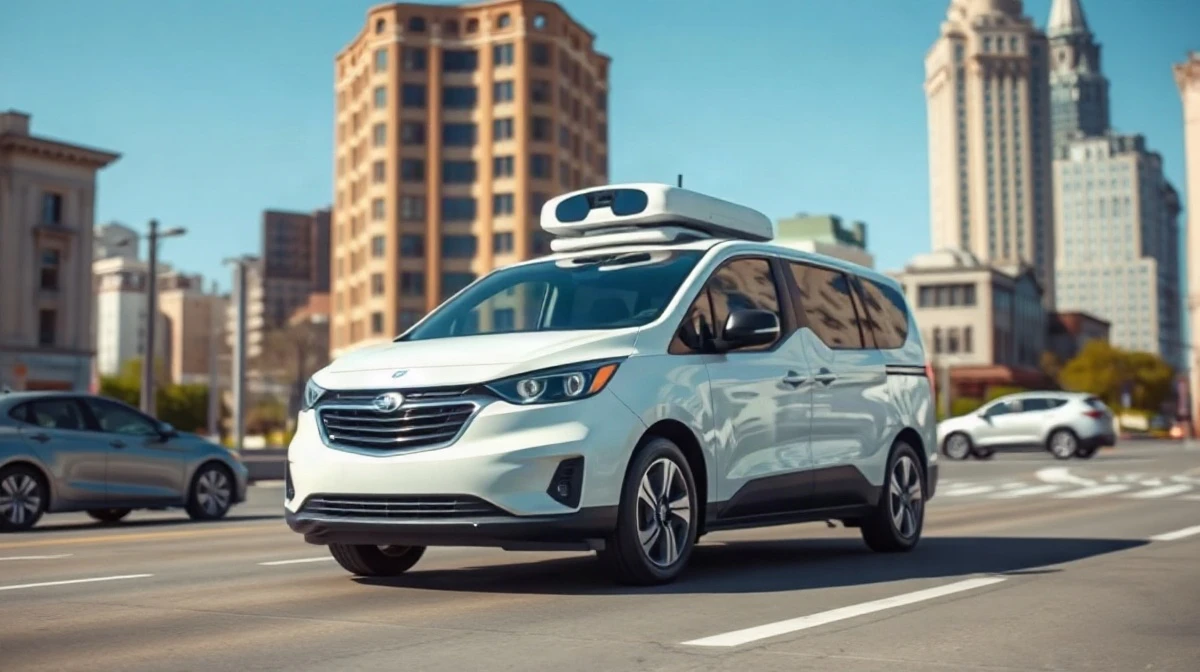
Waymo has officially opened its next-generation Ojai robotaxi to all riders in Los Angeles, Phoenix, and San Francisco, marking a major step in the Alphabet company’s push to scale its autonomous ride-hailing service with a more cost-efficient vehicle. The Ojai, pronounced “oh-hi,” is now being matched to riders in these markets, and Waymo says it will eventually let customers choose between the new vehicle and its existing Jaguar I-Pace robotaxis once the fleet grows large enough.
Waymo currently operates about 300 Ojai robotaxis in its commercial fleet, according to a company spokesperson. The company announced Wednesday that it plans to roll out the Ojai in Denver, Las Vegas, and San Diego later this year, broadening its reach beyond the three initial cities.
Also read: Apple Simplifies EU App Store Fees, Drops Core Technology Fee in Favor of Flat 5% Commission
A strategic shift from Jaguar to Zeekr
For years, Waymo has relied on the all-electric, modified Jaguar I-Pace for its robotaxi fleet, which now operates in 11 U.S. cities. The white, sensor-laden hatchback has become a familiar sight in cities like San Francisco, but it has always been more of a stopgap in Waymo’s longer-term strategy to achieve mass scale and profitability.
The Ojai is designed to deliver on that ambition. It is equipped with Waymo’s sixth-generation self-driving system, which is modular and intended to work across multiple vehicle types. The robotaxi also comes with a redesigned user interface and Google’s Gemini AI, which acts as an in-car assistant for riders, answering questions and providing information during trips.
Also read: Einride to add 500 Tesla Semis to its fleet in major electric truck expansion
Beneath the technology, the Ojai is a minivan made by Zeekr, a brand owned by China’s Geely Holding Group. Waymo partnered with Zeekr in 2021 and has spent years testing a prototype and later a production-intent version of the vehicle. It is built on Zeekr’s SEA-M platform, an updated version of the automaker’s “Sustainable Experience Architecture,” designed specifically for vehicles like robotaxis and delivery vans.
Tariffs and the cost challenge
The goal was to create a robotaxi that is attractive and easy for riders to access, but also cheap to build and maintain, and durable enough to withstand near-constant use. The Ojai delivers on many of those goals, though tariffs on imported vehicles have added cost. Under current U.S. trade policy, vehicles built in China face steep import tariffs, which raises Waymo’s costs for every Ojai it brings into the country.
To mitigate this, the base Zeekr vehicles ship without any Chinese connected-car technology on board. After arriving in the U.S., they are sent to Waymo’s Arizona factory, where they are outfitted with the self-driving system. This approach helps address some regulatory and security concerns while still using Zeekr’s manufacturing efficiency.
New York-based research firm MoffettNathanson, which tracks Ojai imports by examining detailed receipts of shipped goods, said Waymo is on pace to bring 5,000 Ojai vehicles to the United States by the end of 2026. That would be more than double Waymo’s current Jaguar fleet, according to the firm. In July alone, 725 Ojai vehicles entered the country, underscoring the scale and pace of Waymo’s expansion efforts.
What this means for riders and the industry
For riders, the Ojai offers a more modern and spacious interior compared to the Jaguar I-Pace, with a redesigned interface that leverages Gemini AI for a more interactive experience. The vehicle’s minivan design also provides easier entry and exit, which could appeal to a broader range of passengers, including families and those with mobility challenges.
For the autonomous vehicle industry, Waymo’s move signals a shift toward purpose-built robotaxis over retrofitted consumer vehicles. The modular sixth-generation system is designed to be adaptable, potentially allowing Waymo to partner with other automakers in the future. The company’s aggressive import pace also suggests it is preparing for a significant fleet expansion, which could intensify competition with other AV operators like Cruise and Zoox.
As Waymo continues to scale, the success of the Ojai will be a key indicator of whether its strategy of partnering with Chinese manufacturers can overcome tariff hurdles and deliver on the promise of affordable, reliable autonomous transportation. The company’s ability to manage costs while maintaining safety and service quality will be critical as it moves toward profitability.
Disclaimer: This article is for informational purposes only and does not constitute financial advice. The autonomous vehicle industry is subject to regulatory changes, market volatility, and operational risks. Readers should conduct their own research before making any investment decisions.