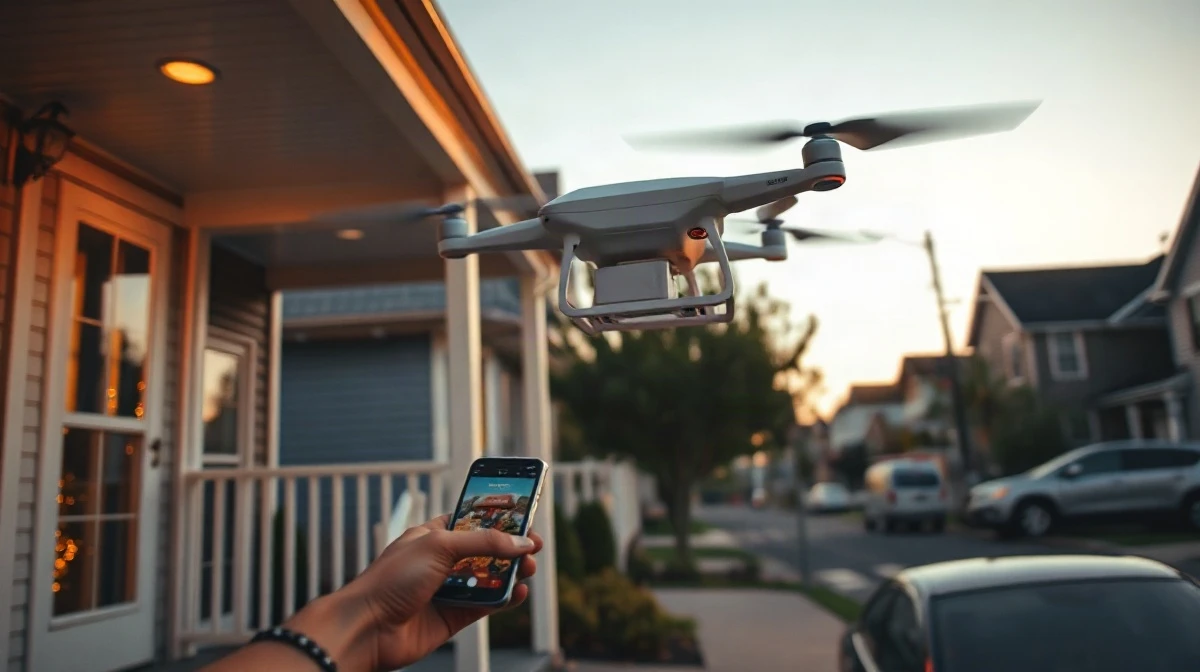
Uber announced a strategic partnership and investment in drone delivery company Zipline on Monday, with the ambitious goal of fulfilling one million deliveries per day using the startup’s autonomous aircraft by the end of 2029. The companies said the first Zipline drone deliveries on the Uber Eats platform will begin before the end of this year, starting in markets where Zipline already operates before expanding to what they described as “dozens of U.S. cities.” The financial terms of Uber’s investment were not disclosed.
Uber CEO Dara Khosrowshahi framed the partnership as a major growth lever for the food delivery business, telling the Wall Street Journal that “truly quick commerce is proving to be an even bigger market than the original food market was.” He added that the company believes drone delivery “can be an enormous tailwind for the next leg of growth for Eats.”
Also read: Kyoto Fusioneering starts building fusion fuel breeding prototype at Oak Ridge
Uber’s platform playbook expands to the skies
The deal is the latest example of Uber’s strategy of aggregating autonomous vehicle technology providers onto its platform rather than building its own hardware. The company has committed more than $10 billion to dozens of autonomous vehicle companies, a model that has allowed it to remain a central player in self-driving technology even after selling off its own Uber Advanced Technologies Group in 2020.
This approach extends to drone delivery. Uber first explored the concept with its now-defunct Elevate division, which focused on aerial ride-sharing before being shuttered. The company re-entered the space late last year through a partnership and minor investment in Israeli startup Flytrex. The Zipline deal, however, represents a significantly larger commitment and a more concrete path to scale.
Also read: Rivian CEO RJ Scaringe to Detail R2 Launch, Autonomy Push, and Humanoid Robotics at Disrupt 2026
Zipline, which is based in San Francisco, recently closed an extended Series H funding round of $800 million, bringing its valuation to $7.6 billion. The company has built its reputation delivering medical supplies in Rwanda and Ghana before expanding into commercial food and retail delivery in the U.S.
What this means for the quick commerce race
The partnership signals that Uber is treating drone delivery as a core part of its competitive response in the rapidly evolving quick commerce sector, where companies compete to deliver goods in increasingly short timeframes. Khosrowshahi’s comments suggest Uber views sub-ten-minute delivery as a distinct and potentially larger market than traditional restaurant food delivery.
“Every great transportation revolution has changed where people live, how businesses operate, and how economies grow,” Zipline co-founder Keller Cliffton said in a statement. “Together with Uber, we’re taking the next step toward building a world where getting what you need is as fast and effortless as sending a text, no matter where you are.”
The strategy is not without friction, however. Uber has recently clashed with Waymo, one of its most prominent autonomous vehicle partners, and the two companies are now expected to part ways when their current contracts expire in 2028. They have also taken opposing positions on autonomous vehicle regulation, a dynamic that could complicate Uber’s multi-partner approach in the drone sector as well.
For now, the immediate focus is on execution. The companies will need to manage Federal Aviation Administration regulations, local airspace rules, and the operational challenges of integrating drone deliveries into a logistics network built around human couriers. The five-to-ten-minute delivery window Zipline is targeting would represent a significant shift in consumer expectations for food delivery, which currently averages 30 to 40 minutes in most U.S. markets.
Observers will be watching the initial rollout in Zipline’s existing markets to gauge consumer reception, delivery reliability, and whether the economics of drone delivery can work at scale. The 2029 target of one million daily deliveries would represent a substantial portion of Uber Eats’ current order volume, underscoring the company’s conviction that autonomous flight will become a mainstream delivery method within the next few years.
This article discusses a business partnership and its stated growth targets. Projections about future delivery volumes are company announcements, not guarantees, and the drone delivery market remains subject to regulatory and operational uncertainties. This content is for informational purposes only and does not constitute financial advice.