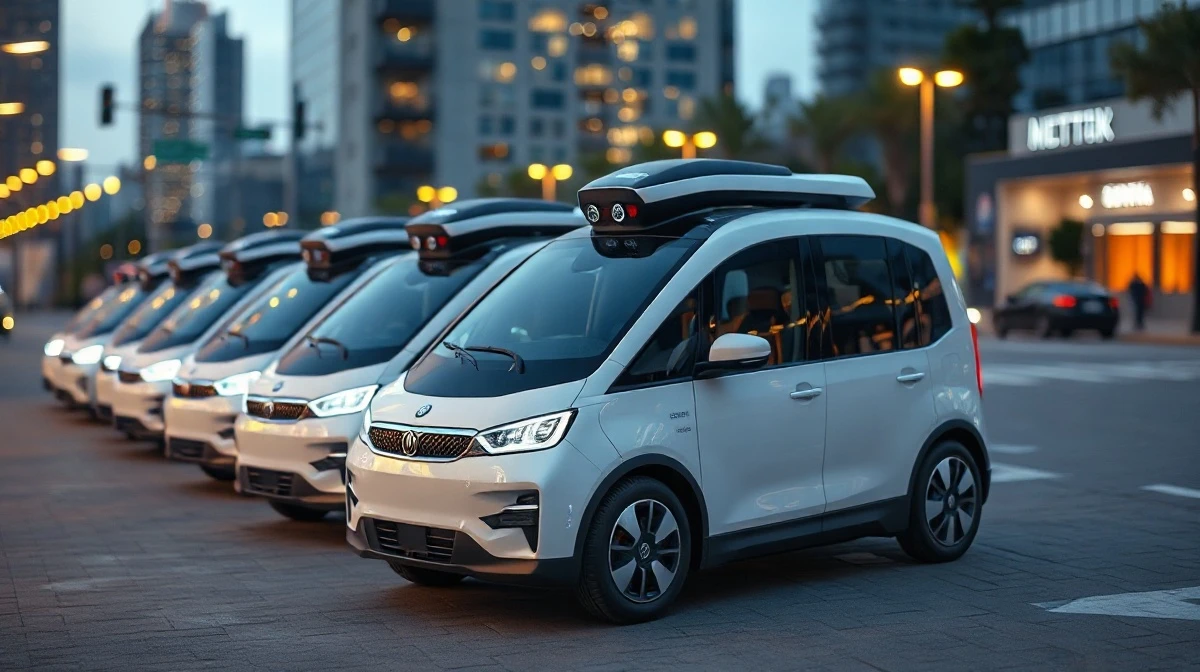
Uber has quietly assembled one of the most sprawling autonomous vehicle networks in the industry, partnering with or investing in more than 30 companies over the past two years. The ride-hailing giant, which once spent billions developing its own self-driving tech, now takes a different approach: it builds partnerships, not hardware.
From robotaxis in Austin to delivery robots in Osaka, Uber’s AV strategy spans the globe. Here’s a breakdown of every major partnership, investment, and pilot program the company has announced.
Also read: ClickFix Scams Spread Through Hijacked HBO Max Reddit Ads, Researchers Say
From in-house development to platform play
Uber’s journey to its current AV strategy began with a series of setbacks. The company launched its Advanced Technologies Group (ATG) in 2014, hiring dozens of researchers from Carnegie Mellon University. It acquired self-driving truck startup Otto in 2016, and began testing autonomous vehicles on public roads in California, Pittsburgh, and Arizona.
But a series of crises — including a trade secrets lawsuit from Waymo, the resignation of CEO Travis Kalanick in 2017, and a fatal pedestrian crash in Tempe, Arizona in 2018 — forced a reset. In 2020, under CEO Dara Khosrowshahi, Uber sold its ATG unit to Aurora, offloaded its flying taxi project to Joby Aviation, and sold its Jump e-bike business to Lime.
Also read: Massachusetts orders large data centers to supply clean power or pay into ratepayer fund
Uber kept equity stakes in those companies, and by 2022 it began creeping back into the AV space. The deal flow accelerated dramatically in 2024, and today the company has a web of partnerships that spans robotaxis, autonomous trucking, and delivery robots.
Robotaxi partnerships: the core of Uber’s AV strategy
Uber’s most prominent AV partnerships are in the robotaxi space, where it connects autonomous vehicle developers with its ride-hailing app. These deals vary in scope and maturity:
- Waymo: Uber’s partnership with Alphabet’s Waymo began in Phoenix in 2023 and expanded to Austin and Atlanta in 2024. However, the Phoenix partnership ended in July 2025, and Waymo is reportedly seeking to exit its contract with Uber.
- WeRide: One of Uber’s most prolific partners, WeRide launched robotaxi services in Abu Dhabi and Dubai, with plans to expand to 15 more cities by 2030. Uber increased its investment in WeRide by $100 million as part of the expansion.
- Nuro: Uber and Nuro have a 10-year partnership that began with autonomous deliveries and evolved into a premium robotaxi service using Lucid vehicles. Uber’s total commitment to Nuro is about $500 million, according to sources familiar with the deal.
- Motional: The Hyundai subsidiary has been working with Uber since 2021, and in March 2026 launched driverless rides in Las Vegas, though safety monitors remain on board.
- Avride: The Yandex spinout has a multi-year deal with Uber for delivery robots and robotaxis, with service currently operating in Dallas.
Autonomous trucking and delivery: expanding beyond passengers
Uber’s AV strategy isn’t limited to robotaxis. The company’s freight division, Uber Freight, has partnerships with autonomous trucking firms Aurora and Torc Robotics. These deals focus on using Uber’s logistics network to identify the most efficient routes for self-driving trucks.
In the delivery space, Uber has partnered with sidewalk robot companies including Cartken, Coco, Serve Robotics, and Starship Technologies. These partnerships bring autonomous delivery to cities like Miami, Los Angeles, Osaka, and several European markets.
Strategic investments: Uber’s financial bets on AV
Beyond partnerships, Uber has made significant financial investments in AV companies. The company invested $500 million in Lucid Motors and ordered at least 35,000 vehicles, and it has also invested in Wayve, Waabi, and WeRide. These investments give Uber a financial stake in the success of its AV partners, aligning incentives and potentially generating returns if those companies thrive.
Uber’s approach is a stark contrast to its earlier strategy of building its own self-driving tech. By partnering with a diverse set of companies, Uber avoids the massive capital expenditures and regulatory risks of developing hardware, while still positioning itself as the go-to platform for autonomous mobility.
What this means for the future of mobility
Uber’s AV network is a bet on a future where autonomous vehicles are ubiquitous. By partnering with multiple companies across different regions and use cases, Uber is hedging its bets and ensuring it has a presence in whatever AV ecosystem emerges.
For consumers, this means more options for robotaxi rides and autonomous deliveries in the coming years. For the AV industry, Uber’s platform provides a critical distribution channel that can help startups scale quickly.
The company’s strategy also has implications for competitors like Lyft, which has been slower to build AV partnerships. And it raises questions about the long-term viability of companies that choose to build their own AV fleets rather than partnering with a platform like Uber.
As the AV industry matures, Uber’s network of partnerships will likely be a key factor in determining who wins the race to autonomous mobility. With over 30 partners and counting, Uber is positioning itself as the central hub of the AV ecosystem.