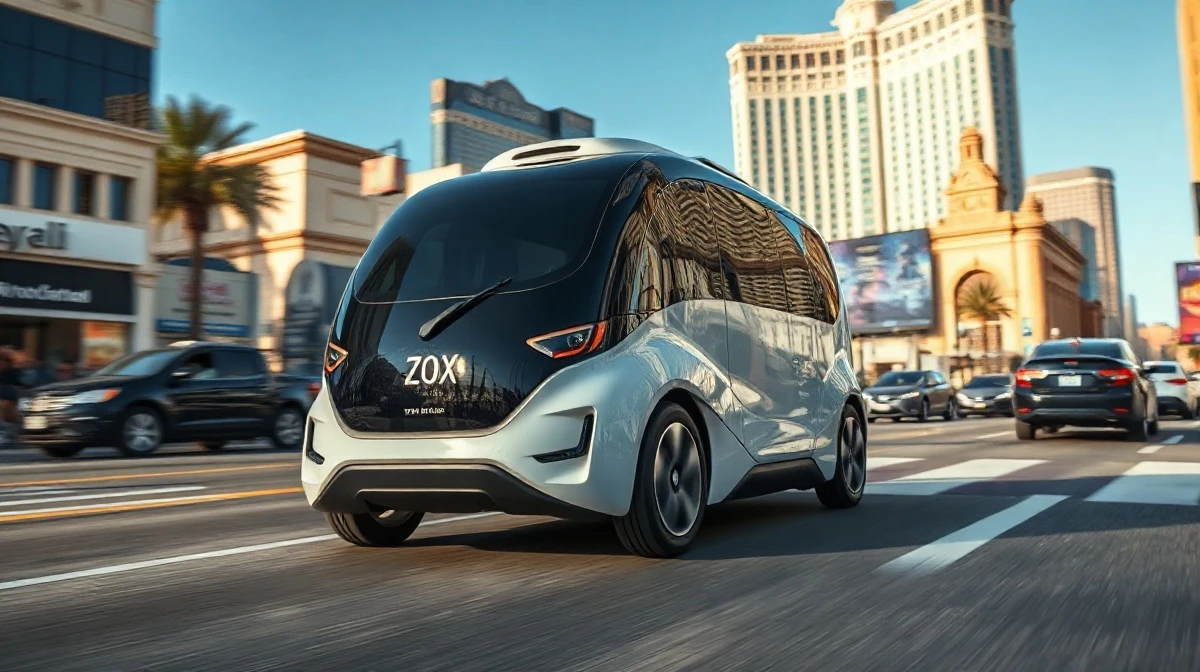
The autonomous vehicle industry hit a regulatory inflection point this week as the federal government cleared a major hurdle for commercial robotaxi service while state and local officials pressed for tighter oversight. The National Highway Traffic Safety Administration granted Zoox a temporary exemption from eight federal motor vehicle safety standards, allowing the company to finally charge customers for rides in its custom-built robotaxi. The decision removes one of the last remaining regulatory barriers for Zoox, which said paid rides are imminent and will begin in Las Vegas.
At the same time, the industry faced mounting scrutiny over how robotaxis interact with emergency responders. San Francisco Mayor Daniel Lurie called on state regulators to strengthen AV rules after Waymo vehicles became immobilized during heavy July 4 traffic, blocking key streets and compounding gridlock. This week, Rep. Kevin Mullin (D-Calif.) introduced a bill that would direct federal regulators to establish minimum national safety standards for autonomous vehicle operators.
Also read: ClickFix Scams Spread Through Hijacked HBO Max Reddit Ads, Researchers Say
Zoox’s Long Road to Commercial Service
Zoox, which Amazon acquired in 2020, has spent years developing a purpose-built robotaxi designed without a steering wheel or pedals. The NHTSA exemption permits the vehicle to operate on public roads despite not meeting certain traditional safety standards, a process the agency has used sparingly for AVs. The approval signals federal support for innovative vehicle designs, but it also highlights the patchwork of regulations that AV companies must deal with.
Zoox’s launch in Las Vegas will mark a significant milestone for the company, which has been testing its robotaxis in California and Nevada. The company has not announced a specific date for the start of paid rides, but executives have indicated that the service will begin shortly.
Also read: Massachusetts orders large data centers to supply clean power or pay into ratepayer fund
State and Federal Tensions Over AV Regulation
The divergence between federal and local approaches has become a defining theme in the AV industry. While NHTSA has focused on enabling innovation through exemptions and streamlined rules, cities and states have grown more cautious after high-profile incidents. The July 4 Waymo disruption in San Francisco, where vehicles ran out of power and blocked streets, intensified concerns about the readiness of AV technology for dense urban environments.
Rep. Mullin’s proposed bill, which he announced alongside Mayor Lurie, would create a national framework for AV safety, potentially overriding the current state-by-state approach. “We have seen disturbing, and frankly, an unacceptable number of incidents where autonomous vehicles inadvertently interfere with emergency responders,” Mullin said during the press conference.
The legislation faces an uncertain path, but its introduction reflects a growing bipartisan interest in setting clear federal standards for AVs. Industry groups have generally favored federal oversight to avoid a patchwork of conflicting state laws, but they have also warned against overly restrictive rules that could slow innovation.
What’s Next for the Robotaxi Industry
The coming months will be critical for AV companies as they balance expansion with regulatory compliance. Waymo, which recently resumed freeway testing after a two-month pause, continues to scale its operations in multiple cities. Baidu has begun testing autonomous vehicles in London as part of a partnership with Lyft and Freenow, with plans to invite the public to hail robotaxis in 2027. Uber and Wayve have also announced plans to launch a robotaxi service in London this year.
For Zoox, the NHTSA exemption is a significant win, but the company must still demonstrate that its robotaxis can operate safely in real-world conditions. The Las Vegas launch will be closely watched by regulators, competitors, and the public alike.
As the AV industry pushes forward, the tension between federal acceleration and local caution is likely to persist. The outcome of Mullin’s bill and similar efforts will shape the regulatory market for years to come, determining how quickly robotaxis become a common sight on American roads.
This article is for informational purposes only and does not constitute financial or investment advice. The autonomous vehicle industry is subject to rapid regulatory changes and market volatility. Readers should conduct their own research before making any decisions.