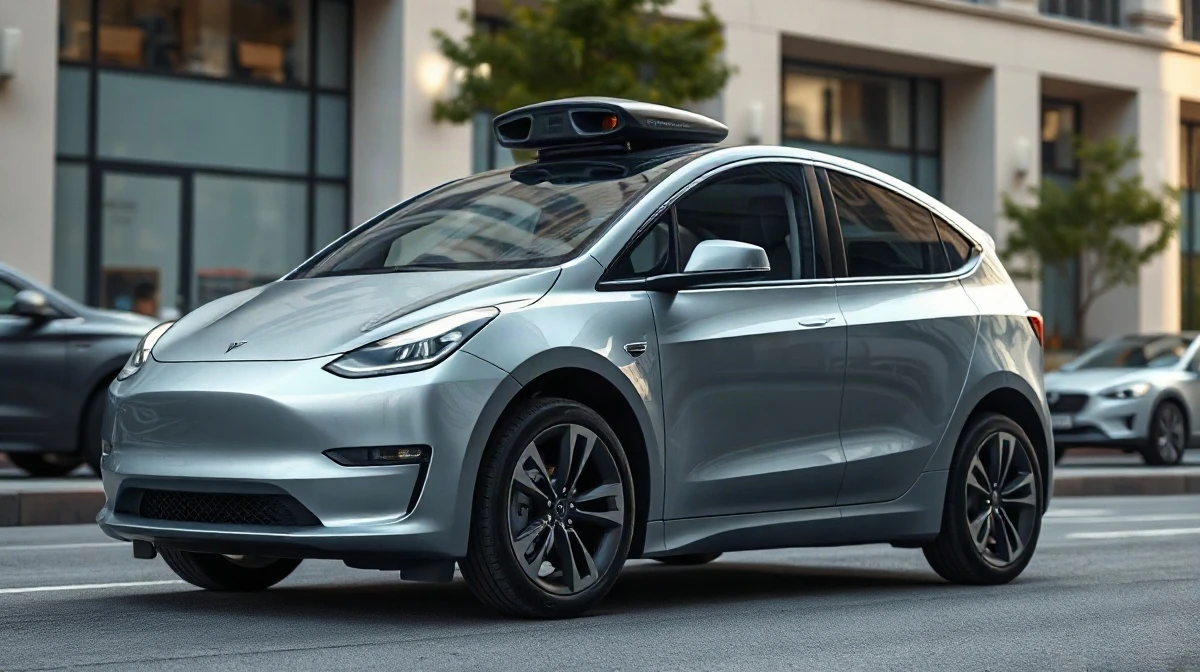
Tesla unveiled its long-awaited Cybercab at a private event in Los Angeles on October 10, 2026, but the company left many significant details scattered across PDFs, app terms of service, and social media posts. The event itself was a departure from Tesla’s usual flashy livestreams, with a keynote lasting only about 15 minutes and no appearance by CEO Elon Musk. As the company pushes forward with its ambitious robotaxi plans, it faces an investigation from the National Highway Traffic Safety Administration (NHTSA) into the Cybercab’s rollout. Here are the most significant new details from the launch documentation and what they mean for potential riders.
Cybercab’s surprising child restriction
One of the most notable fine-print items is that Tesla does not allow minors under 13 to ride in the Cybercab “at this time.” This is a stark contrast to the company’s “Robotaxi” service using Model Y SUVs, which permits riders aged 8 to 17. While Tesla has published guidelines for using child seats in both vehicles, the Cybercab notably lacks the standard LATCH anchors for child seats, meaning they can only be secured with seat belts. This design choice aligns with Musk’s stated philosophy of cutting costs by removing unnecessary parts, but it raises questions about why the company is excluding younger children, especially given Musk’s frequent public emphasis on population growth.
Also read: Google buys 396 MW of geothermal power from Fervo for new Utah data center
Crash response and safety features
Tesla’s documentation outlines a detailed protocol for what happens if a Cybercab is involved in a collision. The airbags deploy, doors unlock, hazard lights and interior lights activate, the high-voltage battery is disabled, and windows move to a “vent” position. The vehicle then applies brakes to come to a stop and park, while the infotainment system establishes a two-way connection with Tesla’s rider support team. The door-unlocking feature is particularly significant given Tesla’s history with electronic door latches. Just last month, the company agreed to recall 3 million cars in China as part of a broader investigation into electronic latches that could trap occupants after a crash.
The Cybercab also addresses a common criticism of Tesla’s interior door releases. In this vehicle, the manual release is placed in an obvious spot on each door’s armrest, a departure from the sometimes-hidden releases in other models. This is a practical acknowledgment of the need for accessible emergency exits in a vehicle designed to operate without a driver.
Also read: CD sales are making an unexpected comeback amid a retro tech boom
Brake-by-wire and other technical choices
Tesla is employing a brake-by-wire system in the Cybercab, replacing traditional hydraulic components with electronic actuators that control the brake calipers. Musk explained the rationale in a social media post, noting that electric brakes eliminate the need for hydraulic plumbing throughout the car. This follows Tesla’s earlier adoption of steer-by-wire in the Cybertruck, which removed the physical connection between the steering wheel and the front wheels. These choices underscore the company’s commitment to simplifying manufacturing and reducing costs, even if they represent a departure from industry norms.
Windows, USB-C, and other observations
Several other details have emerged from the event and subsequent documentation. The Cybercab’s windows cannot be fully opened at this time, though Tesla has not explained why. Influencer Jeremy Judkins, who attended the event, reported that the USB-C outlets provide 90W of power, roughly four times what is typical in a car. These small but notable features paint a picture of a vehicle designed for a specific purpose: short, autonomous trips in urban environments, with a focus on efficiency and passenger experience over traditional driving comforts.
As Tesla works to bring the Cybercab to public roads, the company must handle a complex regulatory environment. The NHTSA investigation will scrutinize the vehicle’s safety systems, and Tesla will need to demonstrate that its camera-only approach to autonomy can match or exceed the safety record of competitors like Waymo. The Cybercab’s success will depend not just on its technical capabilities, but on public trust and regulatory approval.