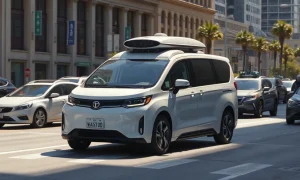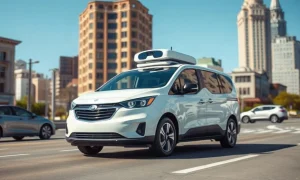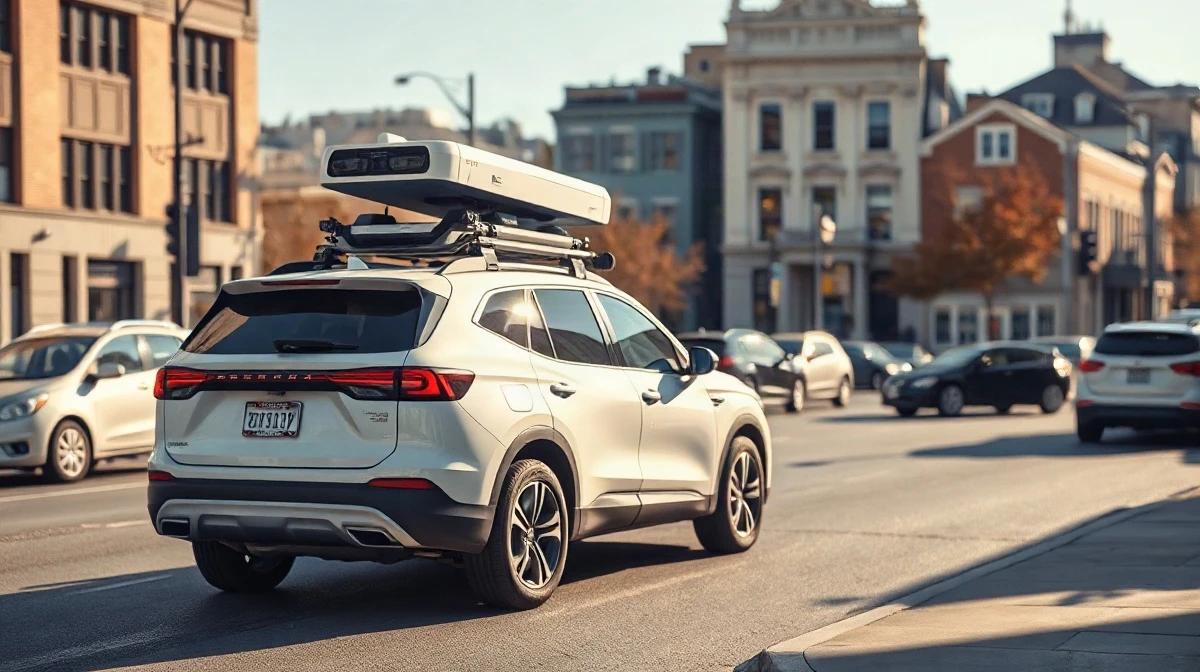
Waymo and Zoox test drivers sustained more than two dozen injuries in 2024 and 2025 as the companies rapidly scaled their robotaxi operations, according to a TechCrunch review of data submitted to the Occupational Safety and Health Administration. The injuries — ranging from sprains and strains to whiplash and a cracked wrist — were caused by autonomous vehicles braking hard or swerving suddenly during on-road testing.
Transdev, which employs and manages Waymo’s test drivers, reported 16 injuries tied to Waymo depot locations in San Francisco, Los Angeles, and Phoenix. Zoox reported as many as eight worker injuries linked to hard braking. The data only captures injuries at larger operations, meaning the true toll is likely higher.
Also read: Plaud One earphones pack an eSIM-enabled case for on-the-go AI agent control
Hard braking and sudden maneuvers behind most injuries
The injury reports paint a consistent picture of autonomous systems making abrupt, sometimes unexplained movements. Transdev’s 2024 reports included an incident where a Waymo vehicle “suddenly backed up” while parking, whipping the steering wheel and catching a driver’s hand, bending it “to the point he heard a crack in his wrist.” That employee spent more than two months away from work.
Injuries jumped from five in 2024 to 11 in 2025 across the three Waymo markets, with hard braking cited as the cause in nearly all cases. One Phoenix test driver spent 157 days away from work after their vehicle made an “exaggerated braking event without any obstruction.” A Los Angeles driver was sidelined for 175 days after the robotaxi stopped hard when “some kids were playing in the pathway.”
Also read: Ring rolls out 'TAKE' encryption as default for cloud video features, deleting keys within 24 hours
Zoox’s OSHA filings tell a similar story. Seven of the company’s eight injury entries explicitly mention hard braking, “nogos” — internal code for a full system shutdown — or “brake jabs,” as contractors call the sudden stops. One instructor reported “sharp pain in lower right ribs” after a test vehicle’s “software braked harshly” in San Francisco in June 2025.
Zoox contractors say issues persist despite recall
Two current and three former Zoox contractors told TechCrunch that test vehicles were still braking hard and abruptly as recently as July. Three said workers are still getting hurt. The contractors described brake jabs happening multiple times on a single test drive, often when the system mistakenly detects debris on the road.
The scariest incidents, they said, occur when a vehicle experiences a “nogo” at highway speeds. “You could be going 45 miles per hour and the car will enact a nogo, and suddenly you’re being whipped forward in the middle of the street, in traffic,” one contractor said.
Four of Zoox’s 2025 injuries occurred after the company issued a recall addressing a federal investigation into unexpected braking. Zoox told TechCrunch the recall addressed an “extremely narrow” behavior and that later incidents are unrelated to the software fix. The company declined to answer specific questions about the injuries or contractor claims, saying it follows reporting requirements and takes injuries seriously.
What the injuries mean for the robotaxi industry
The findings arrive as both companies accelerate commercial deployment. Waymo’s fleet has grown to more than 3,500 vehicles, up from roughly 1,500 in May 2025, as it expands into new cities. Zoox began charging for rides in its purpose-built robotaxi in Las Vegas this month, competing directly with Waymo while testing in eight other markets.
The safety of human operators is a growing concern as autonomous systems take on more complex driving scenarios. While companies emphasize that injuries represent a small fraction of millions of test miles driven, the physical toll on workers who validate these systems is drawing increased scrutiny. Zoox has also reported two robotaxi crashes to federal regulators in the last eight months, both involving hard braking for debris that resulted in rear-end collisions.
OSHA does not require companies to submit annual injury data until the following year, so 2026 figures remain unknown. But current and former Zoox contractors say the hard-braking behavior that caused last year’s injuries has not been eliminated. As robotaxis scale, the question of how companies protect the humans who test them will only become more pressing.
This article is for informational purposes only and does not constitute financial advice. The autonomous vehicle industry is subject to regulatory changes and operational risks that could affect company performance.