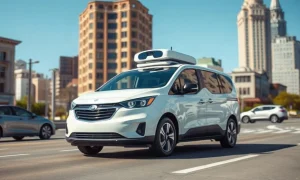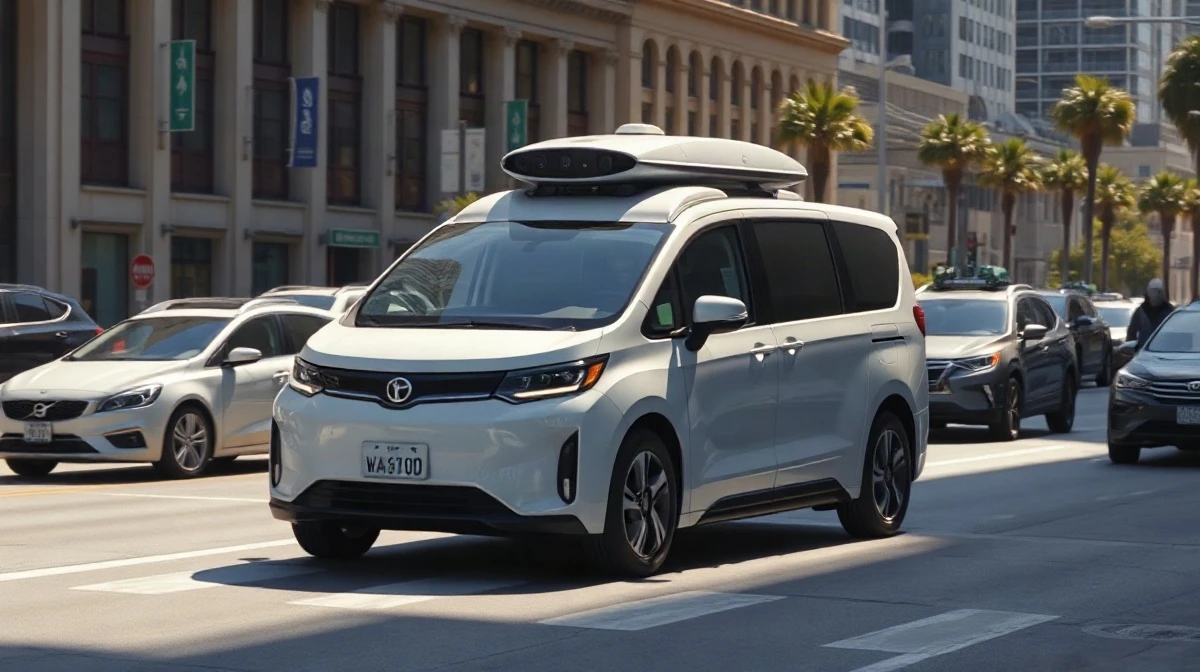
Waymo has been expanding its robotaxi service at a rapid clip, but the company this week offered a rare look at the custom silicon that powers its ambitions. The Alphabet-owned autonomous vehicle firm revealed it built a proprietary 5nm ASIC chip that delivers more than 1,000 TOPS (trillions of operations per second) of computing performance — a figure that puts it in the same performance range as Nvidia’s latest DRIVE AGX Thor automotive processor.
The chip is a central piece of Waymo’s sixth-generation self-driving system, which debuted in its next-generation Ojai robotaxi. The company, which just opened the Ojai to all riders in Los Angeles, Phoenix, and San Francisco, has repeatedly said the vehicle is cheaper to build, operate, and maintain — ingredients required if it hopes to turn a profit.
Also read: Pixel 11 Pro XL review: Better cameras and a handy dictation tool, but an iterative upgrade
Waymo said the custom chip is designed to handle the massive influx of raw data before it reaches the core “brain” of the self-driving system. To give a sense of the data volume, the Ojai has 13 high-fidelity cameras. The result, Waymo contends, is a system with “unmatched efficiency and performance” that can react fast and safely in complex, high-density environments like cities.
Vertical integration and a new supply chain
Waymo’s disclosure highlights how hands-on and vertically integrated the company has become as it chases profitability. The company also listed a slew of partners, some for the first time, including AMD, Micron, Nvidia, Samsung, Sandisk, Socionext, and TSMC. This marks a significant shift for Waymo, which has historically relied on off-the-shelf components from a handful of suppliers.
Also read: US battery startups find a new lifeline: defense contracts and DOE grants
The move to custom silicon is a strategic one. By designing its own chip, Waymo can optimize performance for its specific needs while potentially reducing costs and supply chain dependencies. It also signals that the company is thinking long-term about scaling its robotaxi fleet, which now operates in multiple cities across the U.S.
Security review of Chinese lidar sensors
In other autonomous vehicle news, the Idaho National Laboratory is reportedly evaluating whether Chinese lidar sensors might pose a security risk if they become widely used on vehicles in the United States. According to sources who spoke with TechCrunch senior reporter Sean O’Kane, the research is being funded by a company or group of companies in the electric and autonomous vehicle industries.
O’Kane reached out to numerous companies, including Rivian, General Motors, Ford, Kodiak, Lucid Motors, Nuro, and Uber — all of which said they were unaware of the review. Aurora, Nvidia, and Zoox did not respond to questions. The investigation could have significant implications for the autonomous vehicle supply chain, as many companies rely on lidar sensors from Chinese manufacturers.
Big deals and market shifts
The mobility sector also saw several notable deals this week. Also, the startup incubated within Rivian, raised another $150 million in a Series D round led by Prysm Capital, bringing its total funding to $455 million since spinning out in March 2025. The company has evolved from a micromobility firm to a “Palo Alto-based technology company building the world’s most capable driven and autonomous small electric vehicles.”
Serve Robotics, meanwhile, expanded its partnerships with Grubhub and DoorDash, diversifying beyond Uber after the ride-hailing giant reduced its use of its robots and sold its shares. Einride, the Swedish electric trucking company, struck a deal with Tesla to buy 500 electric Semis, which will be added to its fleet over the next 24 months starting in September.
Uber also made headlines this week, both for its investment in drone delivery company Zipline and for being fined €825 million ($966 million) by the Dutch Data Protection Authority for using automated systems to deactivate driver accounts without adequate notice.
As autonomous vehicle technology continues to mature, the race is on to build cheaper, more efficient systems. Waymo’s custom chip is a clear signal that the company is willing to invest in vertical integration to stay ahead. But with new security concerns around Chinese components and a rapidly shifting competitive environment, the path to profitable robotaxis remains anything but certain.