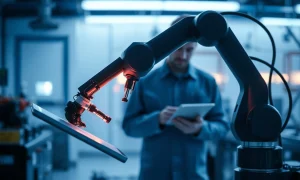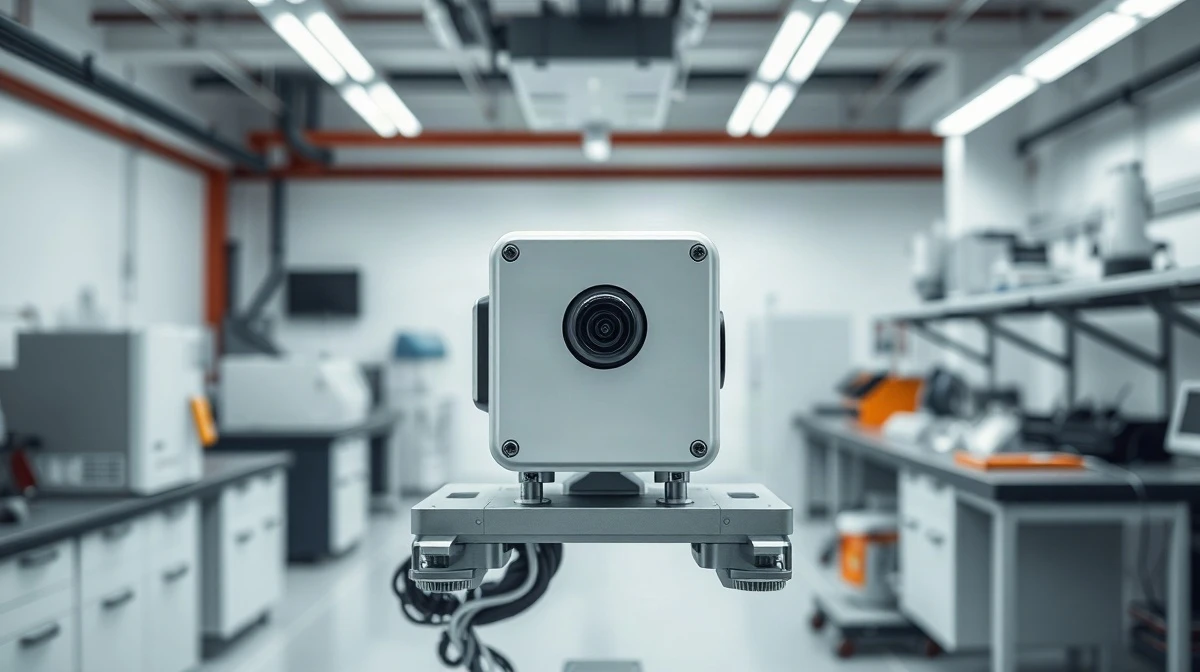
Ouster (NASDAQ:OUST) executives said the company’s newly launched Rev8 lidar platform has already secured multimillion-dollar orders from both new and existing customers, positioning it to become the core of its sensing business over the next several years. Speaking at an Oppenheimer event on August 16, 2026, Chief Financial Officer Ken Gianella said the company recorded its first full quarter as a unified platform during the second quarter, following the Rev8 launch and the introduction of the Stereolabs ZED X Nano camera for robotics.
Gianella said product revenue excluding royalties outperformed the company’s initial expectations in the second quarter and is expected to be sequentially higher in the third quarter. “Rev8 has been very electric,” he said of customer reception, though he noted the product remains in the early stages of volume production. The company expects the ramp to reach greater scale during the September period and continue into the fourth quarter and beyond.
Also read: Dow slides 200 points as Strait of Hormuz talks lapse, refiners price in renewed conflict risk
Rev7 Remains a ‘Workhorse’ as Product Transition Unfolds
While Rev8 is intended to be a central platform over time, Gianella said Ouster’s older Rev7 product should remain part of the portfolio for some time because it is already designed into numerous customer production programs. “As product transitions go, this one’s probably the longest tail that the company’s had in its history,” he said, describing Rev7 as a “real workhorse” for the company.
The company sees growth coming from the overall platform rather than a single sensor, with compute and application-specific software becoming increasingly important over the coming years. Gianella said Ouster’s diversification across industrial, smart infrastructure, automotive, and robotics markets has helped it avoid becoming dependent on one customer segment or use case. Industrial deployments can help smooth order volatility once customers move into production, while smart-infrastructure customers are increasingly seeking turnkey, no-code systems. He cited the company’s BlueCity offering as an example of its effort to provide an end-to-end intelligent transportation solution.
Also read: EMCOR Group (EME) Is Cashing In on the $500B AI Infrastructure Boom
Native Color and Safety Features Set Rev8 Apart
Chief Executive Officer Angus Pacala said Rev8 builds on Ouster’s prior lidar offerings by integrating native RGB color information with depth sensing. According to Pacala, the technology provides color data at every lidar point, which can improve perception systems that otherwise must pair a lidar sensor with a separate camera. The Rev8 architecture combines color and depth sensing at the silicon-chip level using shared optics, aiming to improve synchronization, calibration, and latency versus separate camera-and-lidar configurations.
“Rev8 is taking something that’s already really a leadership position and making it, I would say, obvious that there’s no other choice by bringing even more performance capability and now RGB into the mix,” Pacala said.
He pointed to an order from the Utah Department of Transportation for 160 intersections using OS1 Max Rev8 sensors as evidence of early customer confidence in the new platform. Pacala characterized traffic agencies as conservative buyers of new technology and said the deployment reflects confidence built through Ouster’s earlier Rev7 products.
Pacala said Ouster believes it has a two- to five-year head start in native-color lidar, depending on the product type and operating environment. He said competing color-lidar offerings may emerge, but argued that systems not engineered around tightly integrated color and depth sensing may not offer the same benefits at production scale.
Software, NVIDIA Compatibility, and Supply Chain Strategy
Ouster is also expanding its software capabilities following its acquisition of Stereolabs earlier this year. Pacala said Stereolabs’ ZED software development kit has more than 10,000 users and helps combine data from cameras, lidar, and other sensors into a format usable by machine-learning systems. Ouster plans to add Rev8 to that software ecosystem and build the platform for more demanding production applications, including heavy equipment fleets.
The company is also working with NVIDIA to support Rev8 in NVIDIA DRIVE, JetPack, and Isaac environments, alongside Ouster’s own software tools. Gianella said the platform approach—which combines lidar, cameras, compute, and software—could create stickier customer relationships and support pricing and margins compared with selling individual components. He added that Ouster plans to continue investing in new chips and product form factors over the next 12 to 24 months.
On supply chain strategy, Gianella said the company has secured components for some long-lead-time parts with visibility extending 18 to 24 months. Ouster is increasing finished-goods inventory and capacity investment with contract manufacturers to support faster customer deliveries. Pacala said the company has moved away from a Chinese supply chain and has invested for years in supply-chain security, including achieving Blue UAS certification. He said customers increasingly ask about component sourcing, manufacturing locations, and continuity of supply.
Finally, Pacala said Ouster’s cash position of more than $450 million following recent financing activity provides customers with confidence in the company’s long-term funding position. He said Ouster considers its business model fully funded while maintaining an emphasis on cash discipline.
For investors, the early Rev8 orders and the company’s push into software and sensor fusion signal a broader strategic shift. The move mirrors trends across the perception technology sector, where hardware margins are increasingly supplemented by recurring software revenue. Ouster’s ability to secure large infrastructure contracts, like the Utah DOT order, could provide a more predictable revenue base as the robotics and physical AI markets mature.
This article is for informational purposes only and does not constitute financial advice. The market for lidar and robotics stocks is volatile, and investors should conduct their own research before making investment decisions.