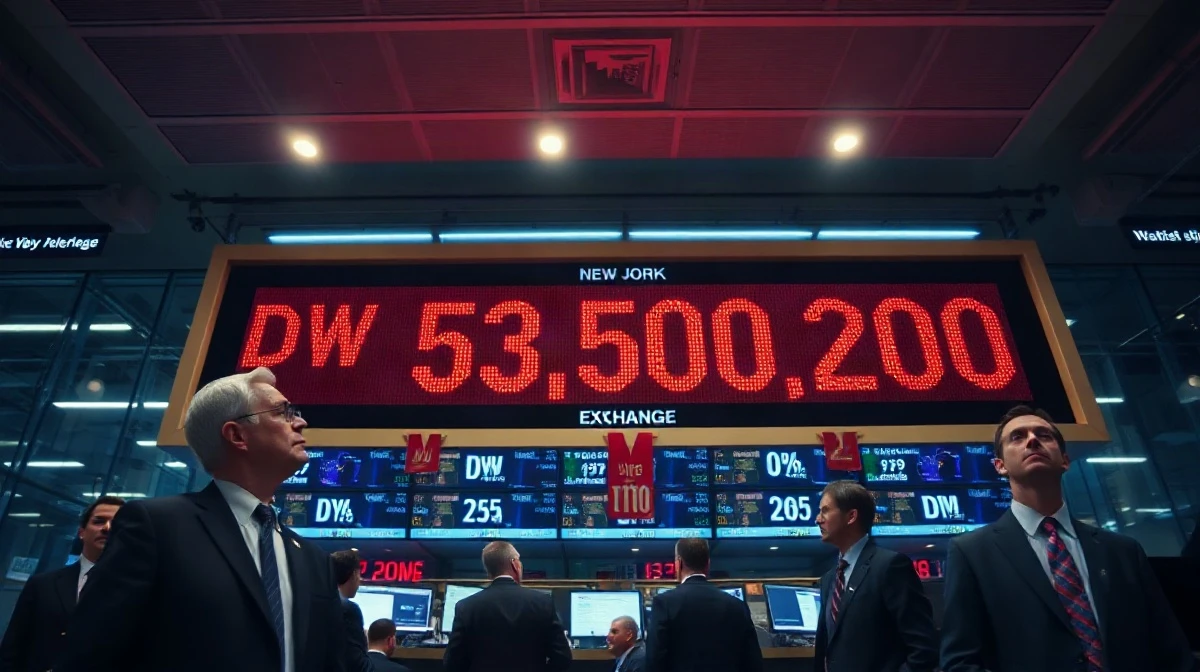
The Dow Jones Industrial Average traded near 53,550 on Monday, down roughly 200 points and about 1,200 points beneath the record high it printed on August 5. The pullback comes as the 60-day negotiating window that was intended to end the conflict over the Strait of Hormuz lapses with no replacement agreement in place, leaving oil refiners to price in the risk of renewed disruption to one of the world’s most critical shipping lanes.
Negotiating window closes without a deal
The 60-day window, which began in mid-June, was widely seen as a diplomatic off-ramp designed to de-escalate tensions that had already disrupted tanker traffic through the strait. According to reports from the period, the framework was brokered with the aim of freezing military activity in the area while both sides negotiated a longer-term arrangement. With that window now closed and no successor agreement announced, the market is left to weigh the likelihood of renewed attacks on commercial shipping and the potential for retaliatory strikes.
Also read: EMCOR Group (EME) Is Cashing In on the $500B AI Infrastructure Boom
The strait is a chokepoint through which roughly 20% of global oil consumption passes daily, making it a focal point for energy markets and, by extension, the broader economy. For refiners, the stakes are particularly high: any sustained disruption to crude flows through the strait would tighten supply and push up input costs, squeezing margins and potentially forcing higher fuel prices for consumers.
The Dow’s decline on Monday reflects that calculus. Energy-linked equities have been among the most actively traded, with refiners adjusting their risk models to account for a longer period of uncertainty. The fact that the index is still holding above 53,000 suggests investors are not yet pricing in a worst-case scenario, but the gap between the current level and the August 5 record indicates a measurable erosion of confidence.
Also read: PacBio Cuts Revenue Outlook as SPRQ-Nx Transition Slows, Targets 2028 Cash-Flow Positivity
What the drop means for investors and the broader market
The 1,200-point pullback from the record is notable not just for its size but for its composition. Defensive sectors, including utilities and consumer staples, have outperformed in recent sessions, a classic sign that investors are rotating toward safety. Meanwhile, cyclical sectors tied to global growth, such as industrials and materials, have lagged, reflecting concerns that higher energy costs could weigh on economic activity.
For refiners specifically, the situation is a double-edged sword. On one hand, higher crude prices can translate into higher revenue if product prices rise in tandem. On the other, a sudden spike in feedstock costs that cannot be passed through quickly enough can compress margins. The market’s reaction suggests traders are betting that the latter risk is more immediate.
History offers some context. During the 2019 attacks on Saudi Aramco facilities, which temporarily knocked out about 5% of global supply, the Dow initially fell but recovered within weeks as diplomatic efforts and strategic reserves calmed markets. The current situation differs in that the conflict is ongoing and the negotiating framework has expired without a clear path forward, leaving less certainty about how or when it might be resolved.
What to watch in the coming days
Traders will be closely monitoring several signals over the next few sessions. First, any official statement from the parties involved in the negotiations — whether indicating a renewed diplomatic push or a hardening of positions — could move markets sharply. Second, oil inventory data from the U.S. Energy Information Administration, due later this week, will show whether supply disruptions are already showing up in physical barrels. Third, the Federal Reserve’s communications on inflation will be scrutinized, as a sustained rise in energy prices could complicate the central bank’s rate path.
Options markets are also signaling elevated uncertainty. Implied volatility on energy-related equities has risen in recent days, and the VIX, while still below panic levels, has ticked up from its August lows. That suggests traders are paying up for protection rather than positioning for a quick resolution.
The Dow’s ability to hold the 53,000 level in the face of this geopolitical overhang will be a key test of investor resilience. A break below that threshold could accelerate selling, while a stabilization would suggest the market is willing to look through the current uncertainty, at least for now.
Disclaimer: This article is for informational purposes only and does not constitute financial advice. Markets are volatile and geopolitical events can lead to sudden and unpredictable price movements. Always conduct your own research or consult a licensed financial advisor before making investment decisions.