Uber Technologies (NYSE: UBER) and British AI company Wayve have launched supervised autonomous rides in London, making such trips available in the United Kingdom for the first time. Londoners requesting UberX, Uber Electric, or Uber Comfort may now be matched with a Wayve vehicle at no additional cost, with fares displayed upfront in the Uber app.
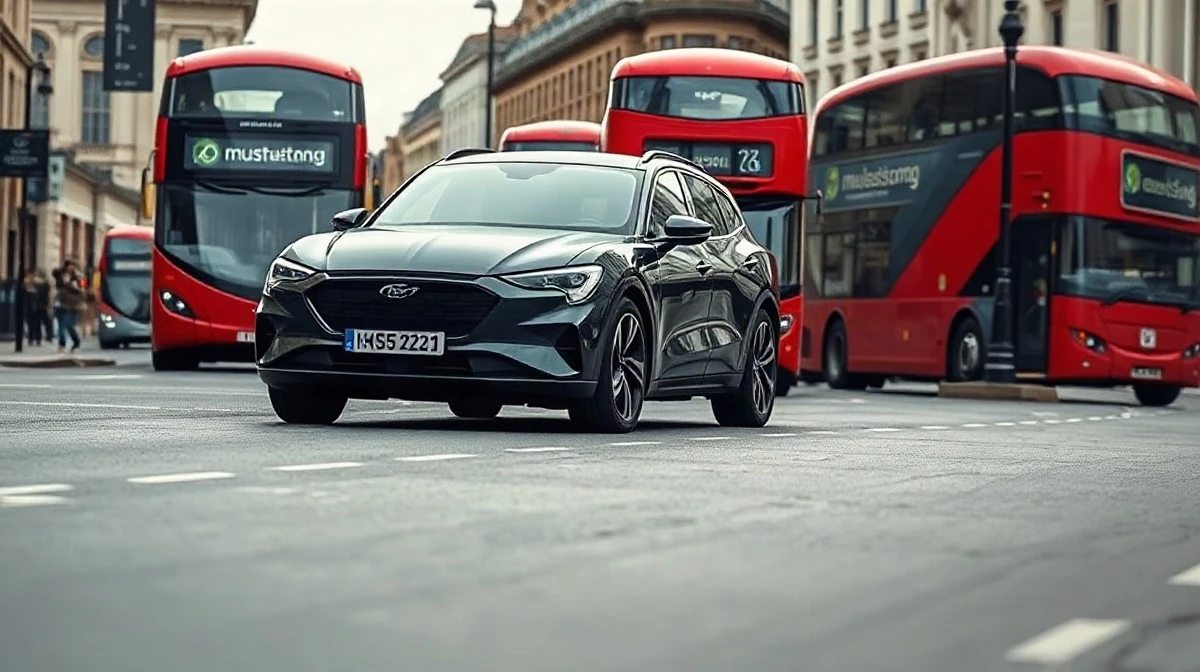
Selected passengers will travel in an all-electric Ford Mustang Mach-E equipped with the Wayve AI driver and surround sensors. Uber-designed interactive screens, available in 64 languages, allow riders to begin their journey and view the vehicle’s intended route. Passengers can accept the autonomous ride or switch to a conventional vehicle before it arrives. The Uber app also lets them unlock the vehicle and start the trip. Initially, the service will cover London, excluding airports.
Also read: UNFI Q4 Earnings Preview: Revenue Pressure Persists as Profitability Improves
How the London Rollout Works
The launch begins with a limited number of vehicles and will expand gradually according to rider demand, technological readiness, and regulatory developments. During the initial phase, every vehicle will carry a trained, Transport for London-licensed private-hire driver to supervise the journey. All autonomous vehicles operating through Uber must also comply with its safety guidelines.
Interested customers can improve their chances of being matched with a Wayve vehicle by opting in through the trip preferences section under settings in the Uber app. More than 140,000 Londoners have already registered their interest. Founded and headquartered in London, Wayve has trained its technology on the capital’s challenging roads since 2018. Its AV2.0 system uses an experience-based AI driver designed to learn and adapt to complex environments without depending on traditional high-definition maps or manually coded rules.
The rollout forms part of both companies’ broader partnership, which includes an Uber investment and plans to deploy Wayve-powered vehicles across 12 global markets, beginning with London. Wayve’s technology works across different vehicle platforms and sensor configurations, supporting faster expansion. The companies also plan to introduce autonomous Nissan LEAF vehicles powered by the Wayve AI Driver and NVIDIA DRIVE Hyperion, starting in Tokyo later in 2026.
Why This Matters for Uber and the U.K.
The launch advances Uber’s AI ambitions by integrating learning-based autonomous-driving technology with its global ride-hailing platform. Real-world journeys on London’s complex roads can generate operational insights that help improve vehicle matching, routing, safety monitoring, and fleet deployment. It also supports Uber’s planned hybrid network, in which autonomous vehicles and human drivers operate alongside one another to improve availability and reliability.
For the United Kingdom, the development could accelerate autonomous-vehicle investment, create demand for AI and mobility-related skills, and strengthen the country’s position in transport innovation. Wider adoption, however, will depend on safety performance, passenger acceptance, and the evolving regulatory framework.
Uber currently works with more than 30 autonomous-vehicle partners across mobility, delivery, and freight, collectively completing millions of autonomous trips annually. It expects to help such journeys in as many as 15 cities by the end of 2026 and aims to become the world’s largest facilitator of autonomous trips by 2029.
Other Notable Autonomous Vehicle Deals
In June, Uber, in collaboration with WeRide (NASDAQ: WRD), a Chinese autonomous vehicle company, announced plans to introduce commercial robotaxi services in the Greater Zurich Region. This move represents their second joint deployment in Europe, coming just weeks after the announcement of a similar initiative in Madrid. The service is expected to commence later this year in partnership with Switzerland’s Federal Roads Office, pending regulatory approvals. At launch, passengers will be able to access the robotaxi service through the Uber app.
Since December 2024, WeRide and Uber have introduced robotaxi services across several Middle Eastern markets, including fully driverless commercial operations in Abu Dhabi and Dubai, as well as public services in Riyadh. These deployments provide an operational foundation for their European expansion.
Earlier in the year, Uber entered into a strategic partnership with Amazon’s (NASDAQ: AMZN) Zoox to deploy its purpose-built robotaxis on the former’s platform. Unlike many other autonomous vehicles currently in development, Zoox’s vehicles are not modified versions of traditional passenger cars. Instead, they are purpose-built specifically for ride-hailing services and designed to enhance rider comfort and social interaction. Zoox rides are expected to be available in Los Angeles next year.
Market Performance and Outlook
Shares of Uber have gained in single digits over the past three months, outperforming the Zacks Internet-Services industry over the same time frame. From a valuation standpoint, Uber trades at a 12-month forward price-to-sales of 2.44X, which is inexpensive compared with its industry. Uber currently carries a Zacks Rank #3 (Hold).
As autonomous driving becomes a more tangible part of urban mobility, the success of these pilots will be measured not just by technological capability but by public trust and regulatory adaptation. Uber’s ability to scale across diverse markets—from London’s dense streets to Zurich’s regulated corridors—will test whether its multi-partner strategy can deliver on the promise of safer, more accessible transportation.
This article is for informational purposes only and does not constitute financial advice. The cryptocurrency and stock markets are volatile; always conduct your own research before making investment decisions.