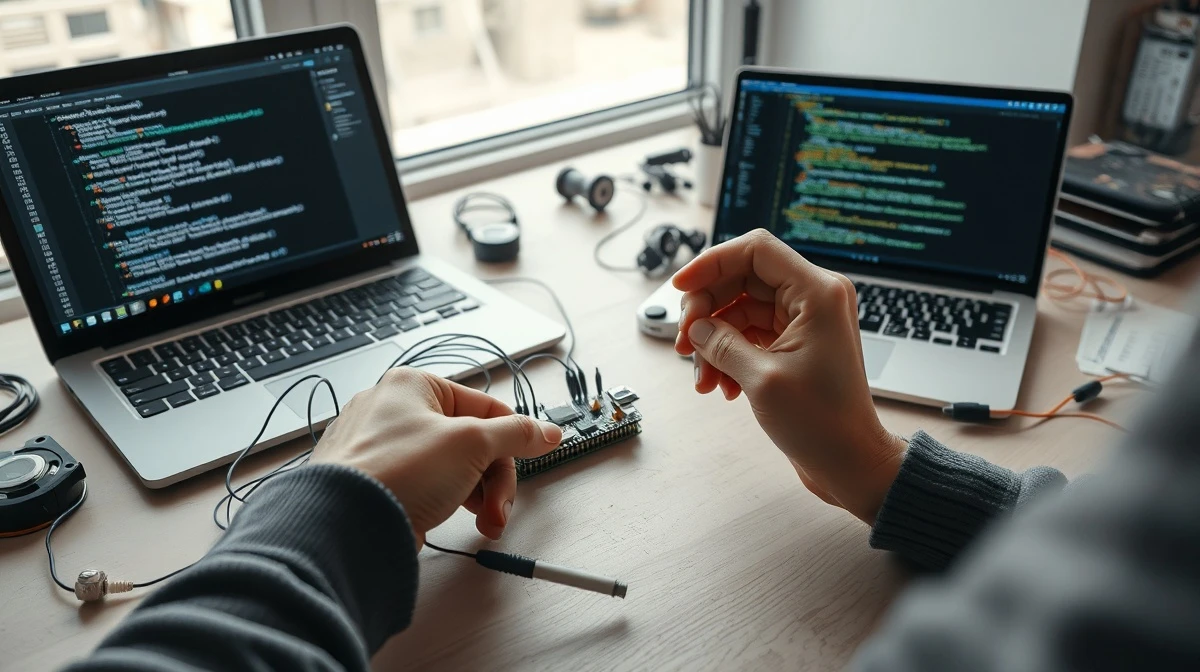
Lovable, the AI-powered app-building platform known for simplifying software creation, has made a strategic bet on hardware. The company has backed Atech, a Danish hardware startup aiming to apply the concept of “vibe coding” to physical product development. Lovable participated in an $800,000 pre-seed round that also included a16z’s scout fund, Sequoia Scout Fund, and Nordic Makers.
How Atech’s platform works
Atech’s approach is designed to lower the barrier for hardware prototyping. Users start by purchasing a starter hardware kit from Atech’s website, tailored to the type of project they want to build — from simple toys to industrial sensors. They then open a browser tab, interact with an AI chatbot, and describe their hardware concept in natural language. The AI generates the necessary code to create a working prototype.
Also read: Ian Bogost on ‘The Small Stuff’: Why Reclaiming Ordinary Life Matters More Than Fighting Big Tech
Gustav Hugod, Atech’s head of customer experience, told TechCrunch that the platform’s user base is already surprisingly broad. “From four-year-olds building cars to a hydrogen synthesis plant that needs precise voltage sensing,” he said, the tool is attracting a wide range of users.
Democratizing hardware development
Traditionally, building a hardware prototype requires years of specialized engineering experience or the budget to hire expensive talent. Hugod argues that the same forces that collapsed the accessibility gap in software are now likely to transform hardware. “Hardware, in a democratized world, has to be available to everyone,” he said.
Also read: Tesla FSD Under New Scrutiny After Fatal Crash; Waymo, Lyft Set Contrasting Paths for Autonomy
The startup’s vision aligns with the broader “vibe coding” trend, where AI tools allow non-experts to create functional software by describing their intent. Atech is essentially applying that same conversational, AI-driven model to the physical world.
Investment and future plans
The $800,000 pre-seed round will fund research and development, marketing, and hiring. The involvement of prominent venture backers like a16z and Sequoia signals growing investor interest in AI-driven hardware tools, a space that has traditionally been capital-intensive and slow to iterate.
For Lovable, the investment is a logical extension of its mission to make creation accessible. By backing Atech, the company is betting that the next wave of innovation will come from lowering the barriers between idea and physical prototype.
Conclusion
Atech’s platform represents a notable step toward making hardware prototyping as accessible as software development. While still early, the startup’s traction with both hobbyists and industrial users suggests a potential shift in how physical products are conceived and built. The backing from Lovable and top-tier venture funds adds credibility to the vision, though the long-term impact will depend on execution and adoption.
FAQs
Q1: What is “vibe coding” in the context of hardware?
A: Vibe coding refers to using AI chatbots to generate code based on natural language descriptions. Atech applies this to hardware, where users describe a physical device and the AI generates the code to make it work.
Q2: Who can use Atech’s platform?
A: According to the company, users range from young children building simple vehicles to industrial engineers creating precise sensors for hydrogen plants. The platform is designed for both beginners and experienced builders.
Q3: What will the $800,000 pre-seed funding be used for?
A: The funds will support research and development, marketing efforts, and hiring to scale the platform and expand its user base.