Anthropic is having an exceptional year. The AI company, known for its Claude model family, is reportedly seeking tens of billions in new funding at a valuation approaching $950 billion — surpassing the $854 billion valuation OpenAI secured in its March round. Business customers are increasingly choosing Claude over ChatGPT, with Anthropic quadrupling its enterprise market share since May 2025, according to recent reports.
A product leader’s vision for Claude
Cat Wu, Anthropic’s head of product for Claude Code and Cowork, has been instrumental in this growth. Since joining the company in August 2024, she has helped transform Claude from a purely informational chatbot into a powerful coding tool and beyond. Wu frequently collaborates with Boris Cherny, creator of Claude Code, and the pair has been described internally as Anthropic’s “Batman and Robin.”
Also read: Ian Bogost on ‘The Small Stuff’: Why Reclaiming Ordinary Life Matters More Than Fighting Big Tech
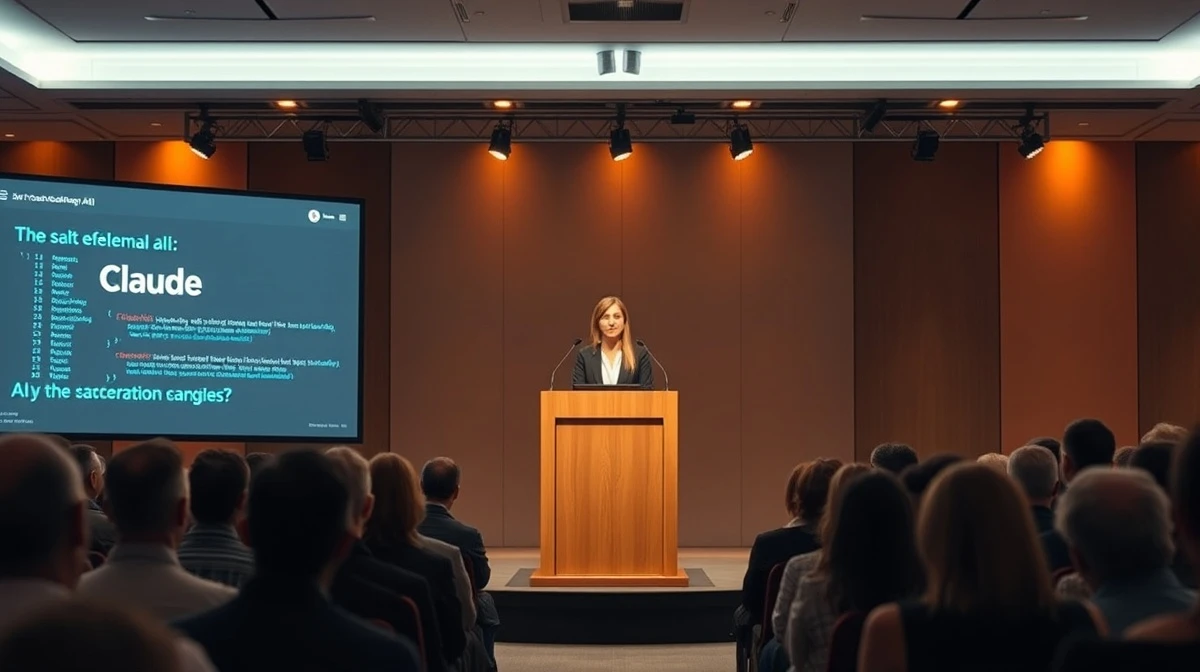
In an interview at the second annual Code with Claude conference in San Francisco last week, Wu shared her product philosophy and vision for the future of AI interaction. The conversation has been edited for length and clarity.
On competitive strategy: staying on the exponential
When asked how much of Anthropic’s product strategy is reactive to competitors like OpenAI, Wu was emphatic: “The main thing that we design for is staying on the exponential. We don’t think about competitors. If you do think about competitors, you end up perpetually two weeks or a month behind how fast you can execute.”
Also read: Tesla FSD Under New Scrutiny After Fatal Crash; Waymo, Lyft Set Contrasting Paths for Autonomy
This focus on frontier development rather than competitive response has defined Anthropic’s rapid release cadence. The company released at least six models in 2024 and nearly as many in the first months of 2025. Wu expects this pace to continue, though deployment strategies may vary. She cited the Glasswing initiative — a limited release of the powerful cybersecurity model Mythos to a consortium of partners including Amazon, Apple, CrowdStrike, and Microsoft — as an example of balancing capability with safety.
The future of work: managing fleets of AI agents
Wu previously described the future of work as “staff managing fleets of agents.” She elaborated on the implications: “It is extremely hard to manage agents if you can’t do the job yourself. Managers still need to be experts in their domain. Managing agents is very similar to being a manager of people — you have to understand why the agent made a mistake, whether it misinterpreted your instruction, or if your request was under-specified.”
She acknowledged the long-term goal involves reducing team sizes but framed it as enabling productivity rather than replacing humans. “Ideally, everyone can get a lot more done. For everyone’s job, there’s always a percentage that’s really tedious. My hope is that AI agents handle that, and then everyone has all these cool things they will want to build in their spare time.”
What’s next: proactive AI that anticipates your needs
Looking ahead, Wu identified proactivity as the next major frontier. “Last year we were in a world of synchronous development. Right now, people are shifting to routines — automating responses to customer support tickets, for example. The next step is that Claude understands what you work on and just sets up some of these automations for you.”
This vision represents a significant shift from today’s AI tools, which primarily respond to explicit commands. If realized, it could fundamentally change how professionals interact with AI — moving from a tool you query to a system that anticipates and acts on your behalf.
Conclusion
Anthropic’s trajectory under product leaders like Cat Wu suggests a company focused on pushing technical boundaries rather than reacting to market moves. With a valuation potentially exceeding $950 billion and growing enterprise adoption, the strategy appears to be working. The coming months will reveal whether proactive AI — Claude anticipating user needs before they’re expressed — can deliver on its promise without raising new questions about autonomy and control.
FAQs
Q1: What is Anthropic’s Glasswing initiative?
Glasswing is a limited-release program launched in April 2025, giving select partners — including Amazon, Apple, CrowdStrike, and Microsoft — access to Mythos, a powerful cybersecurity model designed to scan codebases for vulnerabilities. Anthropic chose not to release Mythos publicly, citing concerns it could be weaponized by bad actors.
Q2: How does Cat Wu define proactive AI?
Wu describes proactive AI as systems that understand a user’s work patterns and automatically set up automations without being explicitly asked. This goes beyond current synchronous tools that only respond to direct commands.
Q3: Why does Anthropic avoid competitor-focused strategy?
According to Wu, focusing on competitors keeps companies perpetually behind in execution. Instead, Anthropic prioritizes “staying on the exponential” — continuously pushing the frontier of AI capability rather than reacting to what others are doing.