
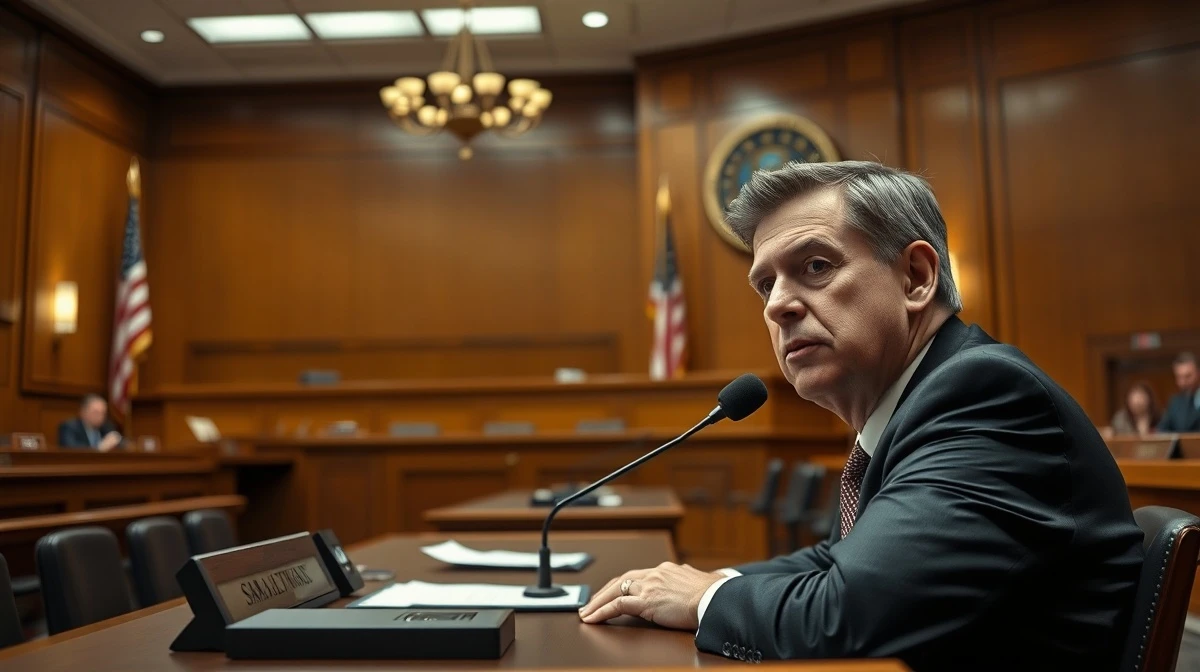
Sam Altman, the CEO of OpenAI, faced a grueling day in a California federal court on Tuesday as attorneys for Elon Musk pressed him on his credibility and financial interests in the company he leads. The interrogation, which touched on Altman’s past testimony before Congress and his brief ouster by OpenAI’s board in 2023, is central to Musk’s lawsuit seeking to block OpenAI’s transition to a for-profit entity.
A pattern of misleading statements?
During the hearing, Steve Molo, Musk’s lead attorney, confronted Altman with inconsistencies in his public statements. Molo pointed to Altman’s May 2023 testimony before the U.S. Senate, where Altman stated he had “no equity in OpenAI.” Under oath on Tuesday, Altman acknowledged he held a passive interest in a Y Combinator fund that invested in OpenAI, effectively giving him economic exposure to the company. “I didn’t mention it in that testimony, but, again, I think it is well understood of what it means to be a passive owner of many venture funds,” Altman said. Molo countered by questioning whether Altman believed Senator John Kennedy, who had asked the original question, was a sophisticated investor.
Also read: Ian Bogost on ‘The Small Stuff’: Why Reclaiming Ordinary Life Matters More Than Fighting Big Tech
The exchange underscored a central theme of the trial: whether Altman can be trusted to lead an organization that, by its own charter, is supposed to prioritize safety and public benefit over profit. Musk’s legal team argues that Altman has repeatedly misled investors, regulators, and even OpenAI’s own board.
The 2023 board revolt and its aftermath
A key piece of evidence in the case is the brief firing of Altman by OpenAI’s non-profit board in November 2023. Former board members Helen Toner and Tasha McCauley testified that Altman had not been candid with them, with McCauley describing “a toxic culture of lying.” Altman, however, downplayed the incident, saying he doubted that lack of candor was the full reason for his dismissal. “They asked me to come back the next morning,” he said.
Also read: Tesla FSD Under New Scrutiny After Fatal Crash; Waymo, Lyft Set Contrasting Paths for Autonomy
Musk’s lawyers argue that the board’s inability to keep Altman fired—he was reinstated days later after a mass employee revolt—proves that the non-profit board cannot effectively control the for-profit arm of OpenAI. This question is central to the lawsuit, which alleges that OpenAI’s structure is a sham designed to enrich Altman and early investors while claiming to serve a charitable mission.
Witnesses defend Altman, but raise doubts
Witnesses called by OpenAI and Microsoft, including CEO Satya Nadella and board chair Bret Taylor, testified that the current board does exercise genuine control. Nadella, however, described Altman’s firing as “amateur city,” and Taylor acknowledged that the decision to rehire Altman was driven by the risk that the company would collapse without him. “Most of the employees were intent on following him out the door,” Taylor said.
Dr. Zeko Kolter, an OpenAI board member focused on AI safety, said no one had interfered with his work since joining in 2024. But the testimony raised a fundamental question: if the board cannot fire its CEO without destroying the company, does it truly have power?
Why this matters for AI regulation and governance
The trial is being closely watched by policymakers, investors, and technologists because it could set a precedent for how AI companies are structured and governed. OpenAI’s unique model—a non-profit board overseeing a for-profit subsidiary—was designed to ensure that the development of advanced AI remains aligned with human interests. If a court finds that this structure is unworkable or deceptive, it could force a rethinking of corporate governance in the AI sector.
Altman, when asked directly if he could be trusted, replied: “I believe I am an honest and trustworthy business person.” Whether Judge Yvonne Gonzalez Rogers and the jury agree will shape not only the future of OpenAI but also the broader debate over accountability in the AI industry.
Conclusion
The trial is ongoing, and a ruling is not expected for weeks. Regardless of the outcome, the testimony has already exposed deep tensions between OpenAI’s stated mission and its operational reality. For readers, the case serves as a reminder that the governance of powerful AI systems is not just a technical or legal issue—it is a question of trust.
FAQs
Q1: What is the core legal question in the Musk vs. OpenAI trial?
The trial centers on whether OpenAI’s non-profit board can genuinely control its for-profit subsidiary, or whether the structure is a facade that allows CEO Sam Altman and early investors to profit from a mission-driven organization.
Q2: Why did Sam Altman get fired by OpenAI’s board in 2023?
The board stated that Altman was not consistently candid in his communications. He was reinstated days later after a mass employee revolt and pressure from investors, including Microsoft.
Q3: What did Sam Altman say about his equity in OpenAI during his Senate testimony?
Altman told Senator John Kennedy in May 2023 that he had “no equity in OpenAI.” In the current trial, he admitted he had economic exposure through a passive investment in a Y Combinator fund that held OpenAI shares.

