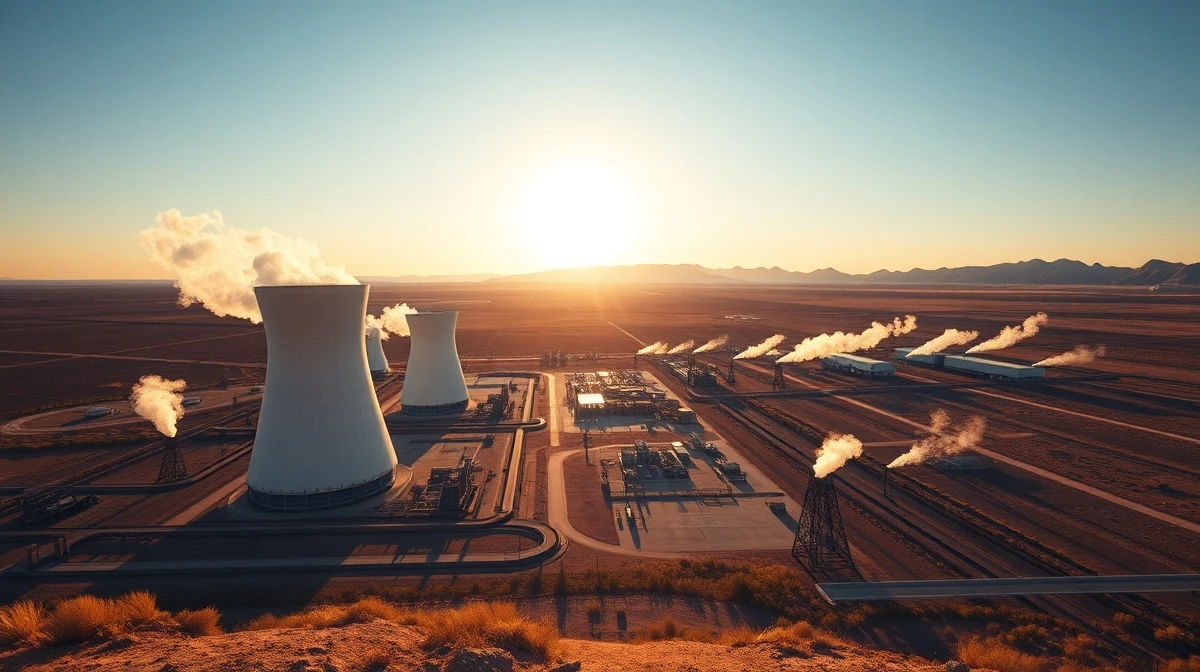
Fervo Energy, a Houston-based enhanced geothermal startup, saw its stock price pop 33% in its first day of trading on the Nasdaq, pushing the company’s market valuation past $10 billion. The strong debut follows an upsized initial public offering that raised $1.89 billion, reflecting surging investor appetite for clean energy sources capable of powering the rapidly expanding fleet of AI data centers.
IPO details and market reception
The company initially set a price range for its IPO, but overwhelming demand led bankers to upsize the offering multiple times. Fervo sold an additional 14.6 million shares and lifted the price range twice, eventually settling at $27 per share. The stock, trading under the ticker FRVO, opened well above that price, closing the day with a valuation exceeding $10 billion. Sarah Jewett, Fervo’s senior vice president of strategy, told TechCrunch that the roadshow feedback was so strong that the upsize became ‘not only within the area of possibility, but the area of the encouraged.’
Also read: Ian Bogost on ‘The Small Stuff’: Why Reclaiming Ordinary Life Matters More Than Fighting Big Tech
The successful listing makes Fervo the second energy-focused startup to receive a warm public market welcome in recent weeks, following nuclear reactor developer X-energy’s $1 billion upsized IPO.
Why geothermal is suddenly hot
Geothermal energy — using heat from the Earth’s core to generate electricity — has existed for decades, but Fervo is part of a new generation of companies developing enhanced geothermal systems. These techniques drill deeper into hotter rock formations and use directional drilling methods borrowed from the oil and gas industry to extract heat more efficiently.
Also read: Tesla FSD Under New Scrutiny After Fatal Crash; Waymo, Lyft Set Contrasting Paths for Autonomy
Jewett described the approach as ‘repeating the playbook from the shale energy industry but with the answer key.’ The result is a clean energy source capable of providing baseload power — electricity available 24/7 regardless of weather — which is particularly valuable for data center operators that require high uptime.
AI companies and hyperscale data center operators have been scrambling to secure reliable electricity supplies to power their facilities, and geothermal’s round-the-clock generation profile has made it a preferred option over intermittent sources like solar and wind.
Cape Station and future capacity
Fervo’s flagship project, Cape Station in Utah, is expected to begin operations this year. The first phase targets 500 megawatts of capacity, driven largely by the size of the grid connection the company secured. However, Fervo is permitted to develop up to 2 gigawatts at the site and has applied to expand its interconnection. Jewett noted that a third-party engineer reported enough heat on site for up to 4 gigawatts of capacity.
If grid interconnection limits prevent full development, Fervo has been fielding interest from companies looking to connect directly. ‘We’re seeing an increasing amount of behind the meter commercial interest,’ Jewett said.
The company is also earlier in development on Corsac Station in Nevada, from which Google has agreed to purchase 115 megawatts of electricity.
Cost reduction and path to profitability
Fervo has focused heavily on reducing drilling costs, a key barrier to scaling geothermal energy. Its first wells took dozens of days to complete and cost more than $1,000 per foot. After drilling 14 wells, the company has cut both drilling time and cost per foot by two-thirds. These improvements are critical for the company to compete with natural gas and other baseload power sources on price.
The IPO netted Fervo approximately $500 million more than originally anticipated, providing a significant cash cushion to accelerate development at Cape Station and beyond. The company had previously raised $462 million in a private round in December 2025.
Industry implications
Fervo’s successful public debut signals a broader shift in how investors view clean energy. While solar and wind have dominated renewable energy investment for years, the need for consistent, dispatchable power is pushing capital toward geothermal, nuclear, and other 24/7 clean sources. The demand from hyperscale data center operators has created a premium pricing environment for baseload clean power, improving the economics for companies like Fervo.
Climate tech and energy investors had widely anticipated the IPO, viewing Fervo’s combination of data from Cape Station and demand from hyperscalers as evidence the company had crossed the so-called ‘valley of death’ that claims many early-stage energy startups.
Conclusion
Fervo Energy’s strong IPO debut reflects a convergence of favorable trends: surging electricity demand from AI data centers, growing investor appetite for dispatchable clean energy, and technological progress that is steadily reducing the cost of enhanced geothermal. With a strengthened balance sheet and a clear path to commercial-scale generation, Fervo is positioned as a bellwether for the next wave of energy infrastructure investment.
FAQs
Q1: What is enhanced geothermal energy?
Enhanced geothermal systems drill deeper into the Earth than traditional geothermal plants, accessing hotter rock formations. They use directional drilling and hydraulic stimulation techniques adapted from the oil and gas industry to create or expand underground reservoirs, allowing for electricity generation in locations that were previously uneconomical.
Q2: Why are AI data centers driving demand for geothermal power?
AI data centers require massive amounts of electricity, and they need it to be available 24/7 to maintain uptime. Geothermal provides consistent baseload power regardless of weather, unlike solar or wind. Data center operators are willing to pay a premium for this reliability, making geothermal economically attractive.
Q3: How does Fervo’s technology differ from traditional geothermal?
Traditional geothermal plants rely on naturally occurring hot water reservoirs near the surface. Fervo drills deeper into hot, dry rock and injects water to create its own reservoir. The company also uses directional drilling — a technique pioneered by the oil and gas industry — to reach more heat from a single well pad, improving efficiency and reducing land use.