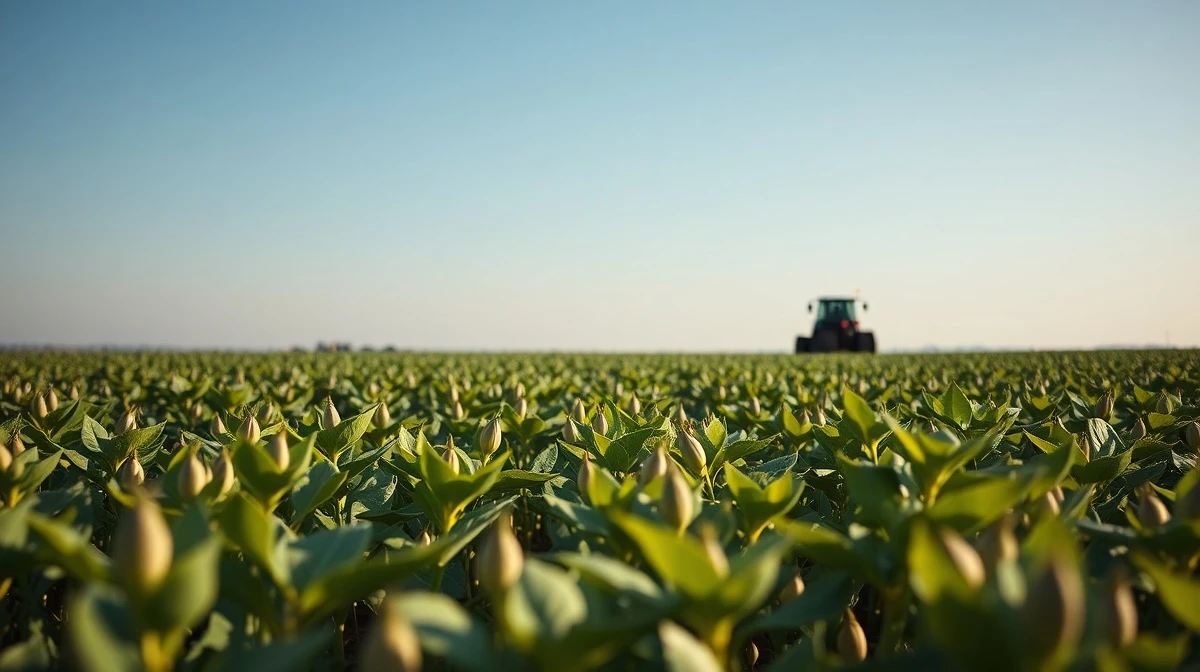
April 15, 2026 — U.S. soybean futures traded lower at midday, giving back recent gains. The move came as updated data showed American farmers planting at a brisk pace and Brazilian officials raising their harvest estimate.
Market Moves Lower
According to data from Barchart, soybean futures for May 2026 delivery were down 4 1/4 cents at $11.58 per bushel. The July contract fell 4 3/4 cents to $11.72 3/4. New-crop November futures saw the steepest decline, dropping 6 1/4 cents to $11.43 1/2.
Also read: Unusual Options Activity Spikes for Rivian, SiriusXM, and MP Materials on Thursday
The national average cash price for soybeans was $10.91, down 4 1/2 cents. Soymeal futures were $1.60 to $2.00 lower. Soy oil futures fell 25 to 35 points.
Planting Progress Accelerates
A key driver for the price pressure was Monday’s U.S. Department of Agriculture Crop Progress report. It showed 6% of the nation’s intended soybean acreage had been planted as of April 13. That pace is triple the 2% planted at the same time last year. It also exceeds the five-year average of 5%.
Also read: Wheat Futures Edge Lower as USDA Keeps U.S. Carryout Steady, Global Stocks Rise
Of the 18 major soybean-producing states, only Iowa was reported to be behind its average planting pace. The rapid start suggests farmers are taking advantage of favorable early-season conditions. This could lead to a longer growing season and potentially higher yields.
Industry watchers note that early planting often reduces weather-related risk later in the season. The implication is a greater potential for a large U.S. harvest, which weighs on futures prices.
Supply Pressures Mount
Additional supply news emerged from South America. Brazil’s national supply agency, CONAB, increased its estimate for the country’s soybean crop to 179.15 million metric tons. That’s a hike of 1.3 MMT from its March forecast. CONAB also raised its projected yield to a record 54.96 bushels per acre.
Meanwhile, data from China’s customs agency showed the country imported 4.02 million metric tons of soybeans in March. That figure is up 14.9% from March 2025. While strong demand from the world’s top soybean buyer provides underlying support, the immediate market focus was on swelling global supplies.
“The market is digesting two straightforward bearish inputs: faster U.S. planting and more beans from Brazil,” one market analyst noted. “Until there’s a threat to the crop, the path of least resistance is lower.”
What Traders Are Watching Next
Attention now turns to the National Oilseed Processors Association (NOPA) monthly report, scheduled for release on April 16. A Reuters survey of traders expects the report to show U.S. processors crushed 229.98 million bushels of soybeans in March. A figure above that estimate could indicate stronger domestic demand and provide some price support.
For investors, the day’s price action suggests the soybean market remains sensitive to supply-side data. The combination of a fast U.S. start and resilient South American production continues to cap rallies. Market participants will monitor weekly planting progress closely. Any significant delays could shift sentiment, but for now, the supply outlook is ample.
Market data sourced from Barchart and official reports from the USDA and CONAB.