April 15, 2026 — U.S. soybean futures closed lower in Tuesday’s trading session. Contracts fell between 3 and 6.5 cents across most months, pressured by rapid domestic planting and updated assessments of the massive Brazilian harvest.
Market Moves and Cash Prices
The May 2026 soybean contract settled at $11.58, down 4.25 cents. The July contract lost 4.75 cents to close at $11.72 3/4. New-crop November futures saw the largest decline, dropping 5.75 cents to $11.44.
Also read: Unusual Options Activity Spikes for Rivian, SiriusXM, and MP Materials on Thursday
Cash markets followed suit. Data from cmdtyView showed the national average cash bean price fell 4.25 cents to $10.91 1/4. The new crop cash price was down 6 cents at $10.82 3/4. Soy product markets were also weaker. Soymeal futures finished 20 cents to $2.20 lower. Soy oil futures were down 6 to 61 points.
Planting Progress Well Ahead of Schedule
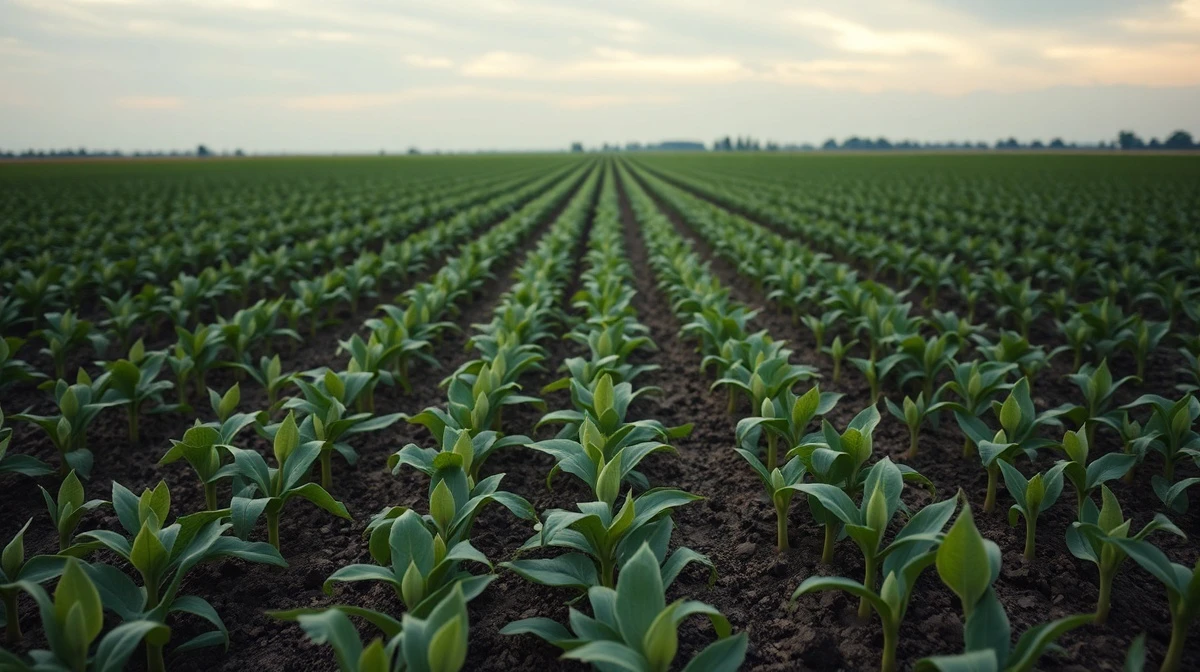
The price pressure stemmed partly from a fast start to the U.S. planting season. The USDA’s weekly Crop Progress report, released Monday, showed 6% of the national soybean crop was already in the ground as of Sunday. That pace is triple last year’s 2% and ahead of the five-year average of 5%.
Also read: Wheat Futures Edge Lower as USDA Keeps U.S. Carryout Steady, Global Stocks Rise
Among the 18 major soybean-producing states, only Iowa was reported to be behind its average planting pace. This early and widespread progress suggests favorable conditions for farmers. It also hints at the potential for a large crop if weather remains cooperative, adding to the global supply outlook.
Global Supply Factors Weigh
Beyond U.S. fields, supply news from South America and demand data from Asia influenced traders.
Brazil’s national supply agency, CONAB, raised its estimate for the country’s soybean crop to 179.15 million metric tons (MMT). That’s a 1.3 MMT increase from its March forecast. CONAB also hiked its projected yield to a record 54.96 bushels per acre, up 0.36 bushels from the previous month.
Meanwhile, Chinese customs data showed the country imported 4.02 MMT of soybeans in March. That figure is up 14.9% from March 2025. While strong, the import number was within market expectations and did little to offset the bearish sentiment from swelling supplies.
What Traders Are Watching Next
Market attention now turns to data set for release Wednesday. The National Oilseed Processors Association (NOPA) will publish its monthly soybean crush report. A Reuters survey of traders anticipates NOPA members crushed 229.98 million bushels of soybeans in March.
This figure is a key indicator of domestic demand. A number significantly above or below expectations could shift market sentiment. Industry watchers note that continued strong crush margins have supported processor activity, but export competition from South America remains a persistent headwind for U.S. prices.
Analysis: The Price Floor Question
The simultaneous strength in U.S. planting and Brazilian production creates a challenging environment for soybean bulls. The implication is a well-supplied global market for the foreseeable future.
“The market is digesting two big pieces of information: a U.S. crop that’s off to a great start and a South American harvest that just got bigger,” one market analyst noted. “Until there’s a threat to either of those supplies, rallies will likely be sold.”
For investors and farmers, the current trend suggests a focus on price risk management. The recent lows near $11.50 for the November contract may be tested if the upcoming U.S. growing season proceeds without major weather disruptions. The next major market-moving events will be weekly planting progress updates and any changes to South American export logistics.
Source: Market data and analysis from Barchart.com and official reports from the USDA, CONAB, and Chinese Customs.