
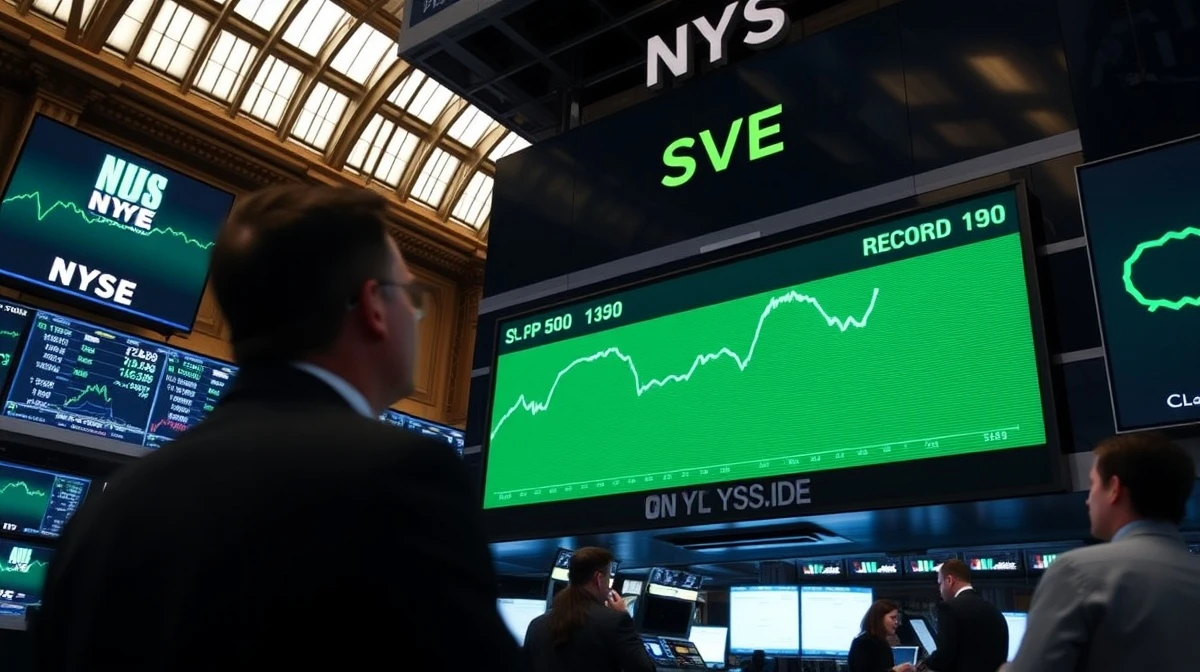
The S&P 500 and Nasdaq 100 closed at new record highs on Friday, powered by a surge in chipmaker and AI-infrastructure stocks, solid corporate earnings, and a stronger-than-expected April jobs report that signaled continued resilience in the U.S. labor market. The Dow Jones Industrial Average lagged, edging up just 0.02%, weighed down by weakness in software stocks.
Labor Market Shows Strength Despite Headwinds
The U.S. economy added 115,000 nonfarm payrolls in April, well above the 65,000 forecast by economists. March payrolls were also revised higher, from 178,000 to 185,000. The unemployment rate held steady at 4.3%, matching expectations. However, average hourly earnings rose just 0.2% month-over-month and 3.6% year-over-year, both below consensus estimates, suggesting wage pressures remain contained — a factor that could influence Federal Reserve policy.
Also read: SpaceX, OpenAI, and Anthropic: The AI IPO Wave That Could Reshape Public Markets
Consumer sentiment, meanwhile, plunged to a record low of 48.2 in the University of Michigan’s May survey, far below the expected 49.5. The decline reflected growing anxiety over inflation and geopolitical instability. Notably, one-year inflation expectations eased to 4.5% from 4.7%, and five-to-ten-year expectations dipped to 3.4%, offering a mixed signal for policymakers.
Chipmakers and AI Stocks Lead the Rally
Semiconductor and AI-infrastructure stocks were the day’s standout performers. Sandisk surged more than 15%, Micron Technology gained over 14%, Intel rose more than 13%, and Advanced Micro Devices climbed over 10%. Qualcomm, Applied Materials, KLA Corp, and Marvell Technology each posted gains of 5% or more. The rally reflected investor optimism about sustained demand for AI computing power and memory chips.
Also read: SpaceX IPO Allocation Leaves Binance, Kraken Users Empty-Handed Despite Massive Demand
Other notable movers included Akamai Technologies, which jumped more than 26% after raising its full-year revenue forecast and announcing a $1.8 billion AI cloud contract. Monster Beverage gained over 13% on better-than-expected quarterly sales. Block rose more than 7% after reporting stronger-than-expected earnings and raising its profit outlook.
Software Stocks and Some Tech Names Falter
Not all tech shares participated in the rally. Salesforce, Autodesk, Workday, ServiceNow, and Intuit each fell more than 2%. Adobe and Microsoft also declined over 1%. Cloudflare plunged more than 23% after issuing a weaker-than-expected revenue forecast, while HubSpot dropped over 18% on a disappointing outlook.
Geopolitical Tensions in the Strait of Hormuz
Markets also digested escalating tensions in the Middle East. Iran seized an oil tanker in the Strait of Hormuz on Friday, according to the semi-official Tasnim news agency, citing alleged violations. The U.S. military responded by targeting missile and drone launch sites in Iran that had been used to attack three U.S. Navy destroyers transiting the strait. The waterway remains effectively closed, disrupting roughly one-fifth of the world’s oil and liquefied natural gas shipments. Goldman Sachs estimates the disruption has drawn down nearly 500 million barrels from global crude stockpiles, with the figure potentially reaching 1 billion barrels by June. Crude oil prices edged higher on the news.
Bond Markets and Central Bank Outlook
Treasury yields fell as safe-haven demand increased amid the geopolitical uncertainty. The 10-year T-note yield declined 2.1 basis points to 4.365%. In Europe, the 10-year German Bund yield edged up slightly to 3.005%, while the UK gilt yield fell to a two-week low. ECB officials signaled heightened vigilance over inflation risks stemming from the Iran conflict, with markets pricing in a 79% chance of a 25-basis-point rate hike at the ECB’s June meeting. The Fed, meanwhile, faces a different calculus: markets see only a 6% probability of a rate cut at the June FOMC meeting, as the strong jobs data reduces urgency for easing.
Earnings Season Continues to Support Sentiment
With 83% of the 446 S&P 500 companies that have reported first-quarter results beating estimates, the earnings season has provided a solid underpinning for equity markets. Aggregate Q1 earnings are projected to rise 12% year-over-year, according to Bloomberg Intelligence. Excluding the technology sector, however, earnings growth slows to around 3%, the weakest in two years — a reminder that the rally remains concentrated in a narrow set of industries.
Conclusion
Friday’s session encapsulated the competing forces shaping markets today: strong corporate earnings and a resilient labor market are driving stocks higher, but record-low consumer sentiment and escalating geopolitical risks in the Middle East introduce significant uncertainty. The coming weeks will test whether the rally can broaden beyond AI and chip stocks, and whether central banks can address the twin challenges of inflation and slowing growth without derailing the economic expansion.
FAQs
Q1: Why did the S&P 500 hit a record high despite weak consumer sentiment?
The record high was driven by strong corporate earnings, particularly in the semiconductor and AI sectors, and a better-than-expected April jobs report. The consumer sentiment reading, while concerning, reflects long-term inflation anxiety rather than immediate spending behavior, and markets are currently focusing on corporate fundamentals.
Q2: How is the Strait of Hormuz disruption affecting markets?
The closure of the strait has disrupted about 20% of global oil and LNG shipments, pushing crude prices higher and increasing safe-haven demand for bonds. Central banks, particularly the ECB, are closely monitoring the situation for potential second-round inflation effects that could influence monetary policy decisions.
Q3: What does the mixed earnings data mean for the broader market?
While 83% of S&P 500 companies have beaten earnings estimates, the strong performance is concentrated in technology. Excluding tech, earnings growth is only about 3% — the weakest in two years. This suggests the market rally is narrow and may be vulnerable if AI-related spending slows or geopolitical risks escalate further.

