
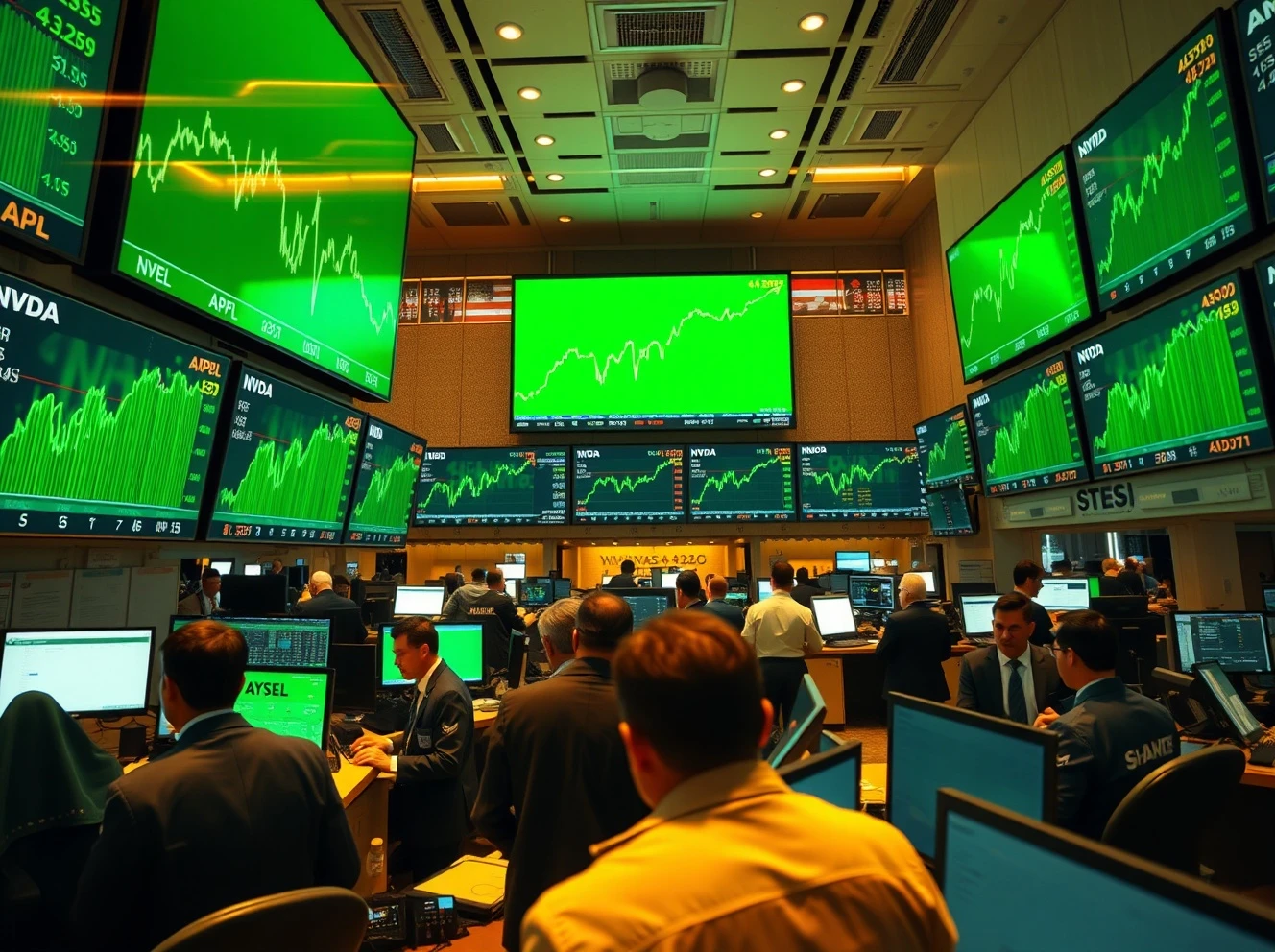
U.S. stock indexes closed higher on Friday, with the S&P 500 and Nasdaq 100 both posting new record highs, as a wave of stronger-than-expected corporate earnings and signs of a resilient labor market outweighed escalating geopolitical tensions in the Middle East. The S&P 500 rose 0.84%, the Dow Jones Industrial Average edged up 0.02%, and the tech-heavy Nasdaq 100 surged 2.35%, driven by a broad rally in chipmaker and AI-infrastructure stocks.
Labor Market Shows Strength Amid Global Uncertainty
The April nonfarm payrolls report provided a key pillar of support for markets. The U.S. economy added 115,000 jobs last month, significantly exceeding economists’ expectations of 65,000. Additionally, March payrolls were revised upward to 185,000 from the previously reported 178,000. The unemployment rate held steady at 4.3%, in line with forecasts. While average hourly earnings rose 0.2% month-over-month and 3.6% year-over-year—slightly below expectations—the data collectively painted a picture of a labor market that remains resilient despite headwinds from higher interest rates and geopolitical risks.
Also read: SpaceX, OpenAI, and Anthropic: The AI IPO Wave That Could Reshape Public Markets
However, the University of Michigan’s May consumer sentiment index fell to a record low of 48.2, well below the expected 49.5, reflecting deep consumer anxiety. Notably, the survey’s 1-year inflation expectations eased to 4.5% from 4.7%, and 5-10 year expectations dipped to 3.4%, offering a nuanced signal that while consumers are pessimistic, their inflation fears may be moderating slightly.
Geopolitical Tensions in the Strait of Hormuz
Markets also digested fresh developments in the Iran conflict. Iran’s semi-official Tasnim news agency reported that Iranian forces seized an oil tanker in the Strait of Hormuz on Friday, citing violations of maritime regulations. In response, U.S. forces targeted missile and drone launch sites in Iran that were used to attack three U.S. Navy destroyers transiting the strait. President Trump has threatened intensified strikes if Iran does not agree to a proposed deal to reopen the strait, which remains effectively closed. The strait is a critical chokepoint for global oil and liquefied natural gas, with Goldman Sachs estimating that the disruption has already drawn down nearly 500 million barrels from global crude stockpiles, a figure that could reach 1 billion barrels by June.
Also read: SpaceX IPO Allocation Leaves Binance, Kraken Users Empty-Handed Despite Massive Demand
WTI crude oil prices rose on the news, adding to upward pressure on energy stocks and providing a supportive backdrop for mining and commodity-related equities.
Earnings Season Continues to Impress
Corporate earnings remained a dominant positive catalyst. As of Friday, 83% of the 446 S&P 500 companies that have reported first-quarter results have beaten analyst estimates. According to Bloomberg Intelligence, aggregate Q1 earnings for the S&P 500 are projected to climb 12% year-over-year, though stripping out the technology sector reduces that growth to around 3%, the weakest in two years.
Among standout movers, Sandisk surged more than 15% to lead the Nasdaq 100, while Micron Technology gained over 14% and Intel jumped more than 13%. Advanced Micro Devices rose more than 10%, and Qualcomm, Applied Materials, and KLA Corp each posted gains of 5% or more. The rally extended to mining stocks, with Anglogold Ashanti, Southern Copper, and Barrick Mining all rising more than 3% as gold, silver, and copper prices rallied.
On the downside, software stocks weighed on the Dow, with Salesforce, Autodesk, Workday, and ServiceNow each falling more than 2%. Cloudflare dropped over 23% after issuing a weaker-than-expected revenue forecast, while HubSpot and Mettler-Toledo also declined sharply on disappointing guidance.
Interest Rates and Global Markets
In the bond market, June 10-year T-notes rose 7.5 ticks, pushing the yield down 2.1 basis points to 4.365%, as safe-haven demand increased amid the Strait of Hormuz tensions. The mixed labor report provided additional support, with weaker-than-expected wage growth offsetting the stronger headline payroll number. European bond yields were mixed, with the 10-year German Bund yield edging up to 3.005%, while the UK gilt yield fell to a two-week low.
Overseas markets were mostly lower. The Euro Stoxx 50 fell 1.02%, Japan’s Nikkei declined 0.19%, and China’s Shanghai Composite closed flat after retreating from a two-month high.
Conclusion
Friday’s session underscored the resilience of U.S. equities in the face of dual headwinds: a sturdy earnings season and a still-solid labor market on one side, and escalating geopolitical risk and consumer pessimism on the other. The S&P 500 and Nasdaq 100’s record closes suggest that, for now, corporate profitability and employment strength are carrying more weight with investors than the threat of supply disruptions and conflict. However, the trajectory of the Strait of Hormuz situation and its impact on energy prices and inflation expectations will remain critical factors in the weeks ahead.
FAQs
Q1: What drove the stock market rally on Friday?
The rally was primarily fueled by stronger-than-expected corporate earnings, with 83% of reporting S&P 500 companies beating estimates, and a resilient April jobs report that showed payroll growth well above forecasts. Gains in chipmaker and AI-infrastructure stocks led the advance.
Q2: How did the labor market data affect market sentiment?
The April nonfarm payrolls increase of 115,000, along with upward revisions to March data, signaled ongoing labor market strength. While wage growth was slightly below expectations, the overall report was seen as supportive for equities, as it suggested the economy can sustain growth without immediately prompting tighter monetary policy.
Q3: What is the significance of the Strait of Hormuz situation for investors?
The Strait of Hormuz is a vital passage for about one-fifth of the world’s oil and LNG. Its effective closure due to Iranian seizures and U.S. military responses has driven crude prices higher and drawn down global stockpiles. Investors are watching for any resolution or escalation, as prolonged disruption could fuel inflation and pressure central banks to tighten policy further.

