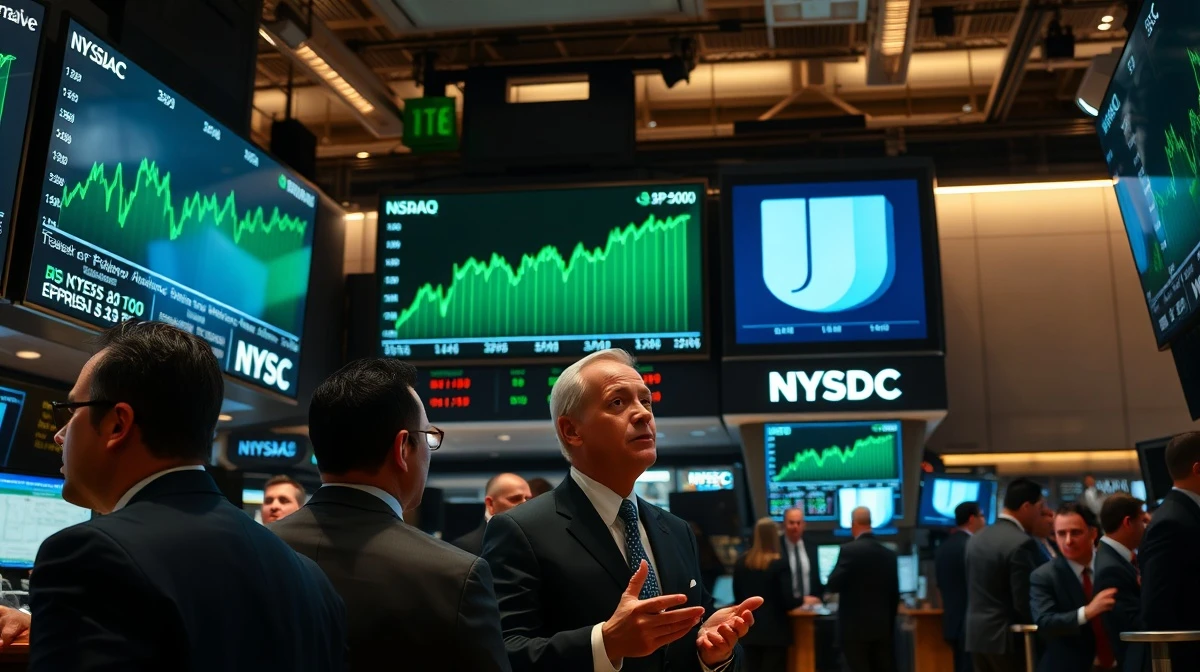
U.S. stock indexes finished Friday at new record highs, driven by a wave of stronger-than-expected corporate earnings and a labor market that continues to show surprising resilience. The S&P 500 and Nasdaq 100 both closed at all-time peaks, while the Dow Jones Industrial Average eked out a modest gain. The rally came despite escalating geopolitical tensions in the Middle East and a sharp drop in consumer sentiment to an all-time low.
Earnings Season Delivers Strong Results
The primary catalyst for Friday’s rally was the ongoing earnings season, which has consistently exceeded analyst expectations. According to data from Bloomberg Intelligence, 83% of the 446 S&P 500 companies that have reported first-quarter results have beaten estimates. Overall, Q1 earnings for the index are projected to rise by 12% year-over-year. However, stripping out the technology sector, that growth drops to approximately 3%, the weakest showing in two years, signaling a bifurcated economy where tech giants are carrying the broader market.
Also read: SpaceX, OpenAI, and Anthropic: The AI IPO Wave That Could Reshape Public Markets
Chipmaker and AI-infrastructure stocks led the charge. Sandisk surged more than 15%, while Micron Technology jumped over 14%. Intel, Advanced Micro Devices, and Qualcomm also posted double-digit gains. The strength in semiconductors offset weakness in software stocks, which dragged on the Dow. Salesforce, Autodesk, and Workday each fell more than 2%, while Adobe and Microsoft also closed lower.
Labor Market Data Supports Fed Patience
The U.S. Labor Department reported that nonfarm payrolls rose by 115,000 in April, well above the consensus estimate of 65,000. Additionally, March’s figure was revised upward to 185,000 from the previously reported 178,000. The unemployment rate held steady at 4.3%, matching expectations. However, average hourly earnings rose just 0.2% month-over-month and 3.6% year-over-year, both below forecasts. The softer wage data suggests that inflationary pressures from the labor market may be easing, which markets interpreted as a sign that the Federal Reserve can maintain its current policy stance without needing to hike rates.
Also read: SpaceX IPO Allocation Leaves Binance, Kraken Users Empty-Handed Despite Massive Demand
Despite the positive jobs data, consumer sentiment plunged. The University of Michigan’s May consumer sentiment index fell to 48.2, a record low in data going back to 1978, and well below the expected 49.5. Interestingly, inflation expectations eased slightly, with one-year expectations dropping to 4.5% from 4.7% and five-to-ten-year expectations slipping to 3.4%. The combination of a strong labor market and easing inflation expectations provided a favorable backdrop for risk assets.
Geopolitical Tensions in the Strait of Hormuz
The rally unfolded against a backdrop of heightened geopolitical risk. Iran’s semi-official Tasnim news agency reported that Iranian forces seized an oil tanker in the Strait of Hormuz on Friday, accusing it of attempting to disrupt oil exports. In response, U.S. forces targeted missile and drone launch sites in Iran that had been used to attack three U.S. Navy destroyers transiting the strait. President Trump has threatened intense strikes if Iran refuses a proposed deal to reopen the waterway, which remains effectively closed. Goldman Sachs estimates the disruption has already drawn down nearly 500 million barrels from global crude stockpiles, a figure that could reach 1 billion barrels by June. WTI crude oil prices rose on the news, adding to inflationary concerns globally.
Market Implications and Investor Outlook
The simultaneous occurrence of record stock highs and record-low consumer sentiment underscores a deep disconnect between Wall Street and Main Street. Investors are betting that resilient corporate profits and a stable labor market will outweigh geopolitical risks and consumer pessimism. The CME FedWatch Tool currently prices in only a 6% chance of a rate cut at the Federal Reserve’s June meeting, suggesting that markets do not expect the central bank to ride to the rescue anytime soon.
In Europe, the picture is different. The ECB is grappling with the inflationary impact of the Hormuz disruption, with swaps pricing in a 79% chance of a 25-basis-point rate hike at its June meeting. ECB officials have signaled that the reopening of the strait will be a key determinant for their decision.
Conclusion
Friday’s session was a study in contrasts: record highs for tech-heavy indexes, a resilient labor market, and strong earnings on one side, versus record-low consumer sentiment, escalating Middle East conflict, and a softening non-tech earnings picture on the other. For now, the bulls remain in control, but the fragility beneath the surface suggests that the path forward will depend heavily on how the geopolitical situation evolves and whether the consumer confidence weakness begins to translate into actual spending behavior.
FAQs
Q1: Why did stocks hit record highs despite geopolitical tensions?
Investors focused on the strong earnings season and resilient labor market data, viewing the geopolitical risks as a secondary factor for now. The technology and AI sectors, in particular, delivered results that exceeded expectations, driving the broader market higher.
Q2: How does the Strait of Hormuz disruption affect the U.S. stock market?
The closure of the strait, through which about a fifth of the world’s oil and LNG transits, has pushed crude prices higher. This creates inflationary pressure and uncertainty. However, the immediate impact on U.S. equities has been muted because the U.S. is less directly dependent on that route for its energy needs compared to Europe or Asia.
Q3: What does record-low consumer sentiment mean for the economy?
Consumer sentiment at 48.2 is a warning sign. If consumers become more pessimistic about their financial prospects, they may reduce spending, which could slow economic growth. However, actual spending data has not yet shown a significant pullback, creating a tension between sentiment and behavior that markets are watching closely.