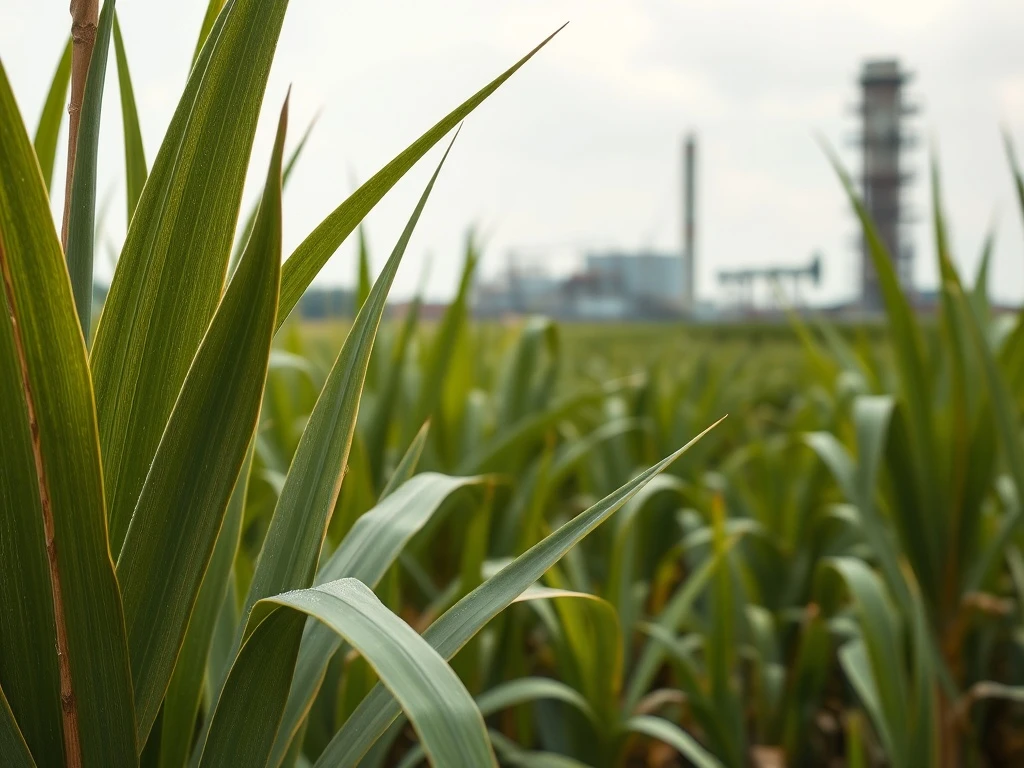
NEW YORK, March 10, 2026 — Global sugar markets experienced a significant downturn today, with prices falling sharply in direct response to a dramatic collapse in crude oil benchmarks. The May NY world sugar #11 contract closed down 1.44%, while May London ICE white sugar fell 0.50% by the 4:43 pm EDT market close. This immediate price movement was triggered by an 11% single-day plunge in crude oil, a drop that fundamentally alters the economic calculus for sugar mills worldwide. The sudden shift underscores the deep and volatile link between energy and agricultural commodities, a connection that is now dictating short-term price action across soft commodity exchanges.
The Crude Oil Catalyst: How Energy Prices Dictate Sugar Production
The mechanics behind today’s sell-off are rooted in biofuel economics. Sugar cane serves as a dual-purpose crop, crushed either for raw sugar or processed into ethanol, a gasoline substitute. Consequently, analysts from firms like Czarnikow and StoneX monitor the crude-to-ethanol price relationship closely. When crude oil prices plummet, as they did on Tuesday, ethanol becomes less profitable relative to pure sugar. This price signal encourages mills, particularly in dominant producer Brazil, to pivot their crushing operations away from biofuel and toward maximizing sugar output. The resulting expectation of increased sugar supplies entering the global market places immediate downward pressure on futures prices. This chain reaction began when President Trump stated the Iran conflict would end “very soon,” and G-7 nations announced plans for a coordinated strategic oil reserve release, sparking the oil sell-off.
Also read: SpaceX, OpenAI, and Anthropic: The AI IPO Wave That Could Reshape Public Markets
This is not an isolated event but part of a broader bearish trend for sugar. On February 12, prices hit 5.25-year lows, driven by persistent concerns over a global supply glut. The current oil-driven decline amplifies those existing fundamental worries, creating a compounded negative effect on market sentiment. Traders are now reassessing production forecasts for the coming months, knowing that today’s oil price could influence planting and milling decisions for the next crop cycle.
Global Surplus Forecasts: A Persistent Weight on the Market
Beyond the immediate oil shock, a consensus of swelling global stockpiles continues to anchor sugar in a bearish phase. Multiple authoritative institutions have revised their surplus projections upward for the 2025/26 and 2026/27 seasons, creating a formidable ceiling for any price rallies. The International Sugar Organization (ISO) forecast a 1.22 million metric ton (MMT) surplus for 2025-26 on February 27, a stark reversal from the 3.46 MMT deficit of the previous year. Simultaneously, analysts point to solid production rebounds in key Asian nations as the primary driver.
Also read: SpaceX IPO Allocation Leaves Binance, Kraken Users Empty-Handed Despite Massive Demand
- India’s Resurgent Output: The Indian Sugar and Bio-energy Manufacturers Association (ISMA) reported a 12% year-over-year production increase for the Oct-Feb period, reaching 24.75 MMT. While their full-year projection was slightly trimmed to 29.3 MMT, it remains substantially higher than crisis-level outputs of recent years.
- Thai and Pakistani Recovery: Both Thailand and Pakistan are expected to contribute significantly to the global surplus, with favorable weather patterns aiding recovery from previous drought-affected seasons.
- Analyst Consensus: Private analysts reinforce this outlook. Czarnikow expects an 8.3 MMT surplus for 2025/26, followed by 3.4 MMT in 2026/27. Green Pool Commodity Specialists project a 2.74 MMT surplus, while StoneX estimates 2.9 MMT.
Expert Analysis: Addressing a Oversupplied Market
Market specialists emphasize that the oil price drop acts as an accelerant on an already bearish fundamental picture. “The crude collapse removes a key support pillar for sugar prices,” explained a senior analyst from a major commodity trading house, who spoke on background due to company policy. “Ethanol parity provided a price floor. When that floor falls out, the market’s focus snaps back to the overwhelming surplus data from ISO, USDA, and others. The question is no longer if there’s a surplus, but how large it will be and how long it will suppress prices.” This perspective is echoed in research notes circulating on trading desks, which highlight the increased likelihood of mills locking in forward sales at current levels, further adding to selling pressure.
Regional Divergence: Brazil’s Data Offers a Lone Bullish Signal
Amid the global surplus narrative, data from Brazil, the world’s largest producer, presents a nuanced counterpoint. Industry group Unica reported on February 18 that sugar production in Brazil’s essential Center-South region fell 36% year-over-year in the second half of January, a surprisingly sharp decline. However, this potentially supportive data point is heavily tempered by context. Cumulative production for the 2025-26 season through January remains 0.9% higher than the previous year. Furthermore, the USDA’s Foreign Agricultural Service (FAS) predicts Brazil will still achieve a record 44.7 MMT of production for the full season. The table below illustrates the conflicting signals between short-term regional data and long-term global forecasts.
| Region/Entity | 2025/26 Forecast | Key Trend | Market Impact |
|---|---|---|---|
| Global (ISO) | 181.3 MMT Production (+3.0% y/y) | Shift from Deficit to Surplus | Strongly Bearish |
| India (ISMA/USDA) | 29.3-35.25 MMT Production | Sharp Recovery from Prior Lows | Bearish (Exports) |
| Brazil Center-South (Unica) | Late-Jan Output -36% y/y | Short-Term Decline | Mildly Supportive |
| Brazil Full Season (USDA FAS) | Record 44.7 MMT | Long-Term Growth | Bearish |
The Export Wildcard: India’s Policy Decisions Loom Large
The forward path for sugar prices now heavily depends on trade policy, particularly from India. On February 13, the Indian government approved an additional 500,000 MT of sugar for export this season, supplementing the 1.5 MMT approved in November. This decision directly injects more supply into the global market. Crucially, ISMA also reduced its estimate of sugar diverted to ethanol production from 5 MMT to 3.4 MMT, potentially freeing up even more cane for sugar and, subsequently, export. Market participants are watching for any signal of further export quota increases, which would likely trigger another leg down in global prices. India’s return as a major exporter, after restrictive quotas were imposed in 2022/23 due to poor harvests, remains the single largest bearish fundamental factor outside of the oil complex.
Industry and Trader Reactions to the Sell-Off
Reaction across the supply chain has been mixed. For end-users like global confectionery and beverage companies, the price drop offers welcome relief from input cost pressures and an opportunity to hedge future needs at lower levels. Conversely, sugar producers and farmers in non-subsidized regions face squeezed margins. “Today’s move is a reminder that we are price-takers, not just of sugar but of oil,” commented a representative from a Latin American sugar mill cooperative. “Our operational planning becomes a guessing game on geopolitical events far removed from our fields.” This sentiment highlights the increased volatility and interconnected risk that defines modern agricultural commodity trading.
Conclusion
The March 10, 2026, decline in sugar prices is a multifaceted event driven by an immediate catalyst—the crude oil collapse—acting upon a market already burdened by forecasts of a persistent global surplus. The bearish convergence of rising production in India and Thailand, potential for increased Indian exports, and the erosion of ethanol’s price support creates a challenging environment for any sustained price recovery. While short-term factors like Brazil’s recent production dip may offer temporary support, the overarching narrative is one of ample supply. Market watchers should now monitor weekly oil price movements for directional cues and await the next set of export policy announcements from New Delhi, which will determine the volume of sugar flowing into an already well-supplied world market.
Frequently Asked Questions
Q1: Why do sugar prices fall when crude oil prices drop?
Sugar prices fall because lower crude oil makes ethanol, a biofuel made from sugar cane, less profitable. Sugar mills then shift production from ethanol to raw sugar, increasing sugar supplies and pushing prices down.
Q2: How large is the projected global sugar surplus for 2025/26?
Forecasts vary but point to a significant surplus. The International Sugar Organization projects a 1.22 MMT surplus, while private analysts like Czarnikow and StoneX estimate surpluses between 2.9 MMT and 8.3 MMT.
Q3: What is the single biggest factor keeping sugar prices low besides oil?
The recovery and expansion of sugar production in India is the most significant bearish factor. India’s output is up 12% year-over-year, and the government has approved increased export quotas, adding substantial supply to the global market.
Q4: Could sugar prices recover soon?
A sharp, sustained recovery is unlikely in the near term due to the overwhelming surplus forecasts. Any price increase would require a major production shock in a key region like Brazil or a dramatic, sustained rally in crude oil prices.
Q5: How does this affect consumers at the grocery store?
Lower wholesale sugar prices can eventually translate to lower costs for sugar-containing products like soft drinks, candy, and baked goods, though the pass-through to retail shelves often takes time and may be offset by other cost factors.
Q6: What should a commodities investor watch next?
Investors should monitor weekly crude oil price trends, monthly production reports from Brazil’s Unica, and any further announcements from the Indian government regarding export quotas or ethanol blending policies.