
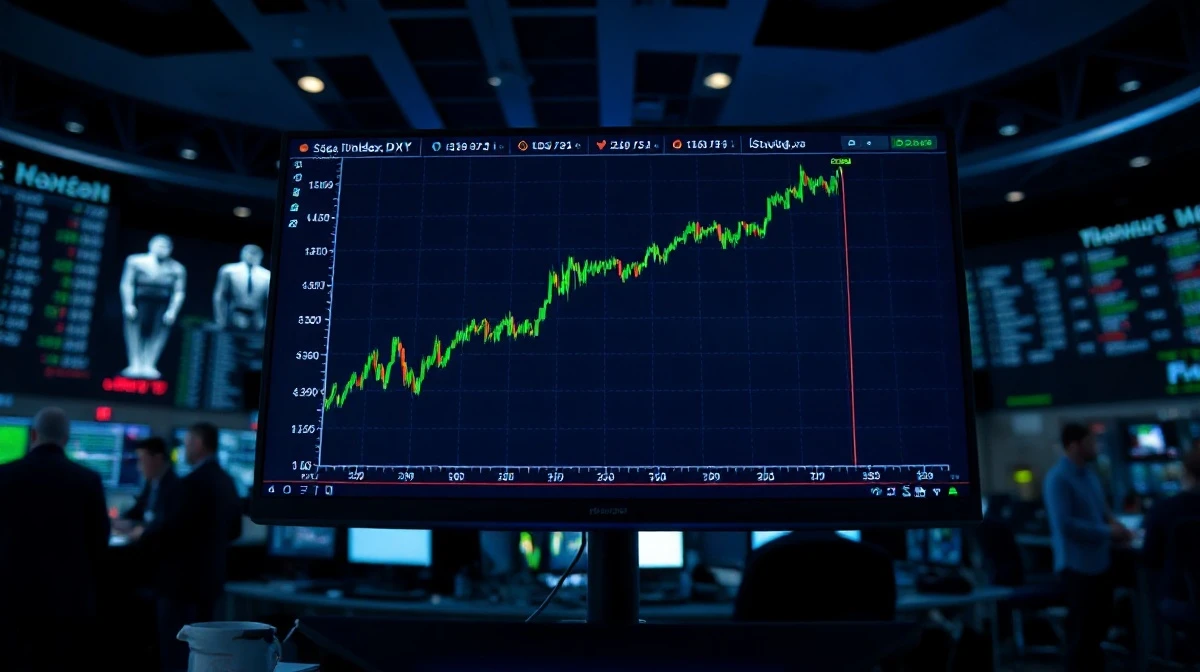
The US Dollar Index (DXY) surged 0.8% on Tuesday, breaking decisively above the 104.50 resistance level for the first time in three weeks. The move marks a sharp reversal from recent weakness and signals renewed confidence in the greenback.
Strong Data Fuels Dollar Demand
The catalyst for Tuesday’s rally was a stronger-than-expected reading on US durable goods orders, which rose 2.3% in February, well above the 0.8% forecast. The data suggests that manufacturing activity remains resilient despite elevated interest rates, reducing the likelihood of an imminent Fed rate cut.
Also read: NZD/USD slides to 0.5860 as New Zealand labor market deteriorates sharply
Federal Reserve Governor Christopher Waller added to the dollar’s momentum during a speech at the Peterson Institute for International Economics, stating that “the economy is not signaling urgency to cut rates.” His comments reinforced the view that the Fed’s next move may be delayed, supporting higher yields and dollar demand.
Technical Breakout Confirms Bullish Shift
The DXY’s move above 104.50 is significant from a technical perspective. This level had acted as resistance since early March, and its breach opens the door to a test of the 105.00 handle, according to analysts at Reuters. The index had been range-bound between 103.50 and 104.50 for much of the month, and Tuesday’s breakout on above-average volume suggests genuine buying interest rather than short-covering.
Also read: USD/JPY Intervention: Why the Yen's Gains May Be Short-Lived, Commerzbank Warns
Key support now sits at 104.00, while resistance beyond 105.00 is seen at 105.50, a level not touched since mid-February.
Implications for Currency Markets
The dollar’s resurgence has put pressure on major currencies. The euro fell 0.6% to $1.0780, while the Japanese yen weakened to 151.40 per dollar, approaching the level that previously prompted intervention warnings from Tokyo. The British pound also declined, trading at $1.2620, down 0.5%.
Emerging market currencies were hit harder, with the Mexican peso dropping 1.2% and the South African rand losing 1.5%. Commodity-linked currencies such as the Australian and Canadian dollars also weakened, as a stronger dollar typically weighs on commodity prices.
What to Watch Next
Markets will now focus on Friday’s release of the US Personal Consumption Expenditures (PCE) price index, the Fed’s preferred inflation gauge. A hot reading could accelerate the dollar’s rally, while a softer number might trigger a pullback. Traders are also watching for any verbal intervention from Japanese officials if the yen continues to weaken toward 152.
For now, the dollar appears to have reclaimed its footing, but the sustainability of this rally will depend on whether economic data continues to surprise to the upside and whether the Fed maintains its hawkish tone.
Frequently Asked Questions
What caused the US Dollar to rally today?
The rally was driven by stronger-than-expected US economic data and hawkish comments from Federal Reserve officials, which increased expectations for tighter monetary policy.
What is the DXY and why is it important?
The DXY is the US Dollar Index, which measures the value of the US dollar against a basket of six major currencies. It is a key benchmark for currency markets and global trade.
What are the implications of a stronger US dollar?
A stronger dollar can impact global trade, making US exports more expensive, and can pressure emerging market currencies and commodities priced in dollars.
Is this rally likely to continue?
Market analysts are divided. Some see further upside if economic data remains strong, while others caution that the rally may be overdone and a correction could follow.

