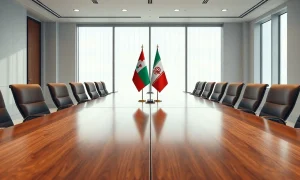
The US Dollar (USD) experienced a notable retreat during Wednesday’s trading session, driven by emerging reports suggesting a potential de-escalation in tensions between the United States and Iran. Market participants reacted to unconfirmed but widely circulated news of possible peace talks, prompting a shift away from safe-haven assets and weighing on the greenback.
Market Reaction to Geopolitical Developments
The dollar’s decline was broad-based, with the currency weakening against major peers including the Euro, British Pound, and Japanese Yen. The US Dollar Index (DXY), which measures the currency against a basket of six major currencies, fell approximately 0.4% on the day. Analysts attributed the move primarily to a recalibration of geopolitical risk premiums that had been built into the dollar in recent weeks. The reports of potential US-Iran negotiations, though lacking official confirmation, were enough to trigger profit-taking on long dollar positions and a rotation into riskier assets.
Also read: Pound Sterling faces a heavy week as Westminster empties out
Context and Implications for Forex Traders
The development comes against a backdrop of heightened Middle East tensions that had previously supported the dollar as a safe haven. For forex traders, the key takeaway is the market’s sensitivity to headline risk in this environment. A confirmed breakthrough in US-Iran relations could lead to further dollar weakness, while a breakdown in talks or renewed hostilities could quickly reverse the move. The situation remains fluid, and traders are advised to monitor official statements from both governments and major news outlets for confirmation. The broader trend for the dollar will also depend on upcoming US economic data, particularly inflation figures and Federal Reserve commentary, which could reassert influence over currency markets once the geopolitical noise subsides.
Why This Matters for Currency Markets
Geopolitical events can create sharp, short-term volatility in forex markets, often overriding fundamental economic drivers. For readers, understanding this dynamic is important for risk management. A sustained reduction in geopolitical risk could lower the dollar’s safe-haven premium, potentially opening the door for a broader correction. Conversely, the market’s current pricing may overestimate the likelihood of a peaceful resolution, creating risks for those betting against the dollar. The situation underscores the importance of staying informed on both geopolitical developments and central bank policy.
Also read: US Dollar Index Holds Firm Near 101.00 as Traders Assess Fed Outlook
Conclusion
The US Dollar’s retreat on US-Iran peace hopes highlights the currency market’s acute sensitivity to geopolitical shifts. While the move is significant, it remains contingent on further diplomatic developments. Traders should prepare for continued volatility and base decisions on confirmed facts rather than speculation. The coming days will be critical in determining whether this is the start of a lasting trend or a temporary reprieve.
FAQs
Q1: Why did the US Dollar fall on reports of US-Iran peace talks?
The US Dollar often acts as a safe-haven currency, meaning investors buy it during times of geopolitical uncertainty. Reports of potential peace talks reduce that uncertainty, leading investors to sell the dollar and move into riskier assets.
Q2: Is this a good time to sell US Dollars?
It depends on your risk tolerance and outlook. If you believe peace talks will succeed, selling dollars might be profitable. However, the situation is uncertain and could reverse quickly. It is advisable to wait for official confirmation before making major trading decisions.
Q3: How long will the dollar’s weakness last?
The duration depends on the outcome of US-Iran diplomacy. If a peace agreement is reached, dollar weakness could persist. If talks fail, the dollar is likely to rebound. Additionally, US economic data and Federal Reserve policy will eventually reassert influence over the currency’s direction.