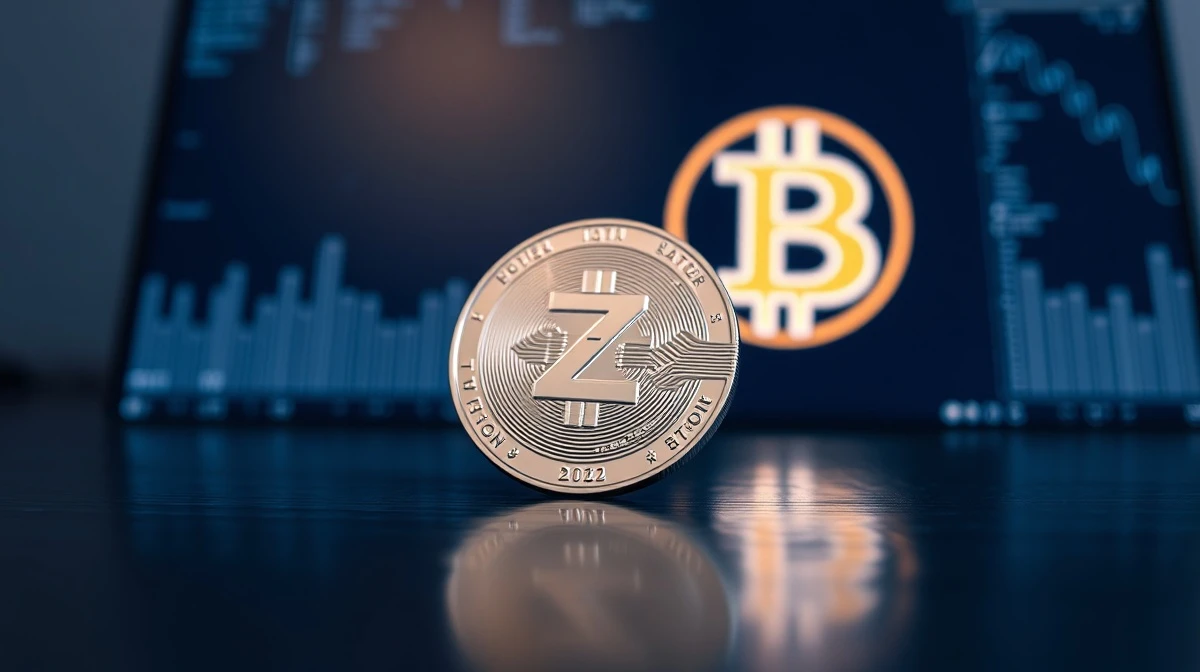
Zcash, the privacy-focused cryptocurrency known for its advanced zero-knowledge proof technology, has recently captured renewed attention from a segment of investors who are publicly labeling it a potential ‘next Bitcoin.’ While such comparisons are ambitious and often met with skepticism in the broader crypto market, the underlying discussion raises important questions about Zcash’s unique value proposition, its technological roadmap, and its place in the evolving digital asset market.
Why Zcash Is Being Compared to Bitcoin
The comparison stems from several key attributes that Zcash shares with Bitcoin, alongside distinct differences that some investors believe could drive future adoption. Like Bitcoin, Zcash has a fixed maximum supply of 21 million coins, creating a deflationary monetary policy that appeals to those seeking a store of value. However, Zcash’s primary differentiator is its privacy technology: shielded transactions using zk-SNARKs (zero-knowledge succinct non-interactive arguments of knowledge) allow users to transact without revealing sender, receiver, or amount on the public blockchain.
Also read: Ripple Partners With Water.org to Expand Clean Water Access Using RLUSD Stablecoin
Proponents argue that as regulatory scrutiny increases and on-chain analysis becomes more sophisticated, the demand for truly private digital cash could grow significantly. They point to Bitcoin’s transparent ledger as a potential liability for users who value financial privacy, positioning Zcash as a natural evolution.
The Technological and Market Reality
Despite the narrative, Zcash faces substantial hurdles before it could realistically challenge Bitcoin’s dominance. Bitcoin’s network effect, brand recognition, institutional adoption, and hash rate security remain orders of magnitude larger. Zcash’s market capitalization, currently in the hundreds of millions, is a fraction of Bitcoin’s trillion-dollar-plus valuation. Liquidity and trading volume are also significantly lower, making large-scale institutional adoption more challenging.
Also read: Galaxy Research Lowers CLARITY Act Approval Odds to 60% on Political Hurdles
Furthermore, Zcash has navigated a complex development history. The project was originally backed by the Electric Coin Company (ECC), which has undergone leadership changes and strategic pivots. The controversial ‘founders reward’ — a mechanism that allocated a portion of mining rewards to early investors and developers — was a point of contention for years, though it ended in late 2024, removing a major source of community friction.
Regulatory Headwinds and Privacy Coins
Privacy coins, including Zcash, Monero, and Dash, have faced increasing regulatory pressure globally. Several cryptocurrency exchanges have delisted privacy coins in jurisdictions with strict anti-money laundering (AML) rules. In Japan and South Korea, for example, privacy coins are effectively banned from major exchanges. This regulatory overhang creates uncertainty about Zcash’s accessibility and liquidity in key markets.
However, Zcash offers a unique feature that may mitigate some regulatory concerns: selective disclosure. Users can choose to share transaction details with auditors or counterparties using view keys, potentially allowing compliance with reporting requirements while maintaining privacy from the public. This flexibility could make Zcash more palatable to regulated entities than fully anonymous alternatives.
What Investors Should Understand
The ‘next Bitcoin’ label is often applied to promising cryptocurrencies during market cycles, and historically, few have lived up to the comparison. Ethereum, while enormously successful, serves a fundamentally different purpose as a smart contract platform. Litecoin, once called ‘digital silver,’ remains a smaller peer-to-peer currency. Zcash’s trajectory will depend on several factors: continued development of its privacy technology, regulatory clarity, user adoption, and the broader macroeconomic environment for digital assets.
For now, Zcash occupies a niche but important position in the crypto ecosystem. Its technology is widely respected among developers and privacy advocates, and its recent network upgrade, which improved shielded transaction efficiency, has been well received. Whether that translates into mainstream investment demand remains an open question.
Conclusion
While the comparison of Zcash to Bitcoin captures attention, it is more accurately understood as a reflection of investor enthusiasm for privacy technology rather than a realistic near-term market shift. Zcash offers genuine technological innovation in a space where privacy is increasingly valued, but it operates in a challenging regulatory environment and against a dominant incumbent with unmatched network effects. For readers evaluating Zcash, the focus should be on its technological merits, adoption trends, and regulatory developments — not on hyperbolic labels.
FAQs
Q1: What makes Zcash different from Bitcoin?
Zcash offers optional privacy features using zero-knowledge proofs, allowing transactions to be shielded from public view. Bitcoin’s ledger is fully transparent. Both have a 21 million coin supply cap.
Q2: Is Zcash legal to use?
Zcash is legal in most countries, but some jurisdictions restrict or ban privacy coins. Users should verify local regulations. Zcash’s selective disclosure feature may help with compliance.
Q3: Can Zcash really become the ‘next Bitcoin’?
While some investors use that language, Zcash’s market cap, adoption, and network security are far below Bitcoin’s. The comparison is more about shared monetary properties than a realistic market outcome.