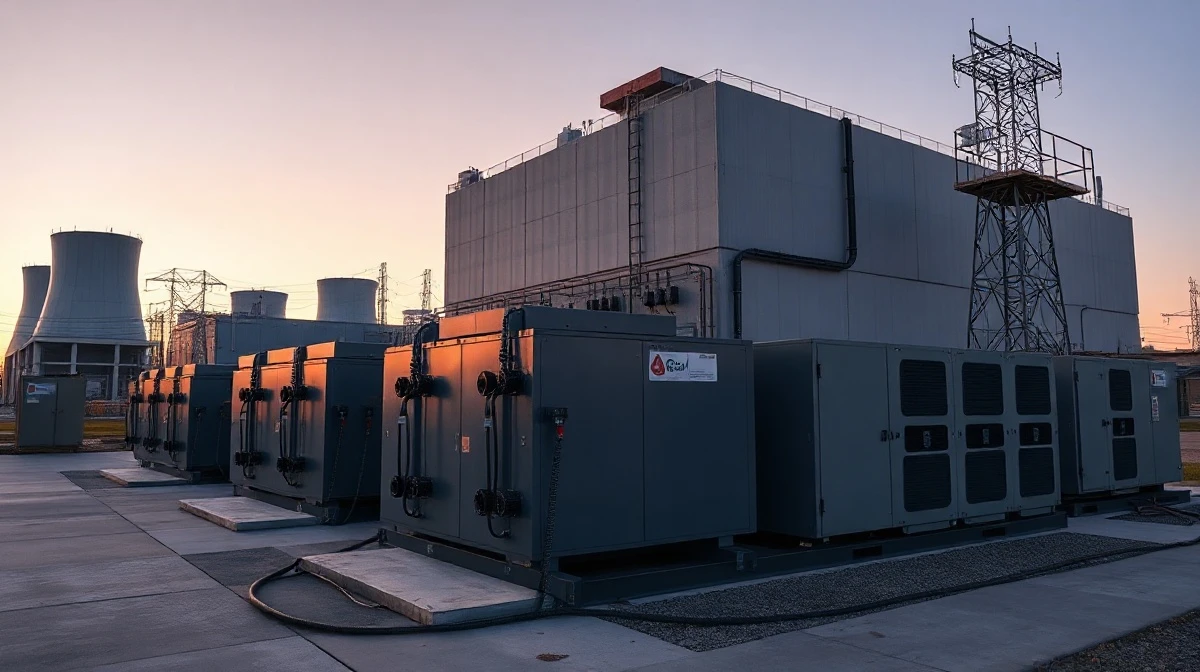
The rapid expansion of artificial intelligence infrastructure is creating a significant new demand stream for battery raw materials, including lithium, graphite, and copper. However, analysts at Benchmark Mineral Intelligence caution that electric vehicles will remain the primary driver of consumption for these critical minerals through the next decade.
AI Data Centers: A Growing Energy and Metals Consumer
Hyperscale data centers, which require vast amounts of electricity for computing and cooling, are increasingly turning to battery energy storage systems (BESS) to manage peak loads and ensure backup power. According to Benchmark’s Battery Energy Storage Lead Shan Tomouk, a single AI query consumes roughly 10 times the energy of a standard internet search, and training models like GPT-4 required an estimated 50 gigawatt-hours of electricity. This surge is reshaping the battery supply chain, with global data center electricity consumption projected to rise significantly through 2030, led primarily by the United States.
Also read: MoEngage acquires Aampe in bet that marketing’s future is millions of AI agents
Tomouk noted that natural gas is currently the preferred near-term power source for many operators, but energy storage is being deployed alongside to stabilize sudden load swings. Lithium iron phosphate (LFP) batteries are expected to dominate these applications due to their lower cost and suitability for stationary storage, according to Benchmark’s head of battery raw materials, Adam Webb.
Lithium Demand from Data Centers Set to Quadruple by 2035
Benchmark forecasts that lithium demand tied specifically to AI data center-related energy storage will rise from roughly 15,000 metric tons in 2025 to nearly 70,000 metric tons by 2035. Demand for purified phosphoric acid is expected to climb from 26,000 metric tons to 127,000 metric tons over the same period, while synthetic graphite demand could increase more than fivefold.
Also read: When the Trump administration cracks down on Anthropic, who benefits?
Despite these significant growth rates, analysts stressed that data centers will remain a relatively small portion of total battery metals demand compared to electric vehicles. By 2035, data center-related storage is expected to account for roughly 11 to 12 percent of total BESS demand for these materials, but only a single-digit share of overall global demand. EVs continue to dominate consumption forecasts.
Supply Chain Concentration Remains a Key Risk
Webb highlighted that China currently controls roughly 70 percent of refined lithium production, more than 70 percent of purified phosphoric acid refining, and over 90 percent of spherical graphite processing used in battery anodes. While diversification efforts are underway in North America and East Africa, China is expected to remain the dominant refining hub for the foreseeable future, creating ongoing supply chain vulnerability for both AI and EV markets.
The Copper Connection: AI Stocks and Metal Demand
Copper demand is also rising as AI infrastructure expands. Benchmark copper demand analyst Anya Hurd noted that copper plays a central role across data center construction, grid infrastructure, cooling systems, and semiconductor manufacturing. The firm expects copper demand tied to data center infrastructure to approach 500,000 metric tons this year and surpass 1 million metric tons by 2040.
Interestingly, copper prices have recently shown a stronger correlation with AI stocks than with traditional supply-demand fundamentals. Hurd attributed this partly to a high-profile error in an NVIDIA article that initially misstated copper requirements by a factor of 2,200, leading to widespread clickbait headlines. While the psychological link between AI growth and metal demand has amplified investor interest, physical consumption remains modest compared to total global supply.
Conclusion
The AI boom is undeniably creating new demand for battery metals and copper, particularly through the expansion of hyperscale data centers and energy storage systems. However, electric vehicles remain the dominant consumption driver for these materials through 2035 and beyond. Investors and industry stakeholders should monitor both sectors, but recognize that the EV market continues to set the baseline for long-term demand fundamentals.
FAQs
Q1: How much lithium will AI data centers consume by 2035?
Benchmark Mineral Intelligence forecasts lithium demand from AI data center-related energy storage will reach nearly 70,000 metric tons by 2035, up from roughly 15,000 metric tons in 2025.
Q2: Are data centers more important than EVs for battery metals demand?
No. While data center demand is growing rapidly, it is expected to account for only a single-digit percentage of total global battery metals demand by 2035. Electric vehicles remain the dominant consumption driver.
Q3: Why is copper demand linked to AI?
Copper is essential for data center construction, grid infrastructure, cooling systems, and semiconductor manufacturing. Benchmark expects copper demand from data centers to surpass 1 million metric tons by 2040.
Q4: What are the main supply chain risks for battery metals?
China controls approximately 70 percent of refined lithium production and over 90 percent of spherical graphite processing, creating significant concentration risk for both AI and EV supply chains.