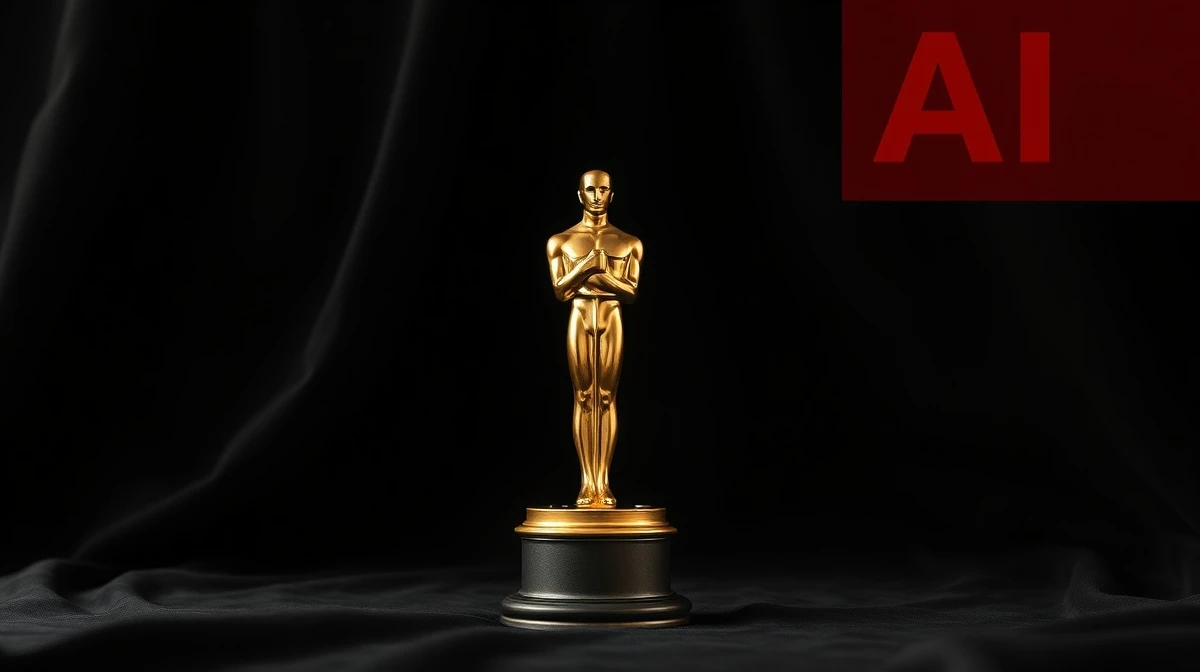
May 3, 2026 — The Academy of Motion Picture Arts and Sciences released new rules on Friday that explicitly bar AI-generated actors and scripts from Oscar eligibility. The changes target performances and screenplays that lack human authorship.
Only performances “credited in the film’s legal billing and demonstrably performed by humans with their consent” will qualify for Academy Awards, the organization said. Screenplays must be “human-authored” to be eligible.
Also read: AI chip shortage may force Apple to raise iPhone and Mac prices, Tim Cook warns
The Academy also said it can request more information about a film’s AI usage and “human authorship.” These rules take effect immediately for the upcoming awards cycle.
Why the Rules Changed Now
The decision comes as AI-generated content becomes more visible in Hollywood. An independent film featuring an AI-generated version of actor Val Kilmer is in production. AI “actress” Tilly Norwood continues to make headlines. New video models are prompting some filmmakers to make sweeping statements about the industry’s future.
Also read: Chi-Hua Chien, who spotted Facebook early, says AI's biggest winners won't be selling AI
AI was a central issue during the 2023 actors’ and writers’ strikes. The Writers Guild of America and SAG-AFTRA both pushed for protections against AI replacing human workers. Those contracts included some guardrails, but the new Oscar rules go further.
Industry watchers note that the Academy’s move signals a broader pushback against AI in creative fields. The implication is clear: the Oscars will remain a human-centric awards body.
Broader Context Beyond Hollywood
The AI debate extends beyond film. A novel was recently pulled by its publisher due to apparent AI use. Several writers’ groups have declared that AI-generated work is ineligible for their awards.
Data from the Writers Guild of America shows that AI-related contract provisions were among the most contentious during the 2023 negotiations. The new Oscar rules could set a precedent for other entertainment awards bodies.
What this means for investors is that AI companies targeting Hollywood may face headwinds. Studios using AI tools will need to carefully document human involvement to maintain awards eligibility.
What the Rules Actually Say
The Academy’s new rules don’t ban AI entirely. Films can still use AI tools in production, visual effects, or sound design. The restrictions target acting and writing specifically.
For performances, the key requirement is that a human actor performed the work and consented to its use. That rules out digital recreations of deceased actors or synthetic performances generated entirely by AI.
For screenplays, the Academy requires that the text be “human-authored.” AI-assisted writing tools that generate drafts or dialogue would likely disqualify a script unless the human contribution is substantial and verifiable.
The Academy reserved the right to request additional documentation about AI usage. Films that fail to provide adequate information could be disqualified.
Reactions and Next Steps
No official statements from studios or guilds were available at press time. But the rules are expected to generate debate among filmmakers and producers.
Some independent filmmakers have already expressed concerns about the rules’ vagueness. The term “demonstrably performed by humans” could be interpreted differently depending on the film’s production methods.
The Academy said it will provide further guidance in the coming months. Awards season typically begins in late fall, giving filmmakers time to adjust.
For now, the message is clear: the Oscars want human stories, told by human artists.