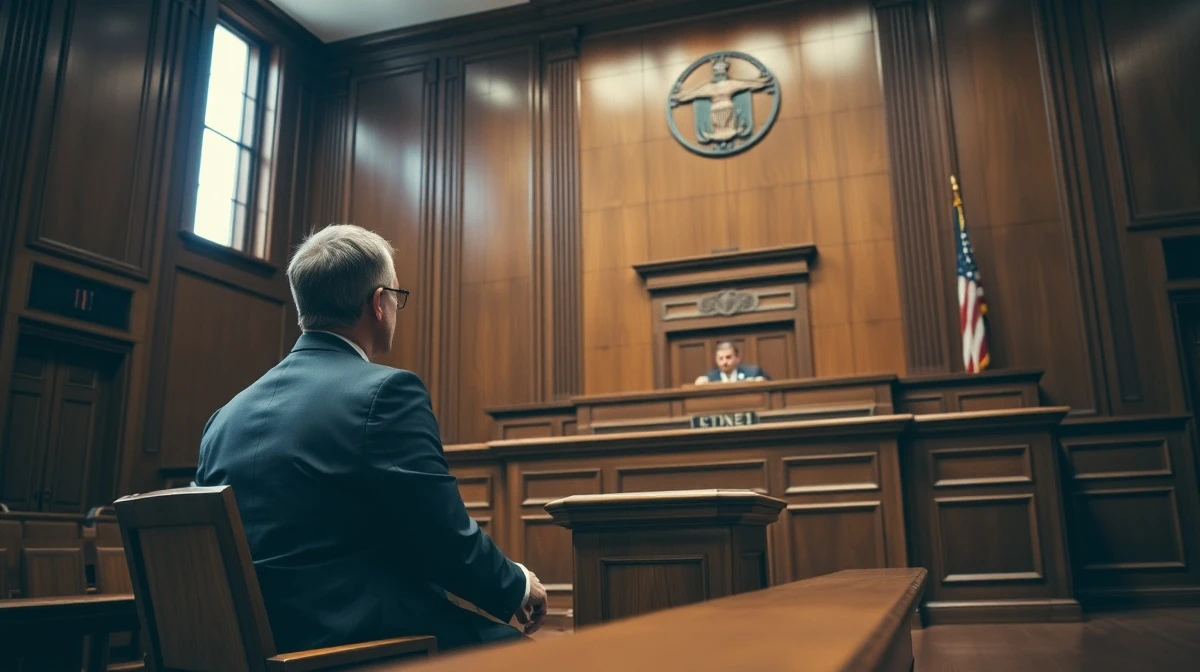
San Francisco, CA — April 30, 2026 — Elon Musk took the stand Wednesday in a California federal court to argue that Sam Altman and OpenAI’s cofounders “stole a charity.” By the end of the day, he had admitted under oath that Tesla is not currently pursuing artificial general intelligence — directly contradicting a tweet he posted just weeks earlier.
It was that kind of day for Musk.
Also read: Inside the FBI’s 22,000-square-foot replica town built to train agents in real-world cyberattacks
The lawsuit he filed challenges OpenAI’s structure. Musk alleges Altman and others tricked him into backing a nonprofit, then launched the lab’s for-profit arm and let it dominate the organization. After hours of testimony, the case may hinge on how much jurors and Judge Yvonne Gonzalez Rogers distinguish between investors whose profits are capped and those whose profits are not.
The Core Dispute
In Musk’s telling, he cofounded OpenAI with Altman, Ilya Sutskever, Greg Brockman, and others. He trusted them to build AI for humanity. Over time, he became suspicious of their motives. He concluded they were “looting the nonprofit.”
Also read: Google sues alleged Chinese cybercrime network that used AI to send millions of scam texts
OpenAI’s lawyer William Savitt sought to complicate that story during cross-examination. Savitt showed that Musk had supported efforts to transition OpenAI toward for-profit status so it could raise funds to compete with firms like Google. Musk had even explored incorporating the AI lab into Tesla.
Musk testified he discussed converting the company to a for-profit as early as 2016. In 2017, he explored creating a for-profit arm where he would hold majority equity and control. When those plans fell apart, he stopped making regular donations to OpenAI, though he continued paying for its office space until 2020.
Musk’s Tweets Haunt Him
The cross-examination extended to Tesla’s AI ambitions. Musk said Tesla’s AI work is focused only on self-driving, not artificial general intelligence — AGI refers to systems that can perform any intellectual task a human can.
But Savitt asked about a recent tweet claiming that “Tesla will be one of the companies to make AGI.”
“We are not pursuing AGI right now,” Musk told the court.
Industry watchers note this contradicts Musk’s public statements. Tesla shareholders may want to take note.
Musk was also asked about a tweet claiming he invested $100 million in OpenAI, rather than the $38 million that actually changed hands. He argued his reputation and network made up for the disparity.
Poaching and Safety Concerns
Savitt brought up emails where Musk backed efforts by Tesla and his brain interface company Neuralink to poach employees from OpenAI while he was still on that company’s board. One conversation focused on Andrej Karpathy, who left OpenAI to lead self-driving work at Tesla. Another focused on Sutskever, whom Shivon Zillis — Musk’s longtime adviser and mother of four of his children — suggested Musk recruit to Tesla.
Zillis was a member of the OpenAI board when it approved some of the transactions at issue.
The most consequential thread of the day may have been about safety. Part of Musk’s case rests on the idea that OpenAI’s transition to a traditional corporation is dangerous because it reduces focus on safety. Savitt had Musk admit that all AI companies, including his own, suffer from this risk.
Judge Gonzalez Rogers halted that line of questioning but made clear it would resume with limits. When Musk’s lawyers floated questions about ChatGPT’s role in the Tumbler Ridge shooting — a 2024 incident in Canada where a man killed his family after conversations with the chatbot — she said she didn’t want to hear about scandals caused by AI models. But xAI and OpenAI’s approaches to safety were fair game.
What’s Next
Musk returns Thursday for another round of adversarial questioning. Also expected to testify are his family office manager Jared Birchall, AI safety expert Stuart Russell, and OpenAI president Greg Brockman.
The case continues to draw attention as it tests the boundaries of nonprofit governance in the AI industry. According to TechCrunch, the outcome could set precedent for how AI labs structure themselves. Reuters reported that the trial is expected to last several weeks.