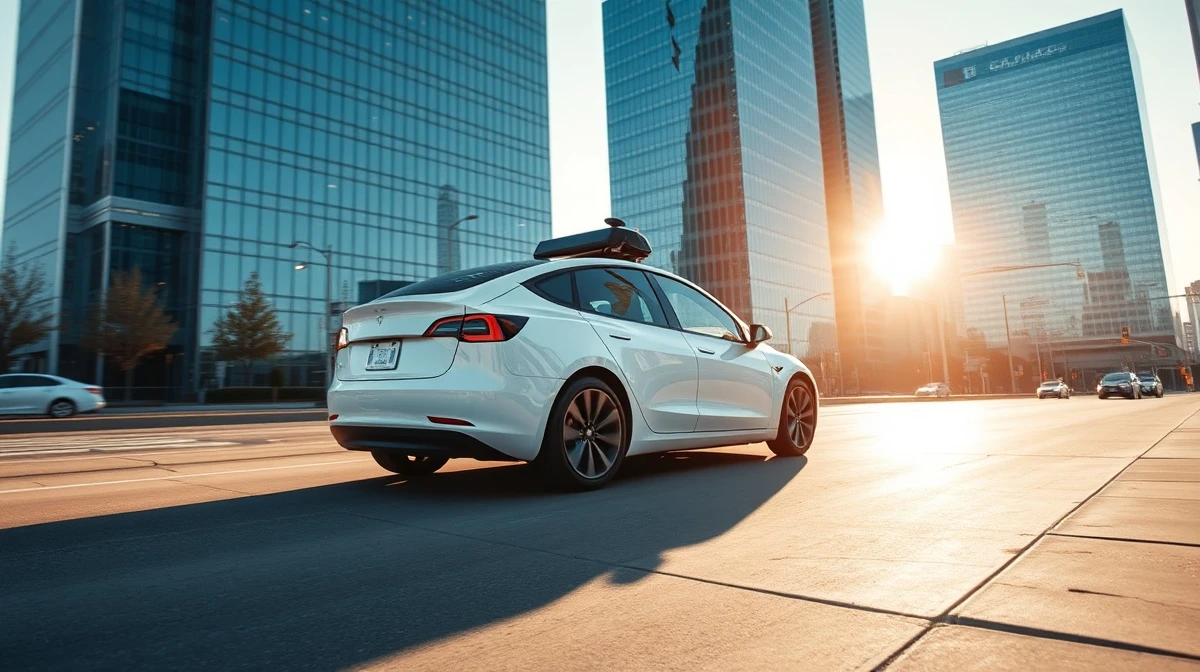
April 19, 2026 — Tesla has launched its fully driverless robotaxi service in two major new markets. The company announced via a social media post that its autonomous ride-hailing service is now operating in Dallas and Houston.
Texas-First Expansion
The move makes Dallas and Houston the second and third cities to get the service, following its initial launch in Austin. According to the company’s post, which included a brief video of vehicles operating without anyone in the front seats, the expansion is now live. All of Tesla’s current robotaxi operations are concentrated in Texas. The company began offering rides without human safety drivers in Austin in January of this year.
Also read: Uber to deploy 500 sensor-packed Hyundai Ioniq 5 EVs this year to gather autonomous driving data
This suggests a deliberate strategy to prove the technology in a single state’s regulatory environment before a wider national rollout. Industry watchers note that Texas has been a favorable testing ground for autonomous vehicles due to its regulatory climate and weather conditions.
Safety Data and Fleet Size
Public records provide some insight into the service’s performance in its first market. A February filing from Tesla revealed that its Austin robotaxis have been involved in 14 crashes since the service launched. The company has not detailed the severity or cause of those incidents. What this means for investors is a continued focus on real-world safety data as the key metric for scaling.
Current fleet size in the new cities appears small. Data from the crowdsourced Robotaxi Tracker website shows only a single vehicle logged as active in each of Dallas and Houston. For comparison, the same source tracks 46 active vehicles in Austin. This indicates a cautious, incremental rollout rather than a mass deployment.
“The low vehicle count in the new cities is telling,” said one analyst who follows the sector. “It’s a soft launch. They’re likely testing infrastructure and demand with a handful of cars before committing more resources.”
Broader Service Offerings
Tesla’s broader ride-hailing ambitions extend beyond Texas. The company also operates a more limited service with human drivers in the San Francisco Bay Area. This hybrid approach allows it to gather mapping data and user experience in a dense, complex urban environment while the fully autonomous technology is refined elsewhere.
The expansion pits Tesla against established players like Waymo and Cruise, though in different geographic markets. It also creates a new competitive dynamic with traditional ride-hail companies. The implication is a gradual reshaping of urban transportation, starting in select metropolitan areas.
What Happens Next
Attention will now turn to operational data from Dallas and Houston. Key questions include ridership rates, trip efficiency, and, critically, any new safety reports. Regulatory filings in those cities will be scrutinized. The company’s ability to scale its fleet from a few vehicles to hundreds will be the next major test.
For consumers in these cities, the service represents a new, albeit limited, transportation option. For the industry, it’s another step toward a future where driverless cars are a common sight. The success or failure of this Texas-centric expansion will likely dictate Tesla’s timetable for entering other states.
You can view Tesla’s official announcement on the company’s social media account. Safety incident data for autonomous vehicles is published by the National Highway Traffic Safety Administration (NHTSA).