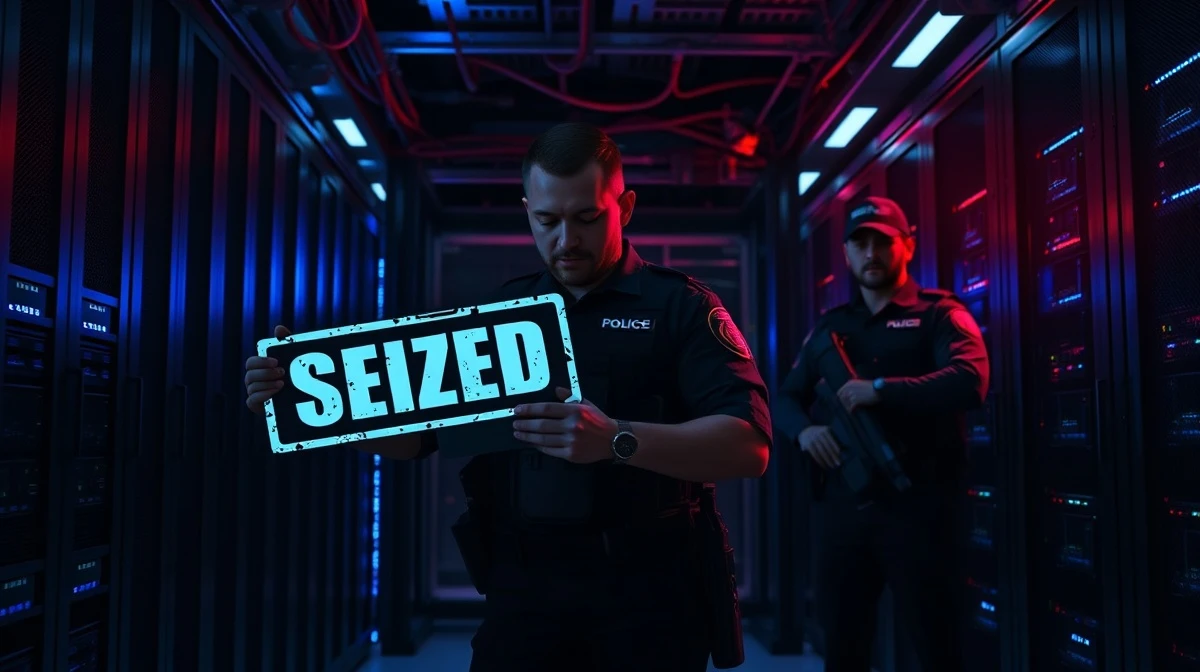
An international coalition of law enforcement agencies announced Thursday the takedown of First VPN, a virtual private network service that had become a critical tool for cybercriminals. The operation, which involved the FBI and Europol, led to the arrest of the service’s administrator and the dismantling of servers across 27 countries.
First VPN’s Role in the Cybercrime Ecosystem
According to the FBI, at least 25 ransomware gangs relied on First VPN to conceal their activities. The service was used not only for ransomware attacks but also for scanning networks, operating botnets, launching distributed denial-of-service (DDoS) attacks, and running fraud schemes. Europol described First VPN as “deeply embedded in the cybercrime ecosystem,” noting that it appeared in nearly every major cybercrime investigation the agency supported in recent years.
Also read: Roost, the viral 'slow-cial' app, delivers messages at the speed of birds
First VPN marketed itself on cybercrime forums, including Russian-language marketplaces, promising anonymity and log-free service. In one promotional post, the service claimed: “We do not store any logs that would allow us or third parties to link an IP address in a specific period of time with a user of our service.” Despite these claims, investigators obtained the service’s user database and identified thousands of users linked to criminal activity.
How the Investigation Unfolded
The investigation, launched in December 2021, culminated in a coordinated action that disrupted First VPN’s infrastructure. Europol confirmed that users were notified of the shutdown and informed that they had been identified. The operation involved seizing servers and freezing assets tied to the service.
Also read: Final call: Startup Battlefield Australia applications extended to July 20
First VPN offered features specifically designed for criminal users, including anonymous payment options and hidden infrastructure. This made it a preferred choice for threat actors seeking to evade law enforcement scrutiny. The service’s administrator now faces charges that could carry significant prison time, though specific charges have not yet been disclosed.
Implications for Cybersecurity and Privacy
The takedown sends a clear message to VPN providers that make possible criminal activity: law enforcement is willing and able to pursue them across borders. For legitimate VPN users, the operation highlights the importance of choosing services that prioritize transparency and comply with legal standards. The case also underscores the growing collaboration between international agencies in combating cybercrime.
Security experts note that while this operation disrupts a key tool for ransomware gangs, it is unlikely to eliminate the threat entirely. Cybercriminals will adapt, seeking alternative services. However, the removal of a widely used infrastructure node creates immediate operational challenges for active criminal groups.
Conclusion
The shutdown of First VPN represents a significant victory for law enforcement in the ongoing fight against ransomware and cybercrime. By targeting the services that enable criminal activity, agencies are disrupting the ecosystem that supports digital extortion. The arrest of the administrator and the exposure of thousands of users serve as a deterrent and a reminder that anonymity online is not absolute.
FAQs
Q1: What was First VPN and why was it targeted?
First VPN was a virtual private network service that marketed itself to cybercriminals. It was used by at least 25 ransomware gangs and other threat actors to conceal their identities and infrastructure. Law enforcement targeted it because it had become a critical enabler of cybercrime.
Q2: How did law enforcement identify First VPN users despite the service’s no-log claims?
Investigators obtained the service’s user database and analyzed connection logs. Despite First VPN’s claims of not storing logs, the investigation revealed that user activity could be linked, exposing thousands of individuals tied to cybercrime.
Q3: What happens to cybercriminals who used First VPN now that the service is shut down?
Users have been notified that they have been identified, and law enforcement may pursue individual investigations. The disruption forces criminals to find alternative services, but it creates immediate operational gaps that can be exploited by authorities.