SpaceX, the aerospace company founded by Elon Musk 24 years ago, has publicly filed its S-1 registration for an initial public offering, revealing a sprawling technology conglomerate that has lost more than $37 billion since inception. The filing, posted after markets closed Wednesday, provides the most detailed financial and operational look yet at a company that has grown far beyond reusable rockets into satellite internet, artificial intelligence, and futuristic transportation concepts.
When SpaceX lists on the Nasdaq under the ticker “SPCX” later this year, it is expected to become the largest IPO in history, with a reported valuation of $1.75 trillion and plans to raise approximately $75 billion. The offering will test investor appetite for a company that combines a proven satellite business with enormous speculative bets on AI, space manufacturing, and Mars colonization.
Also read: Roost, the viral 'slow-cial' app, delivers messages at the speed of birds
A business dominated by Starlink, weighed down by AI losses
The S-1 filing reveals that SpaceX’s Starlink satellite internet service generated more than half of the company’s 2025 revenue, contributing approximately $11 billion of the $18 billion total. However, the company posted a net loss of $4.9 billion last year, according to figures previously reported by Reuters.
Much of the financial strain comes from Musk’s artificial intelligence company, xAI, which was recently merged into SpaceX. The filing shows SpaceX directed roughly 60% of its 2025 capital spending, or around $20 billion, to its AI division. That unit, which houses the Grok chatbot, lost billions last year while growing revenue by only about 22% — a rate far below that of leading AI labs like OpenAI and Anthropic.
Also read: Final call: Startup Battlefield Australia applications extended to July 20
SpaceX also disclosed that it faces legal battles following the absorption of Musk’s AI and social media companies, which the company says will likely cost it $530 million.
Starship: The linchpin of SpaceX’s future
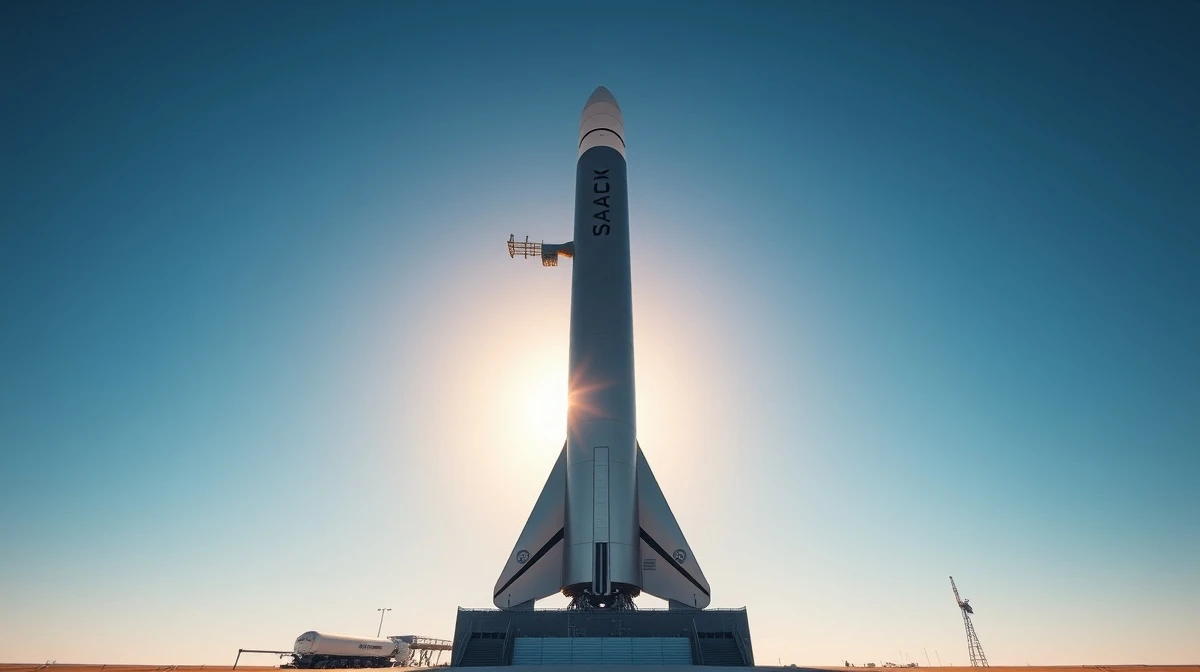
Despite the company’s diversified portfolio, the S-1 makes clear that SpaceX’s long-term prospects hinge on the success of Starship, the fully reusable heavy-lift rocket that has endured multiple explosions and technical redesigns. The company spent $3 billion on Starship research and development in 2025 and another $930 million in the first quarter of 2026.
SpaceX expects Starship to begin delivering payloads to orbit in the second half of 2026, with Starlink satellite deployments following soon after. The company plans to use Starship to launch next-generation V2 mobile satellites in 2027. Beyond satellite launches, SpaceX envisions using Starship for Mars exploration, orbital AI data centers, and even ultra-fast point-to-point Earth transportation — though the filing categorizes many of these as “future markets” with no near-term timeline.
The company argues that Starship is critical to reducing the cost of reaching orbit by 99% or more relative to historical averages.
Elon Musk retains total control
The filing confirms that Musk will remain CEO, CTO, and Chairman of the board after the IPO. He owns 93.6% of SpaceX’s Class B stock, which carries 10 votes per share, giving him 85.1% of total voting power. That stake is expected to decline slightly after the IPO but will remain above 50%, allowing SpaceX to avoid certain corporate governance requirements for independent directors.
Musk was also awarded a new compensation package at the start of 2026 that could grant him up to 1 billion shares of Class B stock if he achieves two ambitious milestones: increasing SpaceX’s value to $7.5 trillion and establishing a permanent human colony on Mars with at least one million inhabitants. He could earn additional shares if the company builds space-based data centers capable of delivering 100 terawatts of compute per year.
What the IPO means for investors
For potential investors, the S-1 presents a company with a profitable core business in Starlink, but one that is spending heavily on speculative ventures with uncertain payoffs. The filing includes 36 pages of risk factors, ranging from the technical challenges of Starship to the regulatory and competitive pressures in AI.
SpaceX claims it has identified the “largest actionable total addressable market in human history” at $28.5 trillion, with $22.7 trillion attributed to enterprise AI applications. However, the company’s AI division has yet to demonstrate the growth rates of its competitors, and the path to profitability remains unclear.
Conclusion
The SpaceX IPO represents a landmark moment for public markets, offering investors a rare chance to buy into a company that has already transformed space access and satellite communications. But the S-1 also reveals a business that is deeply tied to Elon Musk’s personal vision and risk appetite, with enormous sums being poured into AI and Starship development. The success of the offering will depend on whether the market shares Musk’s conviction that these bets will pay off in the long run.
FAQs
Q1: When will SpaceX go public?
SpaceX is expected to list on the Nasdaq under the ticker “SPCX” later this year, though no exact date has been set. The IPO is expected to raise approximately $75 billion at a valuation of $1.75 trillion.
Q2: How much money has SpaceX lost?
According to the S-1 filing, SpaceX has accumulated more than $37 billion in losses since its founding in 2002. In 2025 alone, the company lost $4.9 billion on revenue of $18 billion.
Q3: Will Elon Musk control SpaceX after the IPO?
Yes. Musk owns 93.6% of Class B stock, which gives him 85.1% of voting power. That stake is expected to remain above 50% after the IPO, allowing him to maintain control and avoid certain independent director requirements.
Q4: What is the role of AI in SpaceX’s business?
SpaceX merged with xAI, Musk’s artificial intelligence company, which houses the Grok chatbot. The AI division accounted for about 60% of SpaceX’s 2025 capital spending, or roughly $20 billion, but lost billions and grew revenue by only 22% — far below industry leaders.
Q5: What is the biggest risk for SpaceX?
The S-1 lists 36 pages of risk factors, but the most critical is the success of Starship. The rocket is essential for reducing launch costs, deploying next-generation satellites, and enabling Mars missions. Any significant delay or failure could materially affect SpaceX’s business.