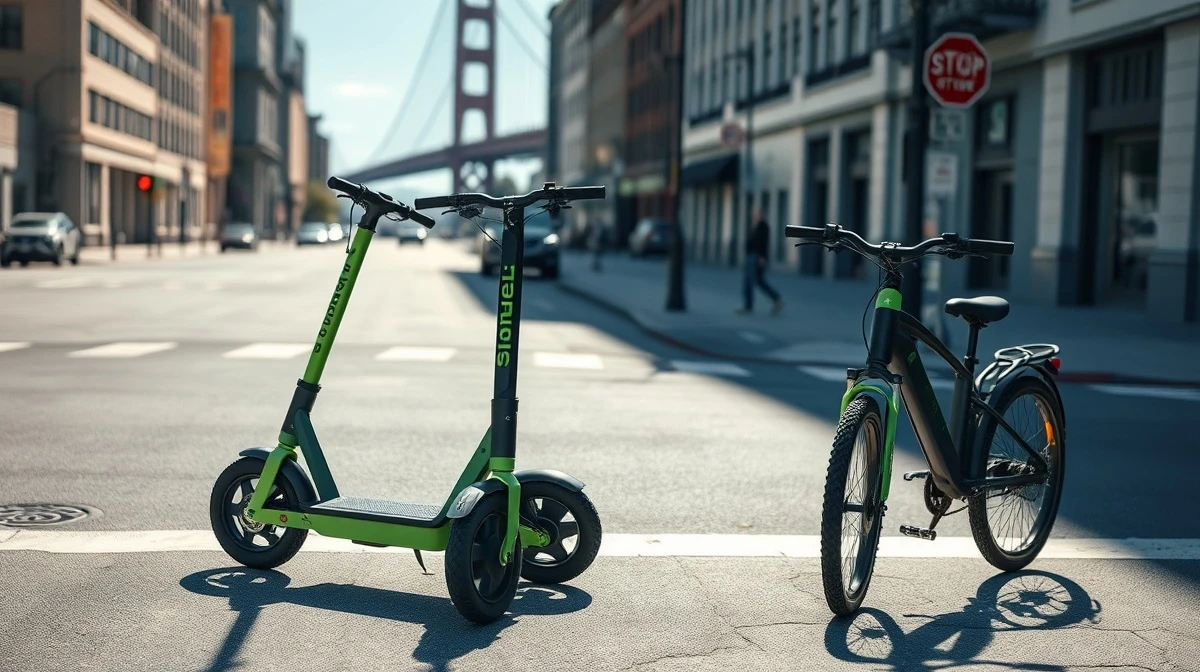
After years of speculation and preparation, Uber-backed micromobility startup Lime has officially filed for an initial public offering. The S-1 registration statement, submitted to the U.S. Securities and Exchange Commission early Friday, marks a central moment for the electric bike and scooter rental company — and for the broader micromobility sector, which has long struggled to prove its financial viability.
Lime CEO Wayne Ting has discussed the possibility of an IPO since at least 2020, with previous mentions in 2021 and 2023. But each time, the company held back. Now, in 2026, Lime is taking the leap — though the filing reveals significant financial headwinds that could test investor confidence.
Also read: Fujifilm Instax Wide 400 review: Bigger prints, simple fun, and a few trade-offs
Revenue Growth, Narrowing Losses — But a Looming Debt Wall
Lime’s S-1 shows a company on an upward trajectory in many respects. Revenue is climbing, the company has achieved positive free cash flow, and net losses narrowed after 2023, despite a slight uptick between 2024 and 2025. Uber, which invested in Lime several years ago, remains a critical partner: approximately 14.3% of Lime’s revenue flows through its integration with the Uber app, allowing customers to find and rent scooters and e-bikes seamlessly.
These metrics suggest Lime is a growth company edging toward profitability. But the filing also lays out a stark reality: Lime carries approximately $1 billion in current liabilities, with $675.8 million of that due by the end of 2026. In total, about $846 million is due within the next 12 months. The company states plainly that it does not have sufficient liquidity to cover these obligations without the proceeds from its IPO or renegotiated debt agreements.
Also read: Tata Electronics, supplier to Apple and Tesla, confirms data breach exposing 630GB of files
Lime’s own words in the S-1 are unambiguous: if it cannot go public and raise the necessary capital, or change its debt terms, it may not be able to continue operating as a business. That admission places the IPO in a new light — not just as a growth milestone, but as a financial necessity.
Potholes, Market Concentration, and Other Risk Factors
Beyond the debt burden, Lime’s filing includes several notable risk factors that underscore the challenges of operating a shared micromobility network. Senior reporter Sean O’Kane, who reviewed the S-1, highlighted an unusual but telling entry: the company cites investment by cities in public road infrastructure — specifically potholes — as a risk factor. While it may sound humorous, the concern is real: potholes can damage scooters and e-bikes, increasing maintenance costs and reducing vehicle lifespan.
Lime also warns that a significant portion of its rides are concentrated in a relatively small number of markets. One such market, the United Kingdom, accounted for 22.2% of its revenue in 2025. This geographic concentration exposes the company to regulatory changes, local economic shifts, and infrastructure decisions in those key areas.
Uber’s Expanding Bet on Autonomous Mobility
Separately, Uber’s deepening investments in autonomous vehicle technology continue to reshape the transportation field. Last summer, Uber announced a plan to launch a premium robotaxi service using Lucid Gravity vehicles equipped with Nuro’s autonomous technology. The initial deal included a $300 million investment in Lucid and a commitment to buy at least 20,000 Gravity SUVs over six years. Uber has since raised its investment in Lucid to $500 million and increased the vehicle order to 35,000.
Details about Uber’s financial commitment to Nuro have been scarce — until now. According to a source familiar with the deal, Uber’s total financial commitment to Nuro, including its participation in the startup’s Series E round and future milestone-based investments, is nearly $500 million. Nuro recently received two critical permits from California regulators: a driverless testing permit from the Department of Motor Vehicles and a permit from the California Public Utilities Commission. The company is now testing Lucid vehicles in autonomous mode with human safety operators, and last month expanded testing to allow Uber employees to request autonomous rides.
Kodiak AI’s Capital Raise Highlights Commercialization Challenges
Kodiak AI’s first-quarter earnings offer a case study in the difficulty of commercializing frontier technology. The company announced several promising deals: a commercial contract with Roehl, a pilot program for autonomous trucks at West Fraser Timber Co.’s log-hauling operations in Alberta, and a collaboration with General Dynamics Land Systems for defense applications. But investors reacted negatively to the terms of its $100 million capital raise, which sold shares at $6.50 each — a steep discount from the $9.10 closing price. The raise also included warrants allowing investors to buy additional shares at prices as low as $6.
Kodiak’s stock fell 37% in after-hours trading following the announcement, though it has since partially recovered. The company will likely need additional capital as it continues burning cash on its path toward driverless trucking operations on public highways.
Other Notable Developments in Transportation
Several other stories shaped the week in mobility:
- Aurora began hauling loads in driverless trucks in Texas for distribution giant McLane, though human observers remain in the cab and cannot operate the vehicle.
- Lucid reported first-quarter earnings that revealed ongoing effects from a supplier issue that forced a recall of its Gravity SUV and paused deliveries. The company changed its guidance and said it is no longer certain how many EVs it will build or sell this year.
- The National Highway Traffic Safety Administration updated its New Car Assessment Program in 2024, adding four new pass-fail tests for advanced driver assistance systems starting in 2026. The later-release 2026 Tesla Model Y is the first vehicle to meet the new benchmark.
- Ouster launched a new lineup of color lidar sensors that CEO Angus Pacala believes will replace cameras in autonomous systems.
- EV startup Slate lost a notable board member — the head of Jeff Bezos’ family office left the board, according to state filings reviewed by TechCrunch.
- Volkswagen has become Rivian’s largest shareholder, pushing Amazon out of the top spot.
Why This Matters
Lime’s IPO filing is more than a single company’s milestone — it is a bellwether for the entire micromobility sector. If Lime succeeds in going public and managing its debt, it could open the door for other shared mobility companies to follow. If it stumbles, it may reinforce skepticism about the long-term viability of dockless bike and scooter networks. The coming weeks, as terms of the offering are disclosed and investor appetite is tested, will be critical.
For readers, the key takeaway is that Lime’s story is not just about growth — it is about survival. The company’s ability to raise capital through its IPO will determine whether it can continue operating, let alone expand. The broader transportation industry is watching closely.
Conclusion
Lime’s IPO filing in 2026 represents a high-stakes moment for the micromobility industry. While the company shows strong revenue growth and narrowing losses, its $1 billion in current liabilities — with nearly $846 million due within 12 months — creates a pressing need for capital. The success of the offering will depend on investor confidence in Lime’s path to profitability and its ability to manage geographic concentration, infrastructure risks, and partnership dependencies. Meanwhile, Uber’s expanding investments in autonomous technology and other mobility players’ developments continue to reshape the competitive field.
FAQs
Q1: Why is Lime going public now in 2026?
Lime needs the IPO to raise capital to cover approximately $846 million in liabilities due within the next 12 months. The company states it does not have sufficient liquidity to pay these obligations without the IPO or renegotiated debt agreements.
Q2: How much of Lime’s revenue comes from Uber?
Approximately 14.3% of Lime’s revenue comes through its partnership with Uber, which allows customers to find and rent scooters and e-bikes through the Uber app.
Q3: What are the main risks Lime faces according to its S-1 filing?
Key risks include: $1 billion in current liabilities with near-term payment deadlines, geographic concentration (the U.K. alone accounts for 22.2% of revenue), and infrastructure issues such as potholes that can damage vehicles and increase maintenance costs.