Kodiak AI, the self-driving truck company that went public via a SPAC merger last September, saw its stock fall 37% in after-hours trading Thursday after disclosing a $100 million capital raise at a price far below its market value. The company sold shares to existing backer Ares Management and unnamed institutional investors at $6.50 each, a steep 29% discount to its $9.10 closing price.
Why the market reacted sharply
The discounted offering, which also included warrants exercisable at $6 per share, signaled that while investors were willing to provide capital, they were not willing to pay the prevailing market price. For a company that has yet to achieve profitability and is burning cash at an accelerating rate, the terms raised concerns about near-term dilution and the true value of the business.
Also read: Tata Electronics, supplier to Apple and Tesla, confirms data breach exposing 630GB of files
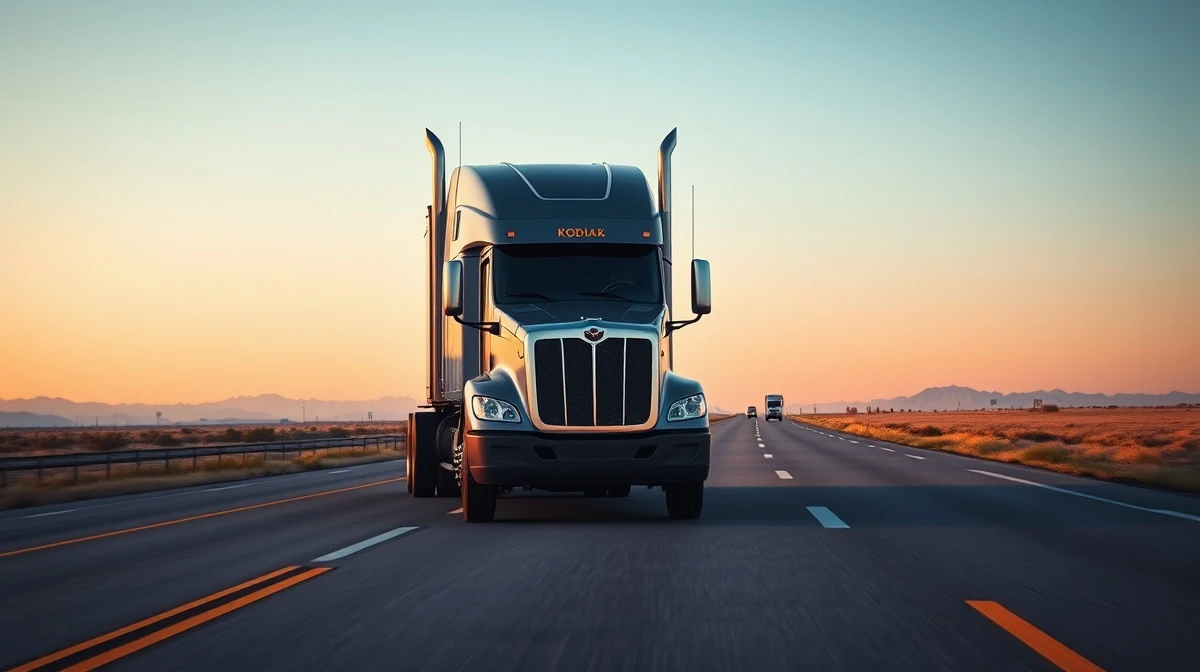
Kodiak reported first-quarter revenue of $1.8 million, up from $1.4 million a year earlier, but its operating loss more than doubled to $37.8 million. The company is spending heavily to scale its autonomous trucking operations, which cover both off-road industrial settings and long-haul public highways.
Cash burn and the path to driverless operations
The $100 million infusion provides a runway extension, but it does not fundamentally change the company’s financial trajectory in the near term. Kodiak founder and CEO Don Burnette said the company remains on track to launch driverless operations on public highways later this year, though he emphasized that extensive validation work remains.
Also read: New AI-Powered Index Ranks Robotaxi Companies: Baidu Edges Waymo as China Dominates
Burnette introduced an internal “autonomy readiness measure” — a 0-to-100 score tracking safety validation progress — which stood at 86% as of April. The company plans to reach 100% before removing the human safety driver from its highway fleet.
Commercial progress and new partnerships
Despite the financial headwinds, Kodiak has made notable business advances. The company announced a new commercial contract with Roehl Transport to run autonomous freight between Dallas and Houston, with four round trips per week. Kodiak provides the trucks, safety drivers, and carries the freight under its current model.
Other developments include a pilot program with West Fraser Timber Co. for log-hauling in Alberta, Canada, and a collaboration with General Dynamics Land Systems to develop autonomous ground vehicles for defense applications. Existing customers include Werner, J.B. Hunt, Bridgestone, Martin Brower, and C.R. England.
Transitioning to a driver-as-a-service model
Burnette said Kodiak plans to shift away from owning trucks once it reaches full driverless operations. The company intends to adopt a “driver-as-a-service” model, where customers own and operate the trucks while Kodiak provides the autonomous driving technology. This model is already in use with off-road customer Atlas in the Permian Basin of Texas.
“Our intention is to not own the trucks at that point,” Burnette said in an interview. “We’re excited about the progress that we’re making as we march toward our driverless launch later this year.”
Conclusion
Kodiak AI’s discounted capital raise reflects the challenging economics of autonomous vehicle development, where high upfront costs and slow revenue growth test investor patience. While the company has secured strategic partnerships and a clear technology roadmap, the stock’s sharp decline underscores the market’s focus on near-term cash burn and dilution. The coming months will be critical as Kodiak works to validate its system and transition to a capital-light driver-as-a-service model.
FAQs
Q1: Why did Kodiak AI’s stock drop 37%?
The stock fell after the company disclosed a $100 million capital raise at $6.50 per share, a 29% discount to the previous closing price. The terms signaled that investors were unwilling to pay the market price, raising concerns about dilution and the company’s financial position.
Q2: When will Kodiak launch driverless operations on public highways?
CEO Don Burnette said the company aims to launch driverless operations by the end of 2026, but only after completing internal safety validation. The company’s readiness score stood at 86% as of April.
Q3: How does Kodiak plan to make money once it goes driverless?
Kodiak plans to shift from owning trucks to a “driver-as-a-service” model, where customers own and operate the trucks while Kodiak provides the autonomous driving technology. This model is already used in its off-road operations.