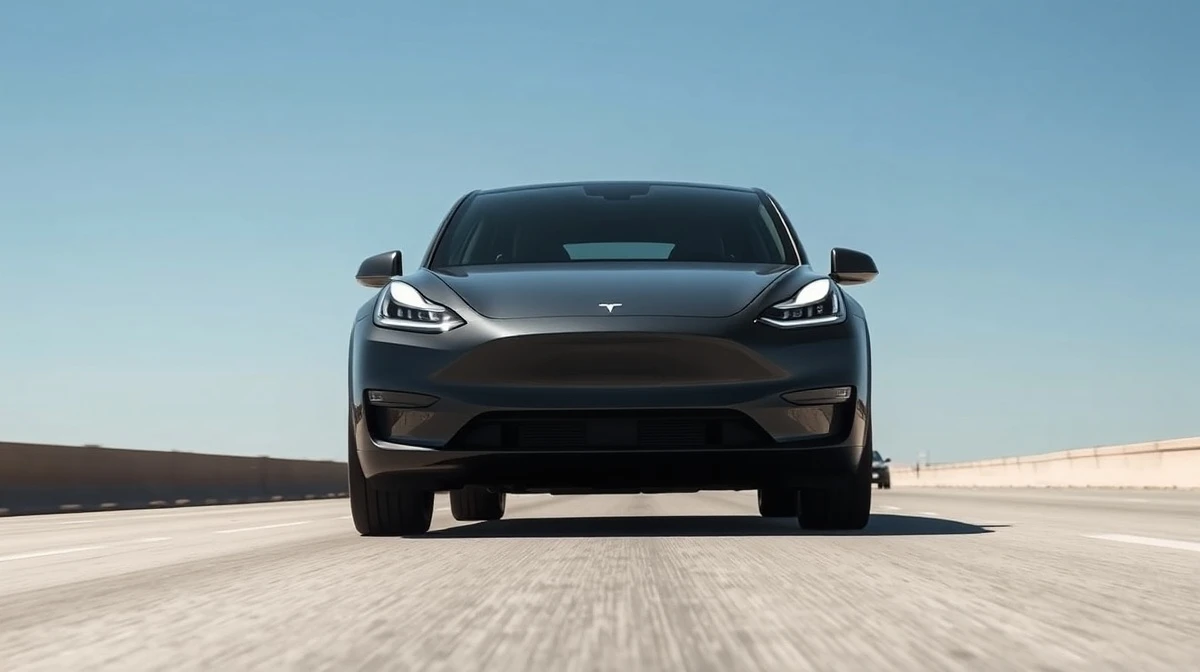
The National Highway Traffic Safety Administration (NHTSA) announced Tuesday that the 2026 Tesla Model Y is the first vehicle to meet its updated benchmark for advanced driver assistance systems (ADAS). The milestone comes as part of the agency’s New Car Assessment Program (NCAP), which administers the government’s 5-Star safety rating system.
New safety criteria target real-world driving risks
NHTSA added four pass-fail tests to its safety ratings in 2024, designed to evaluate how well vehicles perform in common crash-avoidance scenarios. The new criteria assess automatic emergency braking for pedestrians, blind spot warning, blind spot intervention, and lane assist — a feature that helps keep the vehicle within its lane. These updates aim to keep pace with rapidly advancing vehicle technology and the often confusing array of branded driver assistance features marketed to consumers.
Also read: Tata Electronics, supplier to Apple and Tesla, confirms data breach exposing 630GB of files
According to NHTSA, the updated rating applies specifically to 2026 Tesla Model Y vehicles assembled on or after November 12, 2025. The agency noted that the tests are part of a broader effort to provide consumers with clearer, government-verified benchmarks for systems that automakers frequently label with proprietary names that do not always describe their actual capabilities.
Why this matters for consumers and the industry
For years, automakers have marketed advanced driver assistance features under names like Autopilot, ProPILOT, Super Cruise, and BlueCruise, leaving drivers to guess at their actual performance. NHTSA’s new benchmark provides an independent, standardized measure of how these systems perform in critical safety situations.
Also read: New AI-Powered Index Ranks Robotaxi Companies: Baidu Edges Waymo as China Dominates
The agency’s NCAP program already conducts a battery of tests to determine how vehicles handle frontal and side crashes, rollover resistance, and crash avoidance. The addition of ADAS-specific criteria represents a significant expansion of the program’s scope, reflecting the growing role of software-driven safety features in modern vehicles.
What comes next
TechCrunch has reached out to NHTSA to learn which other vehicles are currently being evaluated under the new criteria. The agency has not yet responded, but industry observers expect more automakers to seek certification as the benchmark becomes a de facto standard for safety-conscious buyers. The Tesla Model Y’s early compliance positions it as a benchmark vehicle for the emerging era of government-validated driver assistance systems.
Conclusion
NHTSA’s new advanced driver assistance safety benchmark marks a significant step toward standardized, transparent evaluation of features that have become central to modern vehicle safety. The Tesla Model Y’s first-mover status underscores the growing importance of independent testing in a market where automaker branding often outpaces regulatory clarity. As more vehicles enter the queue for evaluation, consumers will gain a clearer picture of how their cars’ driver assistance systems truly perform.
FAQs
Q1: What specific tests did the Tesla Model Y pass to meet NHTSA’s new benchmark?
The vehicle passed four pass-fail tests: automatic emergency braking for pedestrians, blind spot warning, blind spot intervention, and lane assist.
Q2: Does this mean the Tesla Model Y is the safest car on the road?
No. The new benchmark applies only to advanced driver assistance systems, not overall crashworthiness. The Model Y still undergoes separate NCAP tests for frontal and side crashes, rollover resistance, and other crash avoidance measures.
Q3: When did NHTSA add these new criteria to its safety ratings program?
The four advanced driver assistance criteria were added in 2024 as part of an update to the New Car Assessment Program.