
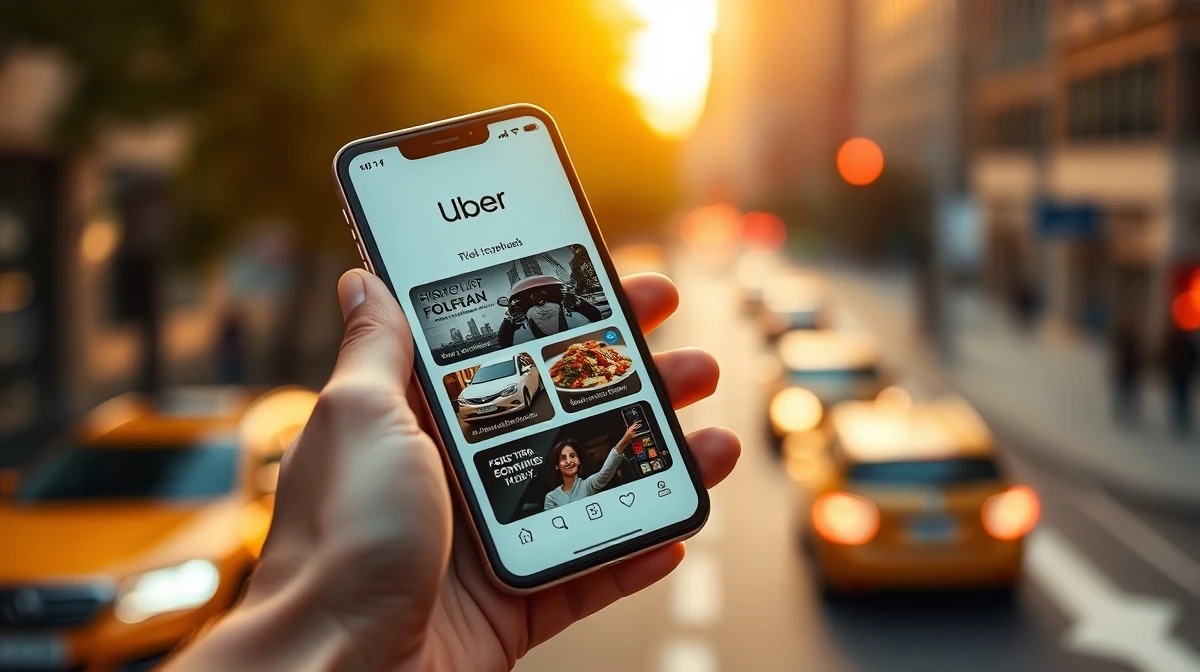
For years, Uber has talked about becoming the app people use for more than just getting from one place to another. Now, with autonomous vehicles reshaping the competitive field and rivals like Airbnb and X making their own moves, the company is accelerating its super app ambitions with a series of concrete product launches.
Hotels, restaurants, and shopping inside Uber
At its annual GO-GET product event in New York two weeks ago, Uber announced that U.S. users can now book hotels directly inside the Uber app through a partnership with Expedia Group, giving access to more than 700,000 properties worldwide. Uber One members — the company’s $9.99 monthly subscription tier — receive 20% off a rotating list of 10,000 hotels and 10% back in credits. Vacation rentals via Vrbo are expected later this year, along with restaurant reservations through OpenTable.
Also read: Fujifilm Instax Wide 400 review: Bigger prints, simple fun, and a few trade-offs
In addition, a new “Shop for Me” feature allows users to order from stores that are not even listed on Uber Eats, further expanding the platform’s utility beyond transportation and food delivery.
Why the hurry now?
The push toward becoming an everything app has been a stated goal since at least 2019, but the urgency has grown. Waymo’s autonomous taxi service began picking up passengers in San Francisco, directly challenging Uber’s core mobility business. Uber has responded by embedding itself in the autonomous vehicle industry as a data provider, investor, and distribution platform — but the consumer-facing strategy may be equally critical.
Also read: Tata Electronics, supplier to Apple and Tesla, confirms data breach exposing 630GB of files
Praveen Neppalli Naga, Uber’s CTO, explained the company’s thinking at TechCrunch’s StrictlyVC event in San Francisco late last month. He noted that the super app model has worked in India and Southeast Asia, but U.S. attempts have often failed by simply bolting services onto existing traffic without creating a reason for users to stay. His answer: membership.
“Every new category — food, groceries, now hotels — gives someone another reason to pay for Uber One,” Naga said. “I take Uber, go to the airport, take a flight, take another Uber, go to a hotel, go to a restaurant. There is a flow you can actually build into it.”
Flights are not yet available, though Naga did not rule them out. Uber previously tested flight booking in Europe without success. “First let’s get the hotel things done,” he said. Financial services also remain a possibility — Uber already offers a debit card to drivers in Mexico — but timing is unclear. “Never say never,” Naga added.
The competitive field: Airbnb and X are moving too
Uber is not alone in this race. Airbnb, arguably the company most directly threatened by Uber’s hotel push, announced its own transportation ambitions in late March — a partnership with Welcome Pickups to offer airport transfers in 125 cities across Asia, Europe, and Latin America, designed to keep users inside the Airbnb app rather than sending them to Uber.
Meanwhile, Elon Musk has spent three years promising to turn X into an “everything app” in the WeChat mold. X Money, a banking and payments platform built inside the social network, is expected to launch publicly soon. X claims 500 million monthly active users.
Can the U.S. support multiple super apps?
The big question is how many super apps the American market will actually support. WeChat works in China partly because the alternative was a patchwork of inferior options. In the U.S., people already have apps they like for most of what Uber wants to do. Getting them to consolidate inside a single platform requires either a compelling reason — Uber One’s discounts, say — or a streamlined enough experience that switching feels worth it.
Uber’s bet is that its installed base is the moat. Its users have already handed over a credit card. Convincing them to book a hotel, or order from a store they’d never find on Uber Eats, is an easier lift than convincing them to download something new.
Uber Eats leads growth, but Wall Street remains cautious
Uber’s most recent earnings, reported a few days ago, suggest Uber Eats may be the strongest argument for that thesis. Delivery revenue grew 34% year over year in the first quarter, to $5.07 billion, making it easily the fastest-growing part of the business and pulling almost even with mobility in gross bookings.
Still, Uber’s stock is down about 8% from a year ago, indicating that Wall Street is not fully convinced. The company says 50 million people are now paying for Uber One, and together they account for roughly half of the company’s total bookings.
Conclusion
Uber is making its most concrete push yet to become a super app, adding hotels, restaurant reservations, and shopping to its existing ride-hailing and food delivery services. The strategy is driven by both opportunity and necessity — autonomous vehicles threaten its core business, and competitors like Airbnb and X are expanding their own ecosystems. Whether Uber can convince U.S. consumers to consolidate their digital lives inside a single app remains an open question, but the company’s growing subscription base and expanding service catalog give it a stronger foundation than previous attempts.
FAQs
Q1: What new services has Uber added recently?
Uber now allows U.S. users to book hotels through Expedia, make restaurant reservations via OpenTable, and order from stores not on Uber Eats through a new “Shop for Me” feature. Vacation rentals through Vrbo are coming later this year.
Q2: How does Uber One factor into the super app strategy?
Uber One, the $9.99 monthly subscription, offers discounts on hotels (20% off a rotating list of 10,000 properties) and 10% back in credits. The company sees membership as the glue that keeps users engaged across multiple categories.
Q3: How does this affect competitors like Airbnb and X?
Airbnb is expanding into transportation through a partnership with Welcome Pickups, while X is building a payments platform called X Money. The race to become a super app is intensifying, with each company tapping into its existing user base to expand into adjacent services.

