
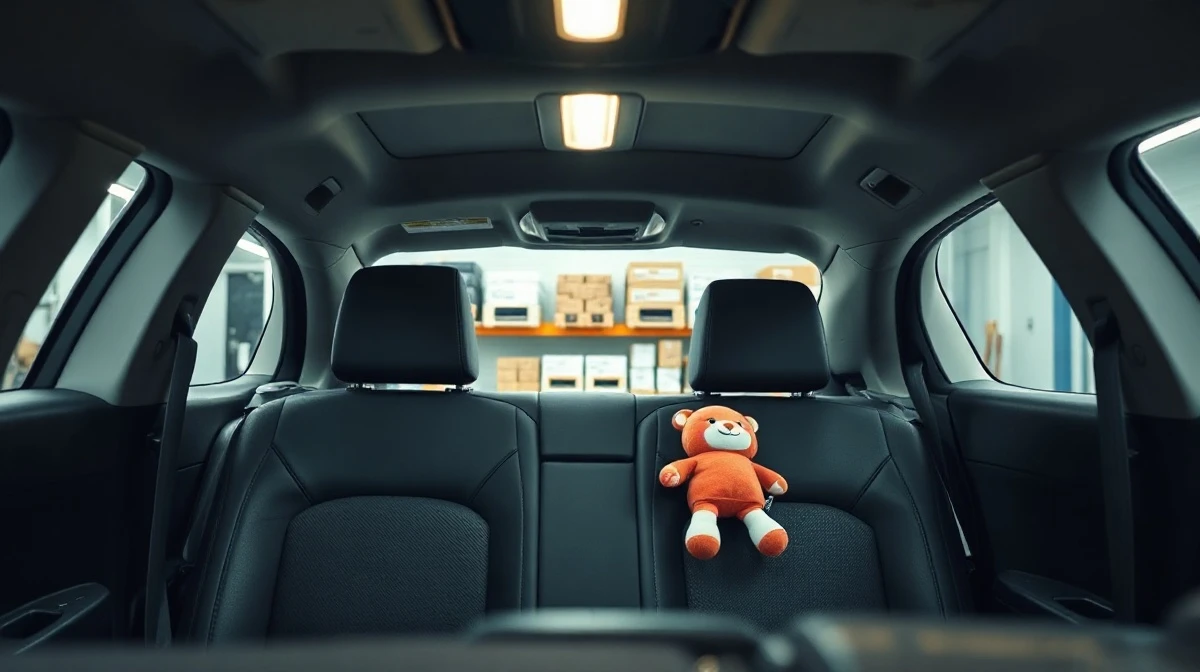
Uber’s annual Lost & Found Index, now in its tenth year, has catalogued millions of forgotten items — from the mundane (smartphones, laptops) to the bizarre (live fish, an ankle monitor, a single Louboutin shoe). But this year’s edition, released Tuesday, adds a new category: robotaxis.
In just 12 months, thousands of items have been left behind in autonomous vehicles on Uber’s ride-hailing network. The list includes the usual suspects — phones, keys, wallets, passports, and headphones — alongside a few head-scratchers: a set of dentures, an “I Heart Hot Dads” bag, and a blue hat reading “Emotional Support Human.”
The data comes from Uber’s growing autonomous vehicle (AV) business, which took a commercial leap in March 2025 when the “Waymo on Uber” robotaxi service launched in Austin. Since then, the partnership has expanded to Atlanta, and Uber has added other AV companies — Motional in Las Vegas and Avride in Dallas — though those still operate with human safety operators behind the wheel.
Lost and found, without a driver
The volume of lost items — even if only in the thousands so far — offers a proxy for how many robotaxi trips Uber is handling. But beyond the quirky catalogue lies a practical business question: who returns the things passengers leave behind when there’s no driver?
Also read: Beyond Google: Six Alternative Search Engines Worth Trying in 2026
Uber’s answer is a hybrid system that repurposes existing infrastructure. When a rider forgets something in a robotaxi, the recovery process mirrors a regular Uber ride: open the app, select the trip, and contact customer support via message, chat, or phone. If the item is located, the rider has two options: pay $15 for same-day local delivery via Uber Courier (a rebrand of Uber Connect, launched in 2020), or pick it up in person from an AV depot where the vehicles are stored and serviced.
“With tens of millions of lost items reported on Uber each year, we’ve spent the last decade building systems that help riders quickly and seamlessly reunite with their belongings,” said Amy Satrom, global head of autonomous support at Uber, in a statement. “As autonomous rides continue to scale on Uber, we’re bringing that same expertise to AVs — combining our fleet operations, support teams, and hybrid network to make getting a lost item back simple, even when there’s no driver behind the wheel.”
A growing AV business with logistical heft
The lost-items report is a small but telling signal of Uber’s larger ambitions in autonomous technology. In February, the company announced Uber Autonomous Solutions, a new division that offers a suite of services for operating robotaxis, self-driving trucks, and sidewalk delivery robots — including software and support.
Uber plans to offer robotaxi rides through its app in as many as 15 cities globally by the end of 2025 and has stated it intends to be the largest facilitator of AV trips in the world by 2029. The company has locked up dozens of partnerships with AV technology firms, but the Waymo integration marks the most visible commercial deployment.
For now, the lost-items list — which also includes a 15-pound yo-yo, a large black marble duck, a Squishmallow, and a Charli XCX poster — serves as a quirky reminder that even in a driverless future, someone still has to handle the basics.

