April 23, 2026 – Tesla is tripling down on its future. The electric vehicle maker announced it will spend $25 billion on capital expenditures this year, a figure that dwarfs its recent spending and underscores a dramatic pivot toward artificial intelligence and robotics.
According to the company’s first-quarter earnings report, the planned 2026 capex is nearly three times its $8.5 billion outlay in 2025. The new budget also exceeds the “in excess of $20 billion” forecast Tesla issued in January. This $5 billion increase suggests the company’s ambitious projects are costing more than initially planned.
Also read: Qualcomm unveils Snapdragon Reality Elite and START toolkit to power the next wave of AI wearables
A Strategic Bet on the Future
CEO Elon Musk framed the spending as an essential investment. “With 2026 we’re going to be substantially increasing our investments in the future,” Musk said on the earnings call. “You should expect to see a very significant increase in capital expenditures, but I think well justified for a substantially increased future revenue stream.”
The move signals Tesla’s intent to evolve beyond its core automotive business. While quarterly spending of $2.5 billion remained consistent, the full-year projection marks a new phase. Industry watchers note this is a high-stakes gamble to position Tesla as a leader in next-generation technology.
Also read: The US government's Anthropic models ban was never about an AI jailbreak
Musk was quick to contextualize the spending. He pointed to other tech giants making similar bets. Amazon has projected $200 billion in 2026 capex for AI, chips, and robotics. Google plans to spend between $175 billion and $185 billion. Tesla’s budget, while large, is part of a sector-wide arms race.
Where the Money Is Flowing
The capital will fund a wide array of initiatives. A significant portion is earmarked for AI training, chip design, and expanding compute infrastructure. The company is also investing in its robotaxi operations and a new semiconductor research facility in Austin, Texas.
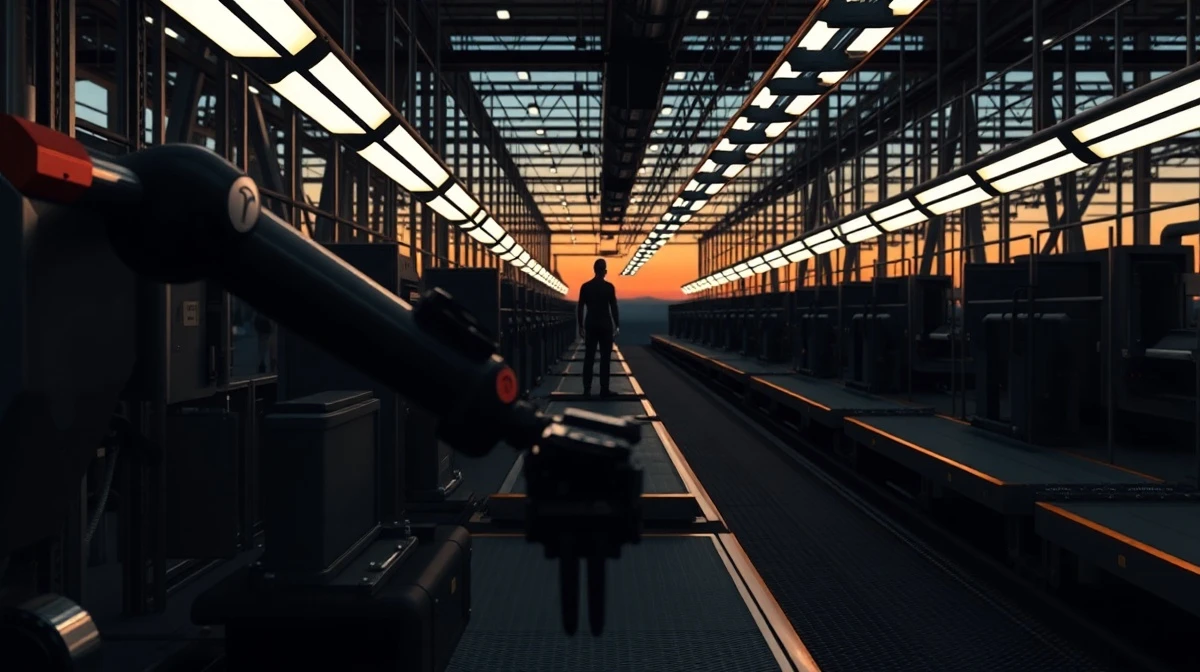
Manufacturing changes will consume capital. Tesla is ending production of the Model S and Model X at its Fremont, California factory. That space will be retooled for scaled production of the Optimus humanoid robot. The company has already cleared ground in Austin for a dedicated Optimus manufacturing plant.
Musk stated that Tesla plans to increase internal Optimus production for testing this year. The robot could become “useful outside of Tesla sometime next year.” Additional funds are allocated to strengthen the supply chain for batteries, energy products, and AI silicon.
The Financial Trade-Off
This aggressive spending comes with a direct cost to Tesla’s balance sheet. Chief Financial Officer Vaibhav Taneja warned investors to expect negative free cash flow for the rest of the year. This follows a first quarter where Tesla reported a surprising $1.4 billion in positive free cash flow, which briefly lifted its share price.
“While this may seem like a lot, and we will have the impact of negative free cash flow for the rest of the year, we believe this is the right strategy to position the company for the next era,” Taneja said.
The market’s initial reaction was cautious. Tesla shares gave up after-hours gains as executives detailed the spending plans. The company, however, entered this period from a position of strength. It reported $44.7 billion in cash, cash equivalents, and short-term investments at the end of the first quarter.
What This Means for Investors
The massive capex increase is a clear statement of priorities. Tesla is choosing to sacrifice short-term profitability to fund long-term growth in AI and robotics. The implication is that Musk sees these areas as more critical to Tesla’s future value than maximizing current automotive margins.
This could signal increased competitive pressure in the EV market, pushing Tesla to diversify. It also reflects the enormous capital required to compete in AI infrastructure. The success of this bet now hinges on Tesla’s ability to execute and eventually generate revenue from its non-automotive ventures. For now, the company is spending heavily to build that future.
For more details, you can review Tesla’s first-quarter 2026 financial results and the related SEC filing.