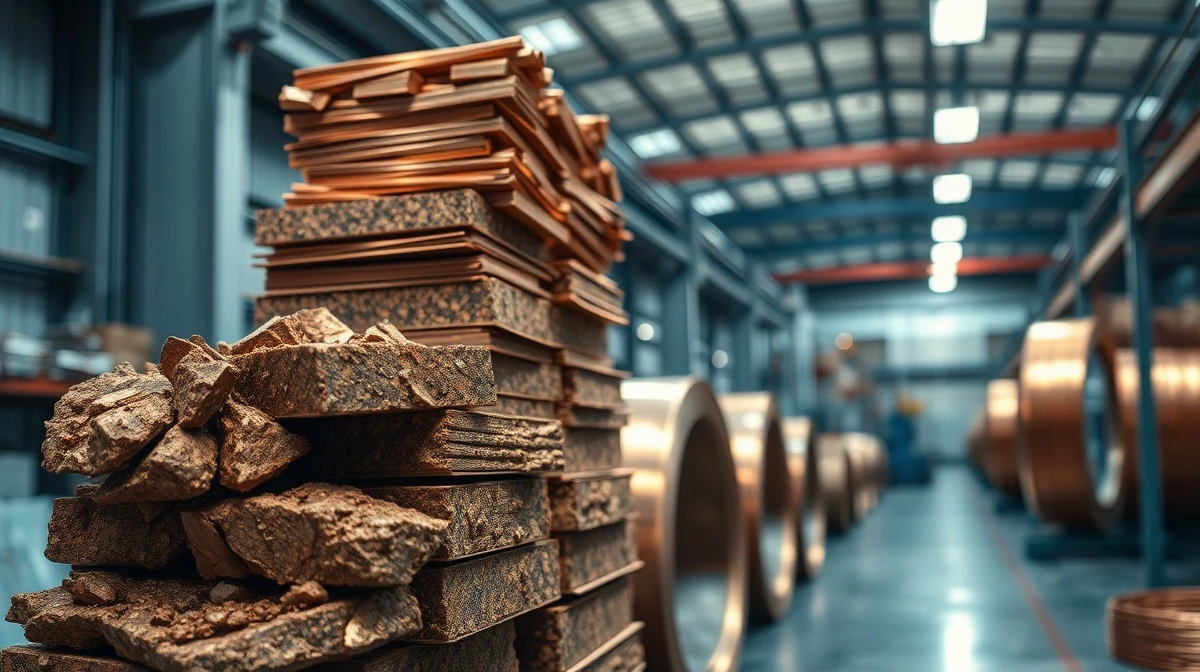
Copper, often referred to as Dr. Copper for its perceived ability to predict global economic trends, is currently addressing a complex market shaped by intensifying geopolitical tensions and shifting demand patterns. According to a recent analysis from ING, the red metal’s outlook remains under pressure from both supply-side disruptions and uncertainties surrounding the pace of global industrial activity.
Geopolitical Tensions and Supply Chain Fragility
ING analysts highlight that ongoing geopolitical frictions, particularly involving major copper-producing regions and key consuming nations, are introducing significant uncertainty into the market. Trade policies, export restrictions, and sanctions continue to disrupt established supply chains, forcing buyers and sellers to reassess long-term contracts and inventory strategies. The concentration of copper reserves in a handful of countries amplifies these risks, making the market particularly sensitive to any political instability in those regions.
Also read: Pound Sterling faces a heavy week as Westminster empties out
Demand Dynamics: Between Green Transition and Economic Slowdown
On the demand side, the picture is equally nuanced. The global push toward electrification and renewable energy infrastructure—both heavily reliant on copper for wiring, motors, and batteries—provides a strong structural tailwind. However, this positive momentum is being partially offset by a slower-than-expected recovery in traditional industrial sectors, particularly in China, the world’s largest copper consumer. ING notes that while long-term demand fundamentals remain strong, short-term volatility is likely to persist as markets digest mixed economic data from major economies.
Implications for Investors and Industry
For market participants, the current environment demands a careful balancing act. The interplay between geopolitical supply risks and the green transition’s demand growth creates both opportunities and pitfalls. ING’s analysis suggests that copper prices may remain range-bound in the near term, with occasional spikes driven by sudden supply disruptions or policy announcements. Investors are advised to monitor not only traditional supply-demand metrics but also the evolving geopolitical sector and policy shifts in key consuming nations.
Also read: US Dollar Index Holds Firm Near 101.00 as Traders Assess Fed Outlook
Conclusion
Copper’s outlook is a microcosm of broader commodity market dynamics in an era of heightened geopolitical awareness and structural demand shifts. ING’s report underscores that while the long-term case for copper remains strong, the path forward will likely be volatile. For readers, understanding these intersecting pressures is essential for handling the metal’s price movements and their ripple effects across global supply chains and investment portfolios.
FAQs
Q1: Why is copper considered a key economic indicator?
Copper is used extensively in construction, electronics, and industrial machinery, so its price movements often reflect broader economic activity. This has earned it the nickname “Dr. Copper.”
Q2: What are the main geopolitical risks affecting copper supply?
Risks include export restrictions, mining disputes, sanctions on producing countries, and political instability in key regions such as South America and parts of Africa.
Q3: How does the green energy transition affect copper demand?
Copper is critical for electric vehicles, solar panels, wind turbines, and power grids. The transition to cleaner energy is expected to significantly boost long-term copper demand, potentially outpacing supply growth.