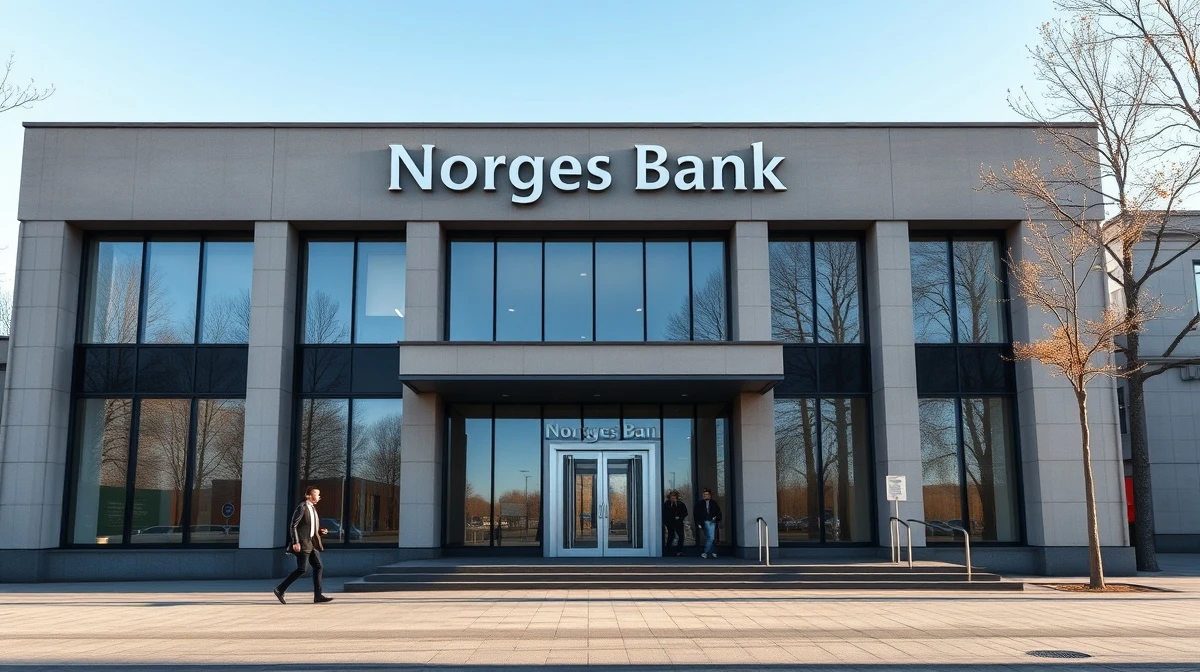
Norges Bank raised its key policy rate by 25 basis points to 4.50% on Thursday, continuing its tightening cycle as underlying inflation remains stubbornly above target. The decision, widely expected by markets, signals the central bank’s commitment to curbing price pressures in the Norwegian economy.
Nomura’s Take on the NOK Outlook
Analysts at Nomura noted that the rate hike was accompanied by a cautious tone from the central bank, which indicated that further tightening may be needed if inflation does not ease. The Norwegian krone (NOK) initially strengthened against the euro and the US dollar following the announcement, but gains were tempered as markets absorbed the forward guidance.
Also read: Swiss Franc Dips Against Dollar, Rises Versus Euro in Mixed Forex Session
Nomura’s currency strategists highlighted that the NOK remains sensitive to global risk sentiment and energy price fluctuations, given Norway’s status as a major oil and gas exporter. They expect the krone to trade in a relatively narrow range in the near term, with the central bank’s data-dependent stance providing limited directional cues.
Inflation Persistence and Policy Implications
Norway’s core inflation, which excludes energy and volatile items, has been hovering around 5.5%, well above the central bank’s 2% target. This persistence has forced Norges Bank to maintain a hawkish posture even as other major central banks, including the Federal Reserve and the European Central Bank, signal a potential pause or end to their tightening cycles.
Also read: Pound Sterling faces a heavy week as Westminster empties out
The central bank’s updated projections suggest that the policy rate may peak at 4.75% later this year, implying at least one more hike. However, Nomura cautions that the path remains highly uncertain, particularly if global economic growth slows more sharply than anticipated.
What This Means for Investors and Businesses
For investors holding NOK-denominated assets, the rate hike provides a modest yield advantage but does not fundamentally alter the currency’s vulnerability to external shocks. Norwegian exporters, particularly in the seafood and maritime sectors, face mixed signals: a stronger krone hurts competitiveness, but a hawkish central bank supports overall financial stability.
Households with variable-rate mortgages will feel the immediate impact of higher borrowing costs. The central bank acknowledged that higher rates are already weighing on housing market activity and consumer spending, but judged that the inflation fight must take precedence.
Conclusion
Norges Bank’s decision to hike to 4.50% reflects a determined effort to bring inflation under control, even as the economic outlook darkens. Nomura’s analysis underscores that the NOK’s near-term direction will hinge on incoming inflation data and global risk appetite, rather than domestic policy alone. Markets will closely watch the next inflation report due in June for clues on whether the central bank delivers another hike or holds steady.
FAQs
Q1: Why did Norges Bank raise interest rates?
The bank raised rates to combat persistent inflation, which remains well above its 2% target. Core inflation has been sticky, driven by services prices and wage growth.
Q2: How did the NOK react to the rate hike?
The Norwegian krone initially strengthened against major currencies but later gave back some gains as markets focused on the central bank’s cautious forward guidance and global risk factors.
Q3: What is Nomura’s forecast for the NOK?
Nomura expects the NOK to trade in a relatively narrow range near term, with the currency remaining sensitive to energy prices, global risk sentiment, and further policy signals from Norges Bank.