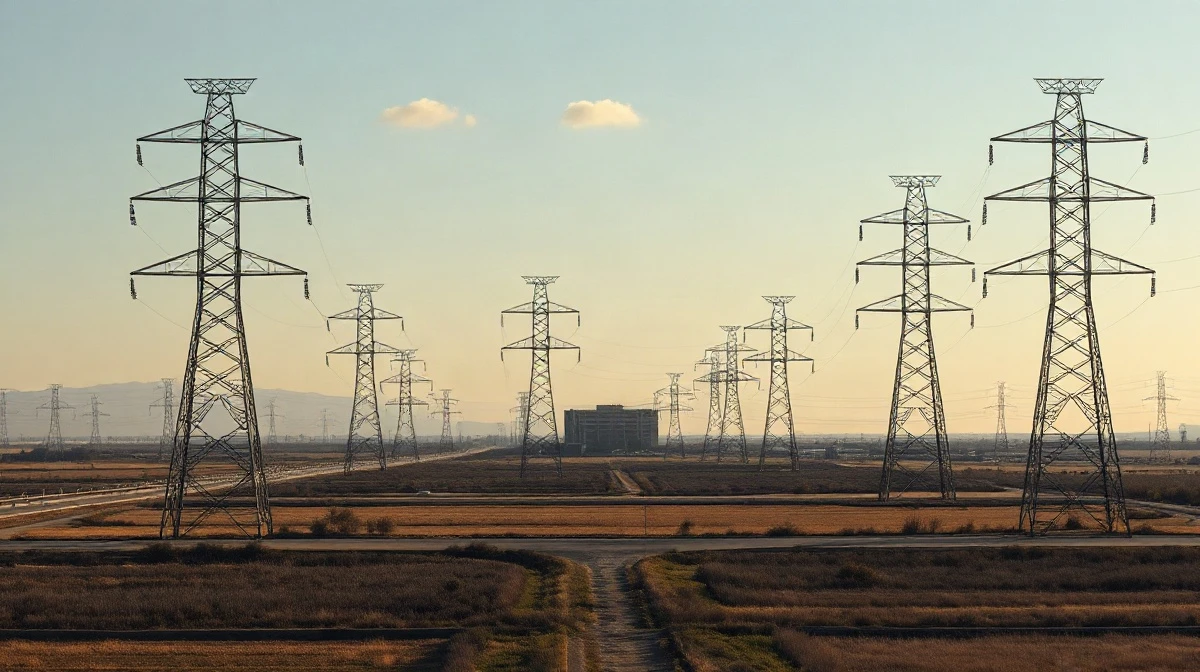
Bruce Kahn, PhD, senior portfolio manager at Shelton Capital Management and a lecturer at Columbia University, argues that the biggest constraint on artificial intelligence is not chip supply but the physical infrastructure required to power and cool data centers. In an interview with the Investing News Network, Kahn said the industry is “already at the bottleneck,” with hyperscaler compute demand outpacing what the grid can deliver.
Kahn’s comments come as major tech companies escalate capital spending on AI infrastructure. Alphabet raised its 2026 capex guidance to US$195–205 billion, and Meta Platforms increased its target to US$130–145 billion, even as free cash flow remains thin. The spending is racing ahead of visible revenue from AI end users, raising questions about the sustainability of the buildout.
Also read: Pangram CEO Max Spero: AI Detection Is About More Than Just ‘Real or Fake’
The Gap Between AI Spending and Revenue
Kahn is skeptical that current AI revenue justifies the scale of investment. “We have yet to see any real revenue generation from AI,” he said, pointing to the fact that a meaningful share of recent earnings growth in the S&P 500 came from one-time gains, such as Alphabet’s US$98 billion stake in SpaceX and Amazon’s US$53 billion gain tied to Anthropic. Excluding those, earnings growth was still a strong 33.8%, but much of it is concentrated in chipmakers selling into the AI buildout rather than proof that end users are paying enough to justify the spending.
Meta’s results illustrate the cash crunch: US$31.1 billion in quarterly capital expenditures left just US$784 million in free cash flow, despite having real AI revenue from tools like Advantage+ running at a US$75 billion annual pace. Microsoft dropped its US$37 billion AI revenue run-rate figure without explanation, and analysts have flagged a circular dynamic in which NVIDIA takes stakes in companies like OpenAI and CoreWeave that then use that capital to buy NVIDIA chips.
Also read: Enterprise AI contracts no longer guarantee revenue stability, Madrona research shows
Power Grid Constraints Are Already Here
Kahn emphasized that the mismatch between capital deployment and grid buildout is a current risk, not a future one. He described hyperscalers’ off-grid solutions like leased jet turbines and on-site solar as short-term stopgaps that won’t scale. The long-term answer, he said, is a return to large, centralized power, which he expects to be “more nuclear than renewables” at the scale required.
He also noted that a large pool of private credit “dry powder” is being deployed into second- and third-tier projects, raising risk. “These two things, I don’t think were planned, but the timing is interesting,” Kahn said, referring to the power buildout and the private credit overhang. AI and data centers have become a “de facto receptacle” for capital that needed somewhere to go, rather than a specifically well-underwritten opportunity.
On the question of whether announced data center capacity will actually be built, Kahn pushed back slightly on a Wood Mackenzie estimate that only 28% of 1,066 gigawatts of requested power will materialize, saying, “split the difference and call it 50 percent.” But he agreed that a meaningful share of announced capacity won’t be built, and even legitimate projects may take longer than expected.
Investing in the Physical Buildout
Kahn’s investment approach avoids trading hyperscaler valuations or macro variables, which he calls “guesswork.” Instead, he focuses on physical, structural supply-and-demand trends that hold regardless of which AI company wins. This includes grid equipment, materials, and infrastructure—the “picks and shovels” of the buildout. He cited digital water metering as an example: “I know a water utility has to go from analog to digital, so they need digital water metering systems. That is without question.”
He also pointed to geothermal energy, both conventional and advanced, as promising, and remains constructive on wind power, arguing that political efforts to block major wind projects signal their economic significance. On community resistance to data centers, Kahn said, “It’s not a side story. It has become the story,” but he doesn’t expect it to change the longer-term trajectory toward more digitization and power demand.
For investors, the takeaway is to look beyond the AI narrative to the physical infrastructure that will be built regardless of which technology or company wins. As Kahn put it, “The power is going to get built.”
This article is for informational purposes only and does not constitute financial advice. The cryptocurrency and technology markets are volatile; readers should conduct their own research before making investment decisions.