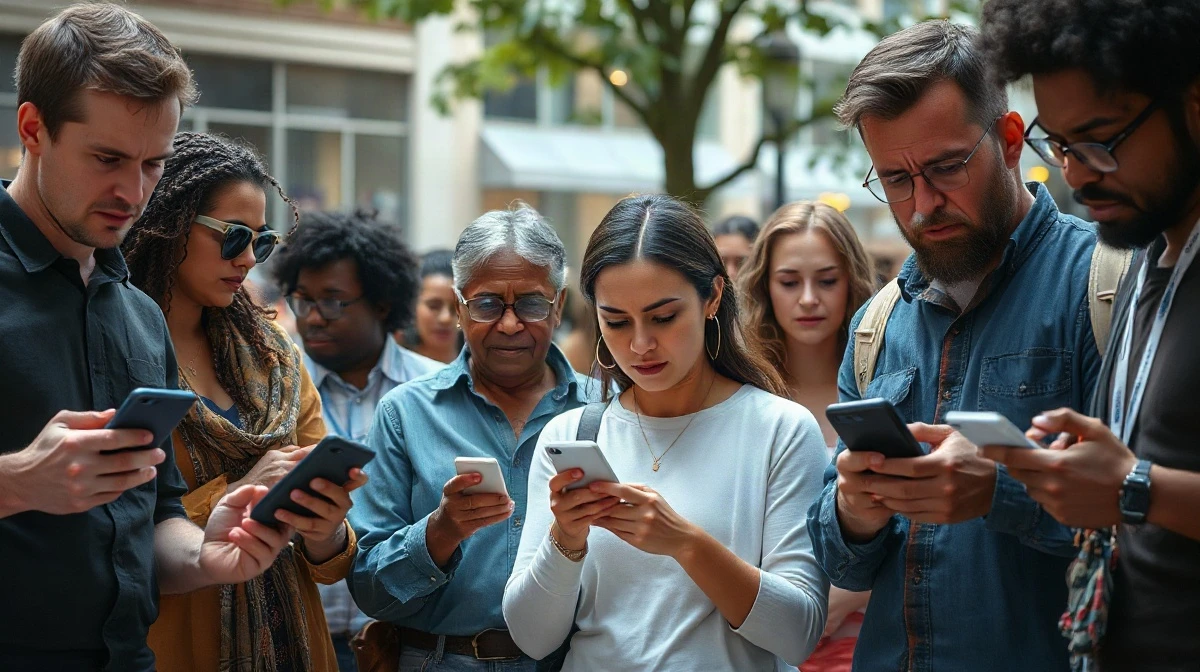
Public enthusiasm for artificial intelligence has curdled into suspicion. A Pew Research study released this week found that 52% of Americans now say they are “more concerned than excited” about AI’s growing role in daily life — up sharply from 37% in 2021. The finding lands as the industry confronts a paradox: AI has never been more capable, yet its reputation among the people it’s meant to serve has rarely been worse.
The discontent isn’t confined to one poll. A CNBC survey of 18- to 34-year-olds found that a majority don’t trust nine top AI industry leaders to “act responsibly.” An Economist/YouGov poll from May reported that over 70% of Americans believe AI is advancing too quickly. And this week, the National Republican Senatorial Committee sent a memo to major AI companies warning that data center development is hurting the party’s chances in a key Ohio election — a sign that AI’s footprint has become a political liability, not just a consumer grievance.
Why the backlash is different this time
Every transformative technology has faced resistance. The iPhone, the personal computer, even the internet itself all encountered skepticism at similar adoption stages. But AI appears to be generating a broader and more visceral reaction, in part because its costs are visible while its benefits feel abstract to many people.
Consumers see AI chatbots and AI-summarized search results, but they also see AI features pushed into products they already use — email, TVs, even refrigerators — whether they asked for them or not. They hear about AI tools helping students cheat, raising questions about the value of a college degree. They watch AI systems train on copyrighted material to generate art, music, and writing that once required human creativity.
Also read: Washington's AI Strategy: Rabobank Maps Out Carrot-and-Stick Approach
The trade-off, as many consumers frame it, is lopsided: they’re being asked to absorb the risks — potential job loss, privacy erosion, cultural disruption — in exchange for features they often find marginally useful. A summarized web page or a chatty television doesn’t feel like a fair exchange for that kind of uncertainty.
Industry leaders acknowledge the problem
That sentiment is starting to show up on balance sheets. The Wall Street Journal reported this week that tech companies are facing a public relations crisis over their data center plans, forcing them to offer job guarantees, clean water investments, and other local perks to win community support. In one Louisiana parish, that included $50,000 bonuses for teachers.
Some of the industry’s most prominent voices are now acknowledging the gap between what AI promised and what it has delivered. On a recent podcast, Airbnb CEO Brian Chesky said the backlash is real and tied to a failure to ship products that “regular people” like.
“I think part of it’s a narrative issue that we’re not talking about AI correctly,” Chesky said. “But part of it is we need to actually be developing more products that just regular people can use and say, ‘I love AI because AI allows me to have a doctor on demand and I can’t have that. I can’t afford that.’ And so I think we need more regular things.”
Anthropic CEO Dario Amodei went further this week, posting on X that negative public perception of AI is a “big problem” and fundamentally a “crisis of trust.” He said people don’t trust companies, governments, or the tech industry, suspecting “that we are cooking up some new way to screw them over.” His proposed solution: deliver on AI’s biggest promises, like curing cancer.
“I think by far the most accurate criticism of AI companies, including Anthropic, is that we haven’t yet delivered on our big promises to benefit the world. That is totally on us,” Amodei wrote.
A cultural counter-movement
While the industry searches for a fix, consumer behavior is telling its own story. Young people are increasingly embracing retro technology — dumbphones, point-and-shoot cameras, tape decks, CD players. Classic iPods are selling for premium prices on eBay. “Grandma hobbies” like quilting, knitting, and Mahjong have surged in popularity, and in-person run clubs are drawing people away from dating apps.
Some in Silicon Valley interpret this as a messaging failure — a belief that better PR could explain AI’s benefits more clearly. But the more likely explanation is that consumers understand AI well enough and simply don’t think the trade-offs are worth it. When the promised upside is not shorter workweeks and higher pay but the threat of job displacement paired with marginally useful features, skepticism hardens into resistance.
The industry has raised hundreds of billions of dollars on the assumption that AI’s inevitability would eventually win people over. That assumption is now in question. The challenge for AI companies is no longer just technical — it’s convincing a skeptical public that the technology is being built for them, not at their expense.
Disclaimer: This article is for informational purposes only and does not constitute financial advice. The cryptocurrency and technology markets are volatile and uncertain; readers should conduct their own research before making any investment decisions.