
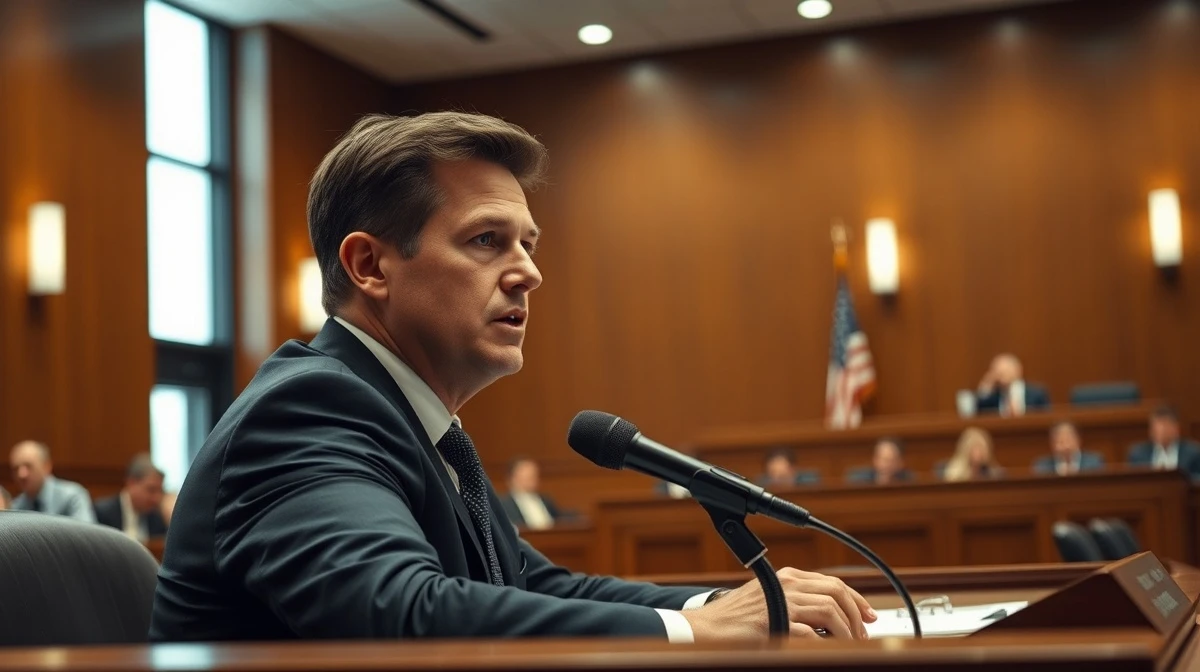
OpenAI CEO Sam Altman took the stand this morning to defend himself against a lawsuit filed by his former co-founder Elon Musk, offering a series of revealing anecdotes about Musk’s involvement in the company’s early years. The central question in the case is whether OpenAI’s shift from a nonprofit to a for-profit structure violated its original mission.
Altman recounts Musk’s plan for control
Altman testified that during a 2017 debate about how to fund OpenAI’s growing computational needs, Musk suggested that if he died while controlling a hypothetical for-profit entity, the company should pass to his children. Altman described this as a ‘hair-raising moment’ that underscored his concerns about Musk’s approach to governance and safety.
Also read: Corgi denies stealing open-source code after Papermark accuses it of copying Dataroom software
‘Founders who had control usually did not give it up,’ Altman said, drawing on his experience running Y Combinator. He argued that OpenAI’s commitment to keeping advanced AI out of any single person’s hands was incompatible with Musk’s vision.
Safety concerns and management style
Altman also testified that Musk’s management tactics, which may have suited his engineering and manufacturing companies, were ill-suited for a research lab. He claimed Musk demanded that co-founders Greg Brockman and Ilya Sutskever rank researchers by accomplishment and ‘take a chainsaw through a bunch,’ causing lasting damage to the organization’s culture.
Also read: Notion Mail to shut down in September as users hand email over to AI agents
‘I don’t think Mr. Musk understood how to run a good research lab,’ Altman said. He portrayed himself as defending the ‘sweat equity’ of the researchers who were effectively running OpenAI while Musk and Altman held other jobs.
The core legal dispute
Musk’s attorneys argue that OpenAI’s creation of a for-profit subsidiary in 2019, and its subsequent partnership with Microsoft, effectively ‘stole a charity.’ Altman rejected this framing, noting that the OpenAI foundation now holds assets of approximately $200 billion and is ready to do significant philanthropic work. Board chair Bret Taylor testified that the foundation lacked full-time employees until this year simply because converting OpenAI equity to cash was a complex process completed only recently.
Why this matters
The case tests a foundational question for the AI industry: whether companies founded with safety-first missions can transition to commercial models without betraying their original promises. A ruling against OpenAI could reshape how AI companies structure themselves and raise new questions about the governance of advanced technology. The trial is being closely watched by regulators, investors, and AI researchers worldwide.
Conclusion
Altman’s testimony paints a picture of two co-founders with fundamentally different visions for OpenAI’s future. While Musk left the board in 2018 and later launched his own AI startup, xAI, Altman kept him informed about OpenAI’s progress and sought his input on investments. The trial continues, with both sides expected to call additional witnesses.
FAQs
Q1: What is Elon Musk suing OpenAI over?
Musk alleges that OpenAI violated its nonprofit mission by creating a for-profit subsidiary and partnering with Microsoft, arguing the company prioritized commercial gain over safety.
Q2: What did Sam Altman say about Musk’s proposal regarding his children?
Altman testified that in 2017, Musk suggested that if he died while controlling a for-profit OpenAI, the company should pass to his children, which Altman found alarming given OpenAI’s commitment to avoiding single-person control.
Q3: How did Musk respond to OpenAI’s for-profit shift?
Musk left OpenAI’s board in 2018 and later founded xAI, a competing AI company. However, Altman testified that Musk was kept informed about OpenAI’s plans and even participated in discussions about investments.

