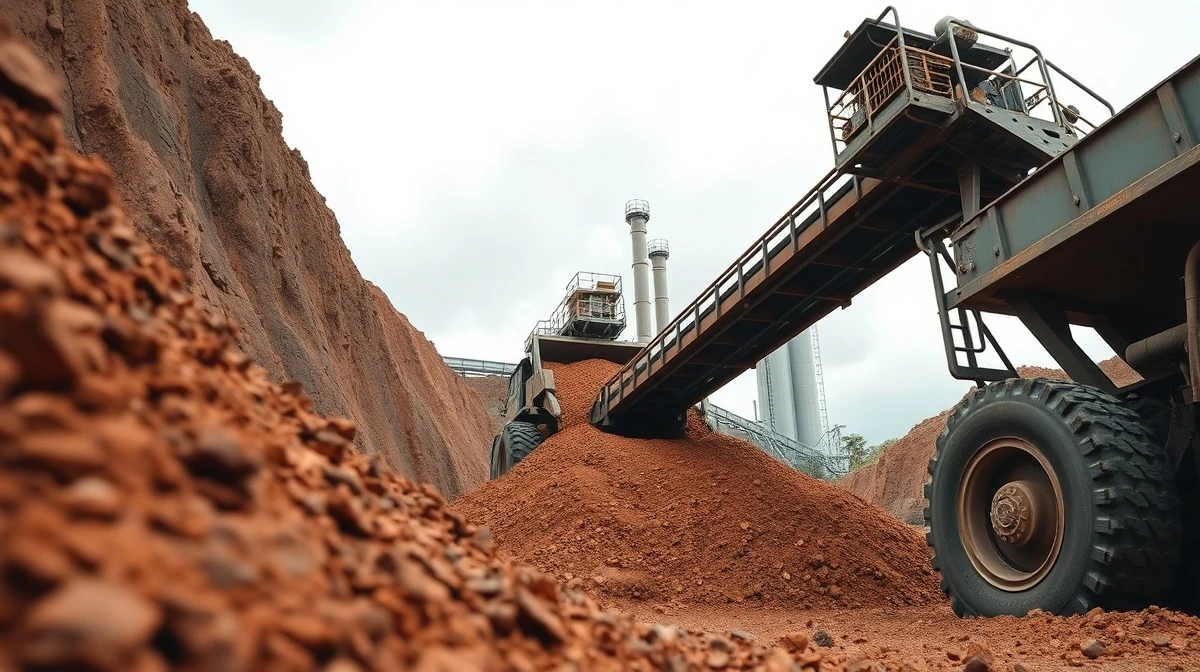
Analysts at Commerzbank have issued a stark warning regarding the global aluminium supply chain, pointing to export restrictions on bauxite—the primary ore used in aluminium production—as a growing threat to market stability. The bank’s assessment highlights how policy-driven caps on bauxite exports from key producing nations could create significant supply bottlenecks and price volatility in the months ahead.
Why Bauxite Export Caps Matter
Bauxite is the essential raw material for alumina refining, which in turn is processed into aluminium. A handful of countries, including Australia, China, Guinea, and Indonesia, dominate global bauxite production. When any major producer imposes or tightens export limits, the ripple effects are felt across the entire aluminium value chain. Commerzbank’s analysis notes that such moves are often motivated by domestic industrial policy—governments seeking to encourage local processing and value addition rather than exporting raw ore. While this may benefit domestic economies in the long run, it introduces acute short-term supply risk for international buyers, particularly smelters in China and other manufacturing hubs that rely heavily on imported bauxite.
Also read: Swiss Franc Dips Against Dollar, Rises Versus Euro in Mixed Forex Session
Market Implications and Price Pressure
The warning from Commerzbank comes at a time when aluminium markets are already sensitive to geopolitical tensions, energy costs, and shifting trade policies. A sustained reduction in bauxite availability would likely drive up alumina prices, raising production costs for aluminium smelters. This could lead to higher aluminium prices for downstream industries, including automotive, construction, packaging, and aerospace. The bank’s report emphasizes that the market has not fully priced in the risk of prolonged export restrictions, leaving it vulnerable to sudden price spikes. Investors and procurement managers are now closely watching policy announcements from major bauxite producers for signs of further tightening.
Supply Chain Vulnerabilities
Beyond price, the cap threatens to expose structural weaknesses in global supply chains. Many aluminium producers operate with minimal inventory buffers, relying on just-in-time deliveries of raw materials. Any disruption to bauxite flows can force smelters to reduce output or even temporarily shut down, compounding supply shortages. Commerzbank’s analysis suggests that diversification of bauxite sourcing and investment in alternative supply routes will become increasingly important for risk management. However, developing new mining capacity or alternative processing facilities takes years, meaning the market faces a period of heightened uncertainty in the interim.
Also read: Pound Sterling faces a heavy week as Westminster empties out
Conclusion
Commerzbank’s assessment serves as a timely reminder that raw material policies in producing nations can have outsized effects on global commodity markets. For aluminium buyers and sellers, the message is clear: bauxite export caps are not merely a regulatory footnote but a central factor in supply-demand dynamics. Market participants would be wise to incorporate this risk into their planning, as the path forward is likely to involve continued volatility and strategic repositioning across the aluminium supply chain.
FAQs
Q1: What is a bauxite export cap?
A bauxite export cap is a government-imposed limit on the quantity of bauxite that can be shipped abroad. It is often used to encourage domestic processing and protect local industries.
Q2: Which countries are most affected by bauxite export restrictions?
Major importers like China, which processes large volumes of imported bauxite into alumina and aluminium, are most directly affected. Producers like Guinea and Indonesia have implemented or tightened such caps in recent years.
Q3: How does a bauxite shortage affect aluminium prices?
Less bauxite means less alumina, which raises production costs for aluminium smelters. These higher costs are typically passed on to consumers, leading to higher aluminium prices in global markets.